

Opinion editor's note: Star Tribune Opinion publishes a mix of national and local commentaries online and in print each day. To contribute, click here.
•••
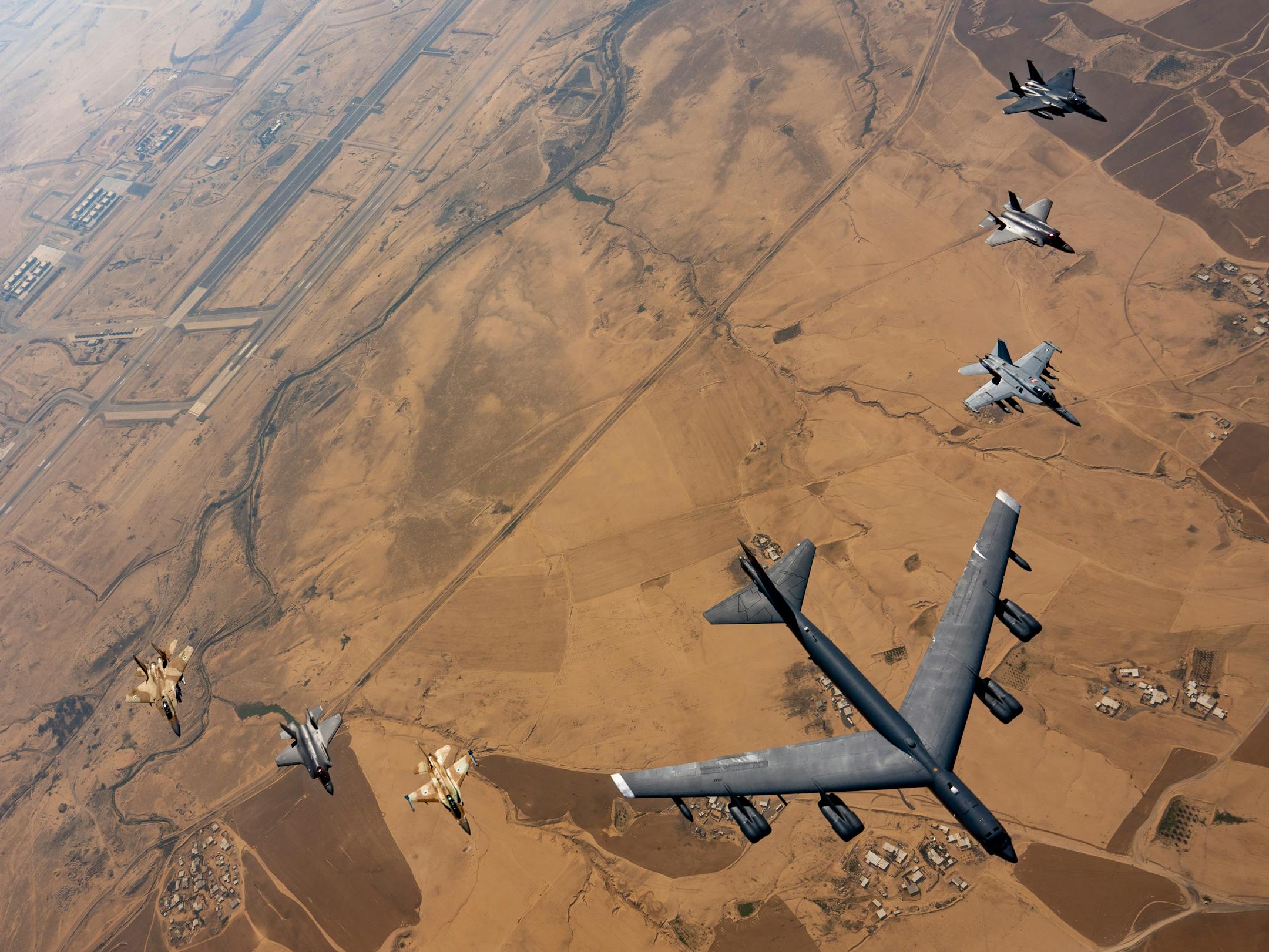
Washington has signaled that when it comes to Iran, diplomacy is out, and hostility is in. The U.S. began conducting joint air exercises with Israel on Jan. 23, employing more than 100 aircraft including strategic bombers and advanced F-35 fighter jets. This comes after President Joe Biden stated, "We're going to free Iran," during its recent wave of protests and adding recently that the Iran deal "is dead" and that Iran "will have a nuclear weapon." But the possibility of a nuclear Iran is less dangerous than the certainty of a war that would erupt from a preventive strike.
While these joint exercises are primarily meant as a deterrent, Iran likely will not view them that way and for good reason. Israel is already hoping to double its purchase of advanced U.S. fighter jets as multiple Israeli officials hint at options for striking Iran's nuclear facilities. Doing so would likely necessitate U.S. assistance, primarily with air refueling. Consequently, the U.S. would likely become entangled, whether it took the lead or supporting role in a strike. But the consequences would be catastrophic.
The idea of a surgical strike is a myth. In a strike on Iran's nuclear facilities, fighters would have to penetrate hundreds of miles of contested airspace, encountering multiple layers of Iranian air defenses, not just in Iran but in Syria as well. To do so without risking American casualties would mean first setting the stage with hundreds of airstrikes on Iranian air defenses and air bases. That would not go unanswered, and Iran's arsenal of thousands of ballistic missiles and hundreds of thousands of proxy fighters would likely be brought to bear against Israeli and American forces in retaliation.
This means U.S. forces in Iraq, Syria, Qatar, Saudi Arabia and the United Arab Emirates would be targeted. Likewise, oil shipments through the Strait of Hormuz, sourcing a fifth of the world's oil supply, would also be disrupted. The effects would immediately prove militarily and economically disastrous for the United States.
With U.S. arsenals already depleted from sending aid to Ukraine, igniting a war in the Middle East would be even more dangerous. The U.S. has been moving away from a two-war force posture for the last decade, formalized most recently in the 2022 National Defense Strategy. This means it cannot fight everywhere at once; 100,000 troops in Europe to deter Russia and more than 300,000 in the Pacific to deter China necessarily mean that the U.S. cannot afford to fight a war with Iran.
The urgency of Iran's nuclear development is likewise exaggerated. The Biden administration's 2022 Nuclear Posture Review released in October revealed that U.S. intelligence still assesses that Iran is not pursuing a nuclear weapon. As far as Israeli Prime Minister Benjamin Netanyahu's track record goes, Iran has been imminently close to obtaining a nuclear weapon for at least 30 years. The premise underlying a preventive strike rests on a foundation of sand, namely that this threat will materialize.


