

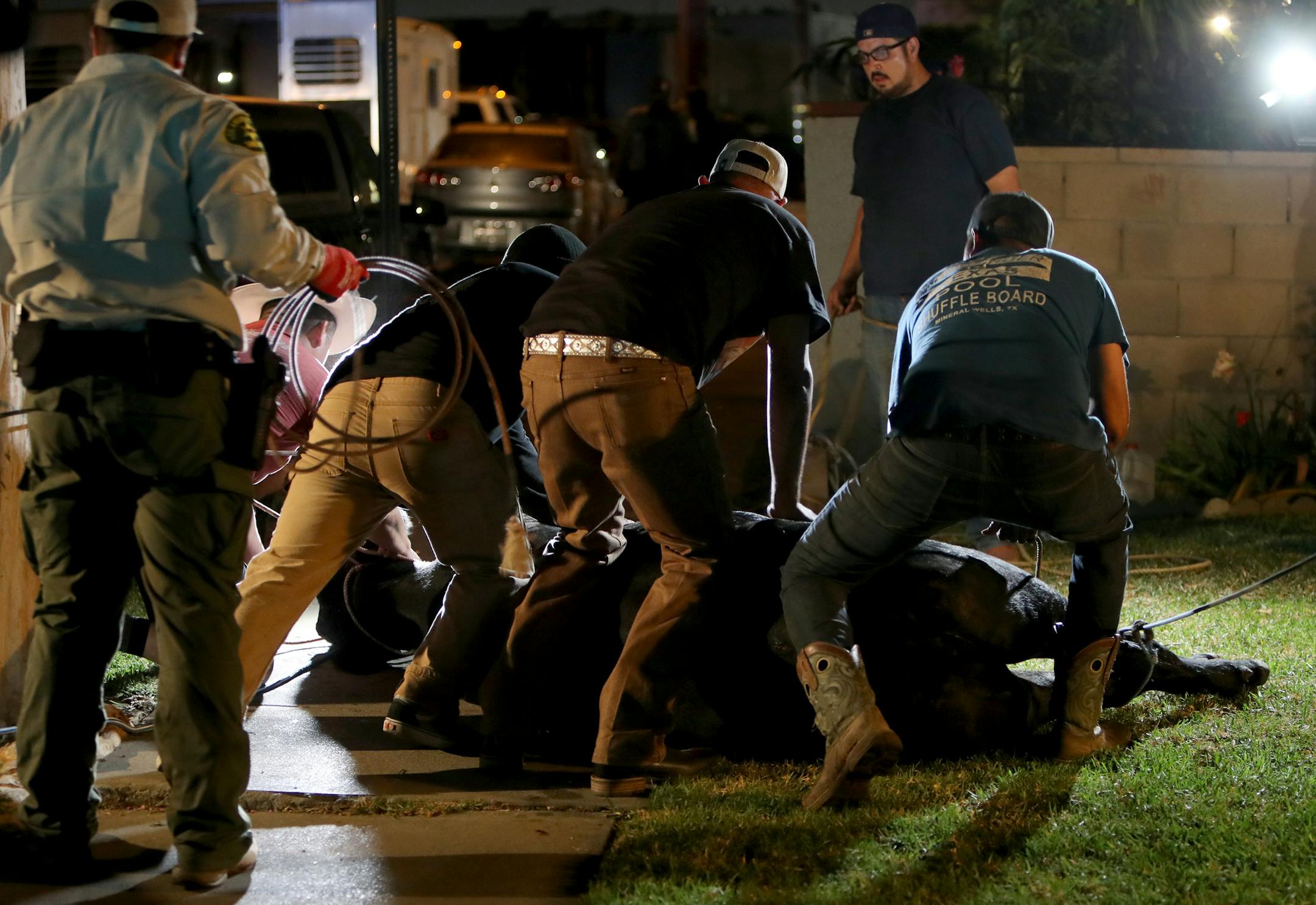
The great cow escape happened on a late June evening. Forty cattle made a break for it through the streets of Pico Rivera, Calif., in metropolitan Los Angeles, in a sprint for their lives.
The fugitives were property of Manning Beef, the last meatpacker of its kind in L.A. The company had placed them in a holding pen before slaughter time, a daily task done with little fuss by workers for more than 70 years. But this herd pushed open a gate.
What ensued wasn't exactly a chase out of "Fast & Furious" or, more appropriately given the stakes (or is it steaks?), "To Live and Die in L.A."
But it had a drama akin to a proper Los Angeles police chase, filmed by TV helicopters for a rapt audience where vegans and meat lovers alike were almost certainly united in rooting for the pursued.
The swift-hoofed black and brown Angus cattle trampled through residential streets. They knocked down people who tried to corral them before finally congregating on a cul de sac on Friendship Avenue awash in the flashing lights of police cars and helicopter floodlights.
When the escapees were finally rounded up, people called Pico Rivera City Hall and Manning Beef, begging for clemency — to no avail. The company butchered the animals, with a Manning Beef executive saying bluntly: "The animals were harvested. Note they were raised for public to consume."
And that would have been that, except it turned out two cows were still on the lam.
And so here is where the big ol' nerd in me takes a brief detour from the cattle's fate to transport you to mid-19th century L.A. to explain what cows tell us about a monster that'll be chasing after all of us soon.


