
A green turnaround

A veteran executive restructures operations at a Minneapolis nonprofit dedicated to saving energy.

March 23, 2010 at 4:50AM
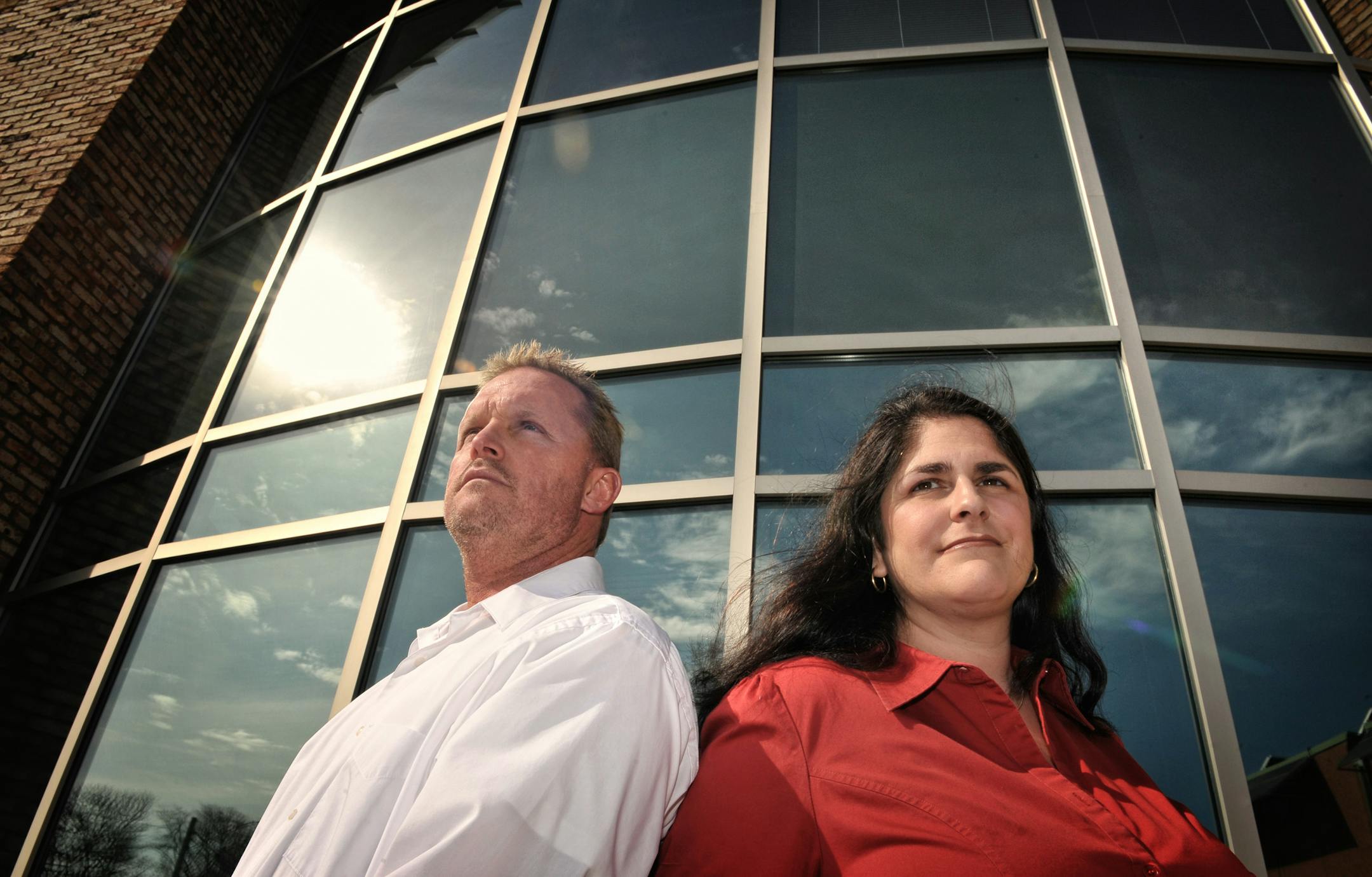
Jaimie Heipel and Diana McKeown of the Green Institute.
Jaimie Heipel and Diana McKeown of the Green Institute. (Catherine Preus — Star Tribune/The Minnesota Star Tribune)

It took a hard-nosed business executive and a very engaged volunteer board to put the green back in the Green Institute.

The Minneapolis icon of a decade ago, which arose from once-contaminated land, retrieves and sells reusable materials from gutted buildings. It has saved hundreds of tons of useful stuff from landfills and millions of dollars from energy bills since 1993.

"When I interviewed for my first job here, I told them that I recycled my beer cans and paper, but I probably wasn't the greenest guy," recalled Executive Director Jamie Heipel, who came aboard to run the institute's "ReUse Center and Deconstruction Services" in 2003. "We used to do a lot of different things. Today, we go after things that fit our green niche and that also are economical."

Heipel, 42, joined the Green Institute after nearly seven years at Ameriprise Financial Inc., working as kind of an Everyman George Clooney, the corporate hatchet man of "Up in the Air." Heipel spent six years trying to help marginally profitable Ameriprise planners get profitable or get out.

Heipel and his wife tired of his road-warrior schedule, and he went looking for work. He was hired by the Green Institute's former executive director, who was focused on the neighborhood and a vision.

"We used to kind of just chase grant money," said board president Lisa McDonald, a corporate sales manager and former Minneapolis City Council member. "We have figured out where we want to go and how we want to get there. But now that the environmental and energy movements are going gangbusters, we had to make sure our programs make sense. ... Jamie wants to make sure that everything we do fits our mission and also that it produces revenue."

The institute, in the Phillips neighborhood in south Minneapolis, served an early and important role as an environmental symbol and then, eventually, in translating green thinking from concept to construction. Institute programs save money and energy for residents and small businesses. The institute's building features passive solar, solar collectors and a green roof that yielded data incorporated into other buildings.

Heipel set about paring costs when he took over as executive director in 2006. It was a bit of a culture shock at a place conceived as a community victory 20 years ago when it thwarted Hennepin County's plans to expand a garbage-transfer station in the middle of a working-poor neighborhood that was sick of other people's trash.

City and county officials didn't enlarge the transfer station. Instead, they accelerated what have become nationally recognized recycling programs and the development of new markets for steel, paper, wood, glass and plastic.

The institute building arose in 1998 on what had been polluted land near Hiawatha Avenue and Lake Street, just west of the light rail tracks. As recently as two years ago, Heipel was unsure the institute, burdened with $5 million in mortgage debt and a city loan, could remain open, despite a building full of a dozen premium-paying tenants.

Paying down debt

Heipel shut down one of three ReUse Centers to focus on one in Maplewood and one in the Hi-Lake Shopping Center in Minneapolis. Business is up, thanks to a center overhaul by Wellington Management, the new Hi-Lake owner.

He shut down two other programs and shrank Green Institute employment to 25 from about 50 a decade ago. Most employees work on building deconstruction crews that provide 75 percent of the ReUse Center material and provide training for young workers with troubled pasts.

The Green Institute also sold its building to Wellington Management in 2009 for $5.2 million and paid off Western Bank and the city. Heipel settled about $480,000 in old debts to vendors for about $240,000.

Heipel, paid a salary of $92,000 by the nonprofit's board, said he expects to generate positive cash flow this year on up to $1.1 million in revenue.

"We now run this by making short-term decisions that enable us to have a sustainable business," he said.

The institute's Diana McKeown has responsibility for a metro-wide program of Clean Energy Resource Teams that provide technical assistance, conservation programs and energy-saving products at bulk prices to small businesses and neighborhood groups. One of the most popular products is a discounted "Vendingmiser," which cuts the electrical use of vending machines by half, or about $150 per year.

Energy-saving grant

On Friday, the Green Institute was notified it has won a $227,000 grant from the Minnesota Office of Energy Security to help 50 small restaurants, grocery stores and convenience stores in Minneapolis cut their energy bills over the next three years, according to Green Institute engineer Nancy Kelly.

Most of these ma-and-pa businesses are run by immigrants and minorities who operate on a shoestring.

"The objective [is] to develop stronger rebate programs to address this energy-intensive business sector across the state and to encourage adoption and implementation of sustainable best practices among small businesses," Kelly said.

Neal St. Anthony • 612-673-7144 • nstanthony@startribune.com

about the writer

about the writer

Neal St. Anthony

Columnist, reporter

Neal St. Anthony has been a Star Tribune business columnist/reporter since 1984. 

See Moreicon

More from Business

See More
card image
card image
