

As new year approached a century ago, most people in the West looked forward to 1914 with optimism. The hundred years since the Battle of Waterloo had not been entirely free of disaster — there had been a horrific civil war in America, some regional scraps in Asia, the Franco-Prussian war and the occasional colonial calamity. But continental peace had prevailed.
Globalization and new technology — the telephone, the steamship, the train — had knitted the world together. John Maynard Keynes penned a wonderful image of a Londoner of the time: "sipping his morning tea in bed" and ordering "the various products of the whole earth" to his door (much as he might today from Amazon) — and regarding this state of affairs as "normal, certain and permanent, except in the direction of further improvement."
The Londoner might well have had by his bedside table a copy of Norman Angell's "The Great Illusion," which laid out the argument that Europe's economies were so integrated that war was futile.
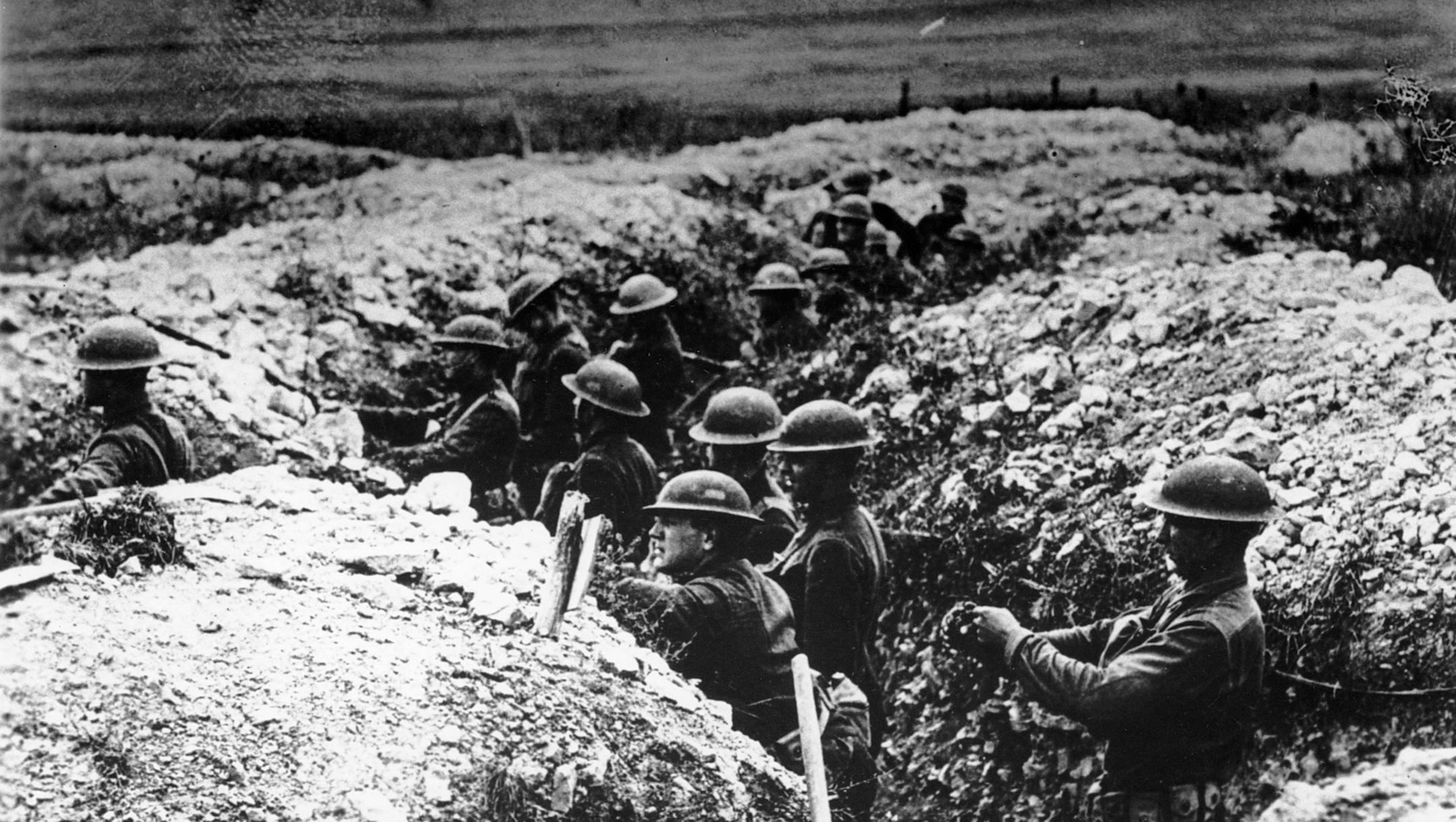
Yet within a year, the world was embroiled in a most horrific war. It cost 9 million lives, and many times that number if you take in the various geopolitical tragedies it left in its wake — from the creation of Soviet Russia to the too-casual redrawing of Middle Eastern borders to the rise of Hitler.
From being a friend of freedom, technology became an agent of brutality, slaughtering and enslaving people on a terrifying scale. Barriers shot up around the world, especially during the Great Depression of the 1930s. The globalization that Keynes' Londoner enjoyed only really began again in 1945 — or, some would argue, in the 1990s, when Eastern Europe was set free and Deng Xiaoping's reforms began bearing fruit in China.
The driving force behind the catastrophe that befell the world a century ago was Germany, which was looking for an excuse for a war that would allow it to dominate Europe. Yet complacency was also to blame. Too many people, in London, Paris and elsewhere, believed that because Britain and Germany were each other's biggest trading partners after America, and there was therefore no economic logic behind the conflict, war would not happen.
As Keynes put it: "The projects and politics of militarism and imperialism, of racial and cultural rivalries, of monopolies, restrictions and exclusion, which were to play the serpent to this paradise, were little more than the amusements of [the Londoner's] … daily newspaper."
Humanity can learn from its mistakes, as shown by the response to the 2008 economic crisis, which was shaped by a determination to avoid the mistakes that led to the Depression. The memory of the horrors unleashed a century ago makes leaders less likely to stumble into war today. So does the explosive power of a modern conflagration: the threat of a nuclear holocaust is a powerful brake on the reckless escalation that dispatched a generation of young men into the trenches.


