

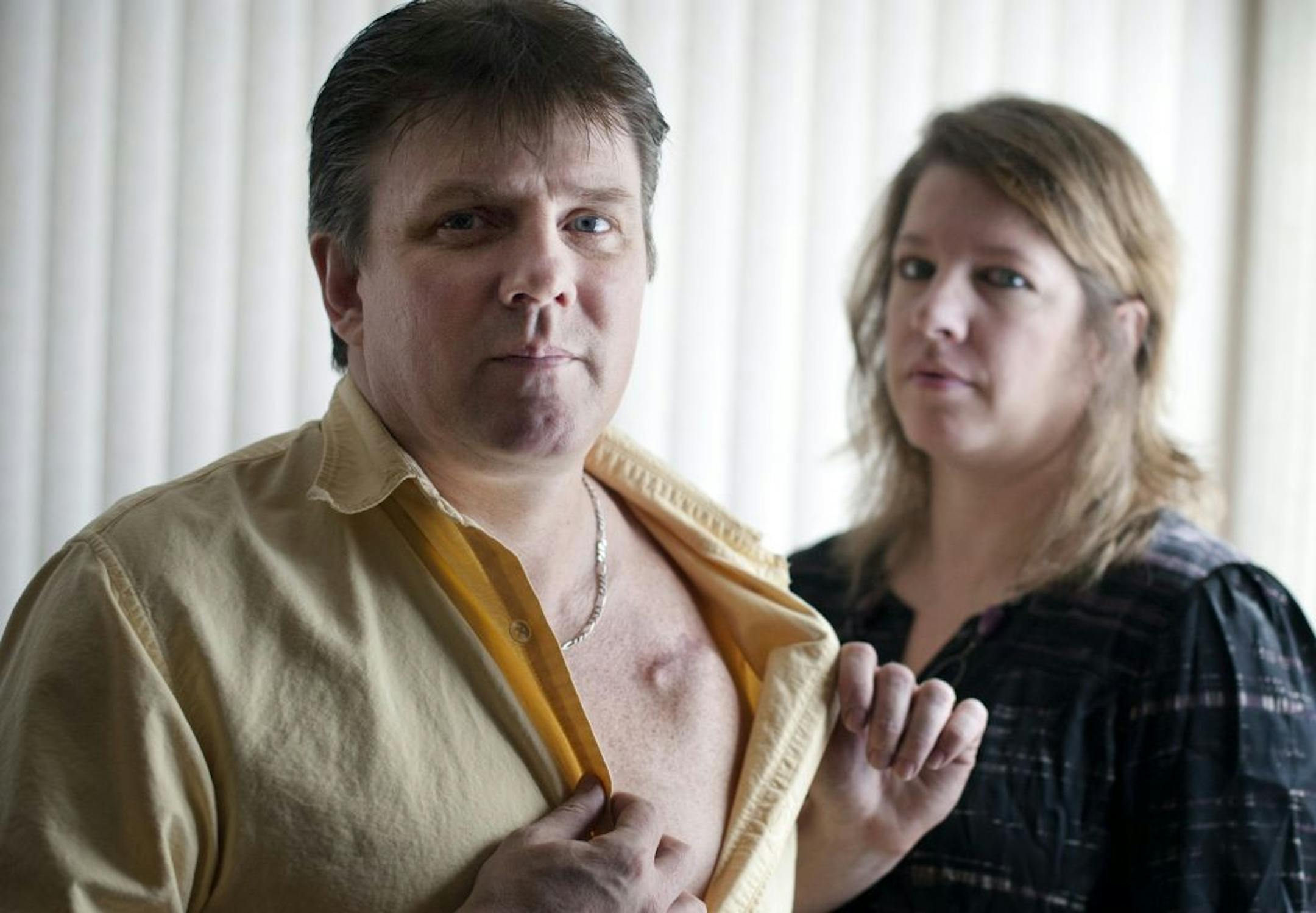
In December, when the U.S. Food and Drug Administration recalled St. Jude Medical's Riata defibrillator lead over potential risks of injury or death, it left about 76,000 U.S. patients facing a serious question: What do I do now?
The Riata leads were pulled off the market because wires have broken free from the outer insulation in some of the devices, which shock the heart when they sense an irregular heartbeat. The discovery raised fears that damaged wires might not deliver lifesaving treatment when needed -- or deliver an unnecessary jolt.
But there seems little consensus on the next step for those who have the Riata leads connected to their hearts. Unlike a defective toaster or recalled automobile, implanted medical devices aren't easy to take back.
The issue has spurred intense debate among physicians and plenty of anxiety among patients. St. Jude Medical is conducting an evaluation study of at least 500 patients in the United States, Canada and Japan and has recommended that doctors monitor their Riata patients.
"We need more data and more information to inform decisionmaking," said Dr. Mark Carlson, medical director and senior vice president at St. Jude.
That seems to be about the only thing on which all parties agree -- the need for more information.
"Now that it's recalled, we don't have the data we need to manage it," said Dr. Robert Hauser, a cardiologist at Abbott Northwestern Hospital in Minneapolis who conducted a "Riata Summit" on Jan. 20. "We are ill-prepared to counsel our patients because we do not have the clinical evidence to support any recommendations."
In 2010, St. Jude sent a letter to doctors, alerting them to a problem with Riata and Riata ST leads, wires that run from a defibrillator to the heart.



