

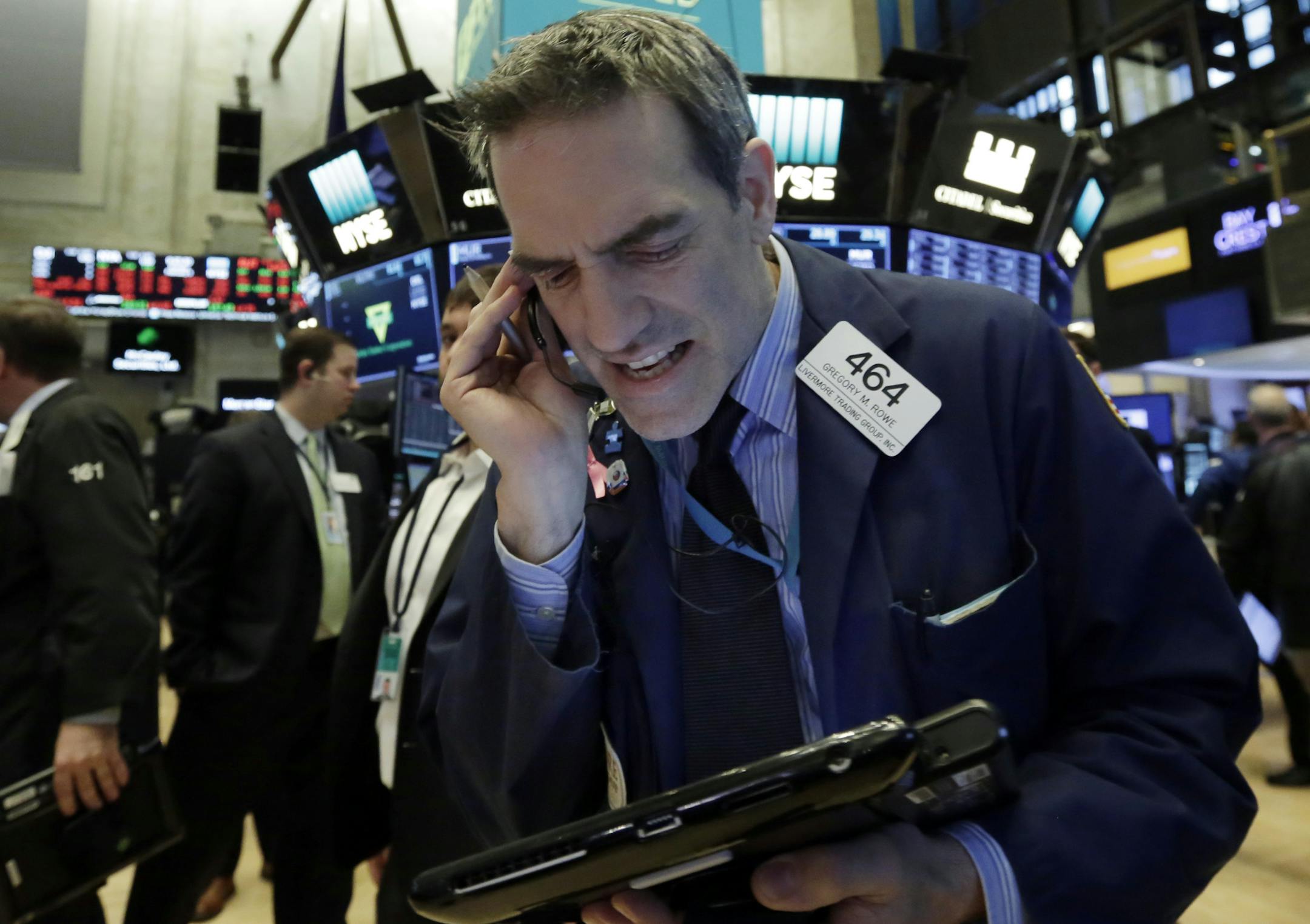
With this market, it's always something. First it was inflation. Then it was technology companies, and then North Korea and then the Federal Reserve's policy on interest rates. And a trade war?
Prepare for more dizziness with the latest economic worry being the inverted yield curve, a suitably wonky bit of information that just sounds bad. In fact, it is said to be directly linked to the future health of the economy. The shape of the yield curve has been changing and is nearing an inversion which experts say is a condition that has existed before the past seven recessions.
For starters, here's how the yield curve works. It is a plotting of the yield on government bonds by the maturity of those bonds — from those that mature in the next couple of years to those that mature in 30 years. Most of the time, the yield curve shows a healthy difference between the return you would get on a short-term bond (a two-year maturity is typically the benchmark here) and a long-term bond like a 10-year U.S. Treasury bond.
The concept is, of course, that the longer you have to commit your money in an investment, the better return you will demand (this is called the term premium for those keeping score at home.) A normal yield curve is positively sloped, reflecting increasing yields as the maturity of the bond increases.
So what causes the yield curve to flatten or invert? Here is where economics comes in. Typically a flat or inverted yield curve exists when the Federal Reserve is raising short-term interest rates. This causes short-term rates to, well, rise. And why does the Fed raise short-term interest rates? To keep the economy from overheating and creating inflation.
If investors believe that the Fed will be successful in managing inflation or that rising short-term interest rates are bad for future economic growth, they will be more comfortable owning long-term Treasury bonds. This will in turn drive more demand for long-term bonds and drive down long-term yields (as the price of a bond increases, its yield decreases).
The combination of rising short-term rates and declining long-term rates causes the yield curve to flatten and possibly invert.
We are nearing a flat yield curve (very little difference between the yields on two-year and 10-year government bonds) and whenever that happens, investors worry that the dreaded inverted yield curve is coming. Here are a few points about yield curves to keep you from burying your money in the backyard:


