

Shares of Minnesota biofuel producer Gevo Inc. dropped 35 percent Tuesday after the company backpedaled on plans for commercial production of a higher-value alcohol called isobutanol.
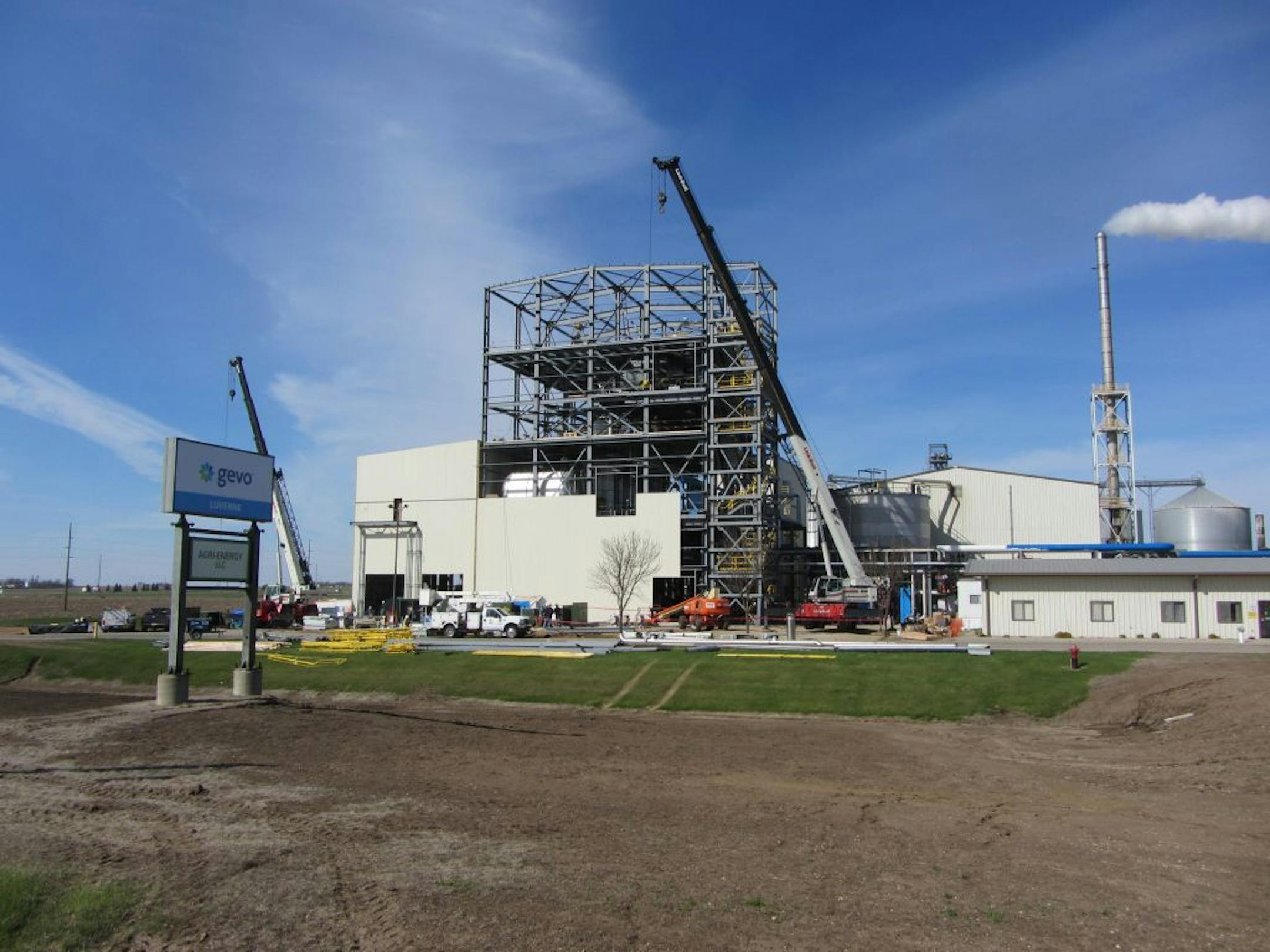
Gevo said it would resume ethanol production at its sole plant in Luverne, Minn., while its scientists work out bugs in its proprietary technology for the new biofuel, which went into production in May after a $40 million plant retrofit.
"Our throughput -- the rate of production -- is not on a track I like," Gevo CEO Patrick Gruber told analysts in a late Monday conference call. "The good news is we know what we need to do."
The Luverne plant is the world's first commercial-scale effort to produce isobutanol from renewable sources. Isobutanol is an alcohol that can be added to gasoline like ethanol, turned into specialty chemicals to make various other products, and used as a jet or marine fuel.
Gruber didn't offer details on the problem, citing proprietary reasons, but indicated that the culprit is literally a bug. In an apparent reference to the yeast used to ferment isobutanol, he said there are "tweaks we can make in our bugs to fix it."
But the plant, with its giant fermentation tanks, is the wrong place to solve the problem, he said. It makes more sense to earn money producing ethanol in Luverne while the problem is addressed, he added. Both processes rely on fermenting corn.
Two investment banks immediately downgraded the company's stock to neutral, and shares fell to their lowest point since Gevo's February 2011 initial public offering.
The shares closed at $2.14, down $1.17, in the stock's second-heaviest day of trading ever. The price had hovered around $10 per share earlier this year, and was as high as $25.55 in April 2011.



