

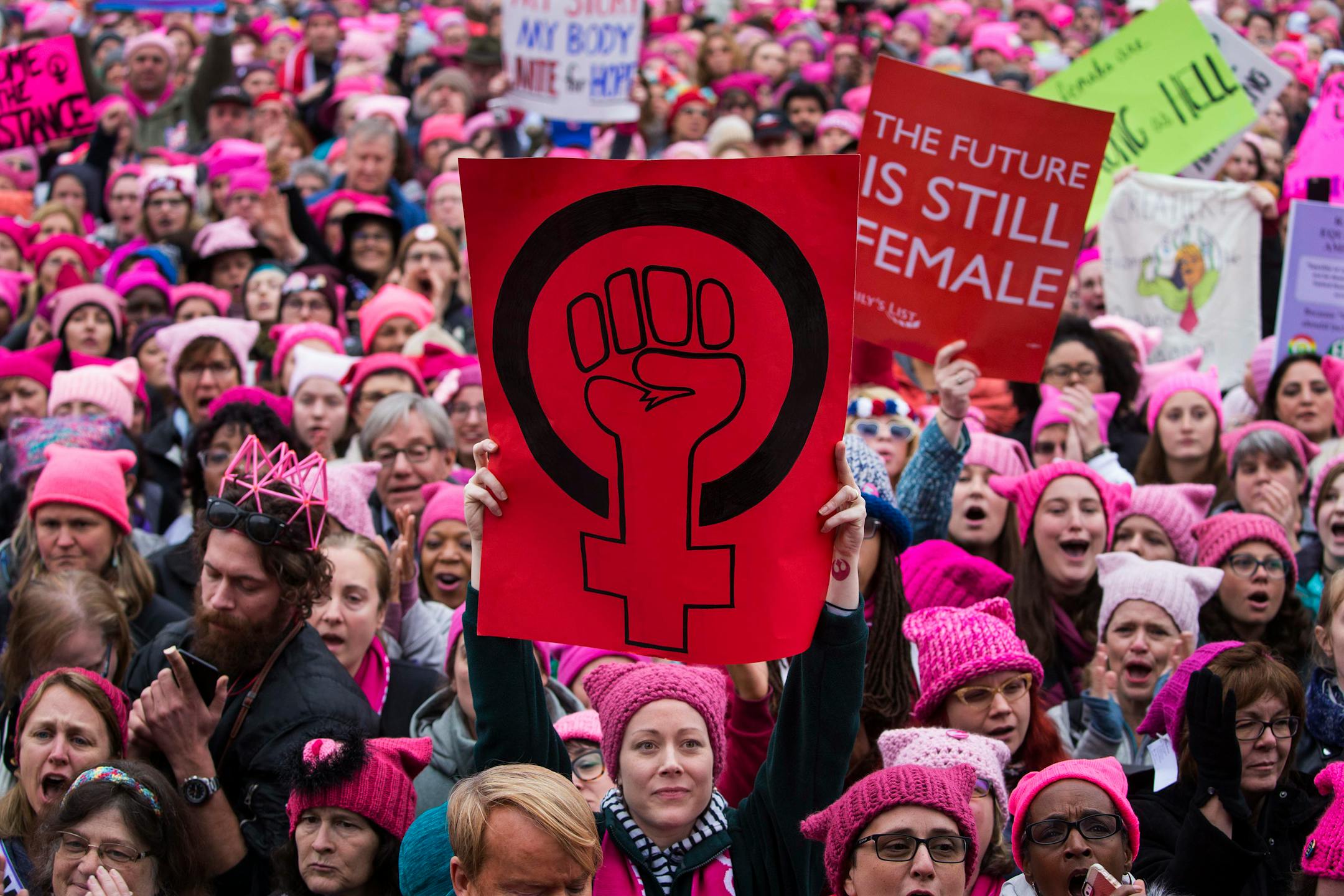
Donald Trump's upset victory over Hillary Clinton in 2016 inspired a surge in political activism among Democratic women. Six years later, that energy remains mostly intact — and has spread to the Republican Party as well.
Beginning with the Women's March in 2017, held on Trump's first full day as president, the anti-Trump "resistance" movement spoke with a distinctly female voice. Scholars and journalists who examined grassroots liberal politics during the Trump years observed a proliferation of women-led citizen networks dedicated to defeating the president and his Republican allies.
One way they did this was by deciding to become candidates themselves. The share of Democratic nominees for the U.S. House who were women jumped from 29% in the 2016 election — a record at the time — to 42% in 2018, rising again to 48% in 2020. And as more women ran for office, more women won. The number of Democratic women increased from 62 to 89 in the House, from 14 to 16 in the Senate, and from three to six in state governorships over the four years of the Trump presidency, according to data compiled by the Center for American Women and Politics at Rutgers University.
Trump's defeat in 2020 raised the question of whether this activism among women would persist once he was no longer president. Had the "resistance" resulted in greater female representation in the Democratic Party? Or would passion fade without the constant fuel provided by Trump's presence in the White House?
The recent conclusion of the 2022 nomination season provides an opportunity for some preliminary analysis. According to figures I've compiled, women constitute 43% of all Democratic nominees for House seats this year — a modest decline from 2020, but roughly equal to 2018 and well above any previous election. Women represent 40% of Democratic nominees for Senate or governor in 2022, marking a new record (the previous high was 38% in 2018).
But a relatively challenging political environment means that the raw number of female Democrats in office won't increase much — or at all — after this fall's elections, even if the gender balance within the party continues to shift.
Democratic Senators Catherine Cortez Masto of Nevada and Maggie Hassan of New Hampshire are both seeking second terms in perennially competitive states, while election forecasters suggest that at least a dozen Democratic women in the House are at serious risk of losing their seats. In governor's races, a near-certain Democratic pickup by a female candidate in Massachusetts and a decent chance of victory in Arizona could be offset by potential losses in Kansas and Oregon.
In fact, it's quite possible that most newly elected women next year will serve on the opposite side of the partisan aisle. Republican leaders and interest groups have responded to the recent wave of female Democratic candidates by aggressively recruiting more female candidates of their own. The proportion of Republican House nominees who are women increased from 13% in 2018 to 22% in 2020 and 19% this year. Women also constitute 21% of Republican Senate or gubernatorial nominees in 2022, representing a historical high point for the party.


