

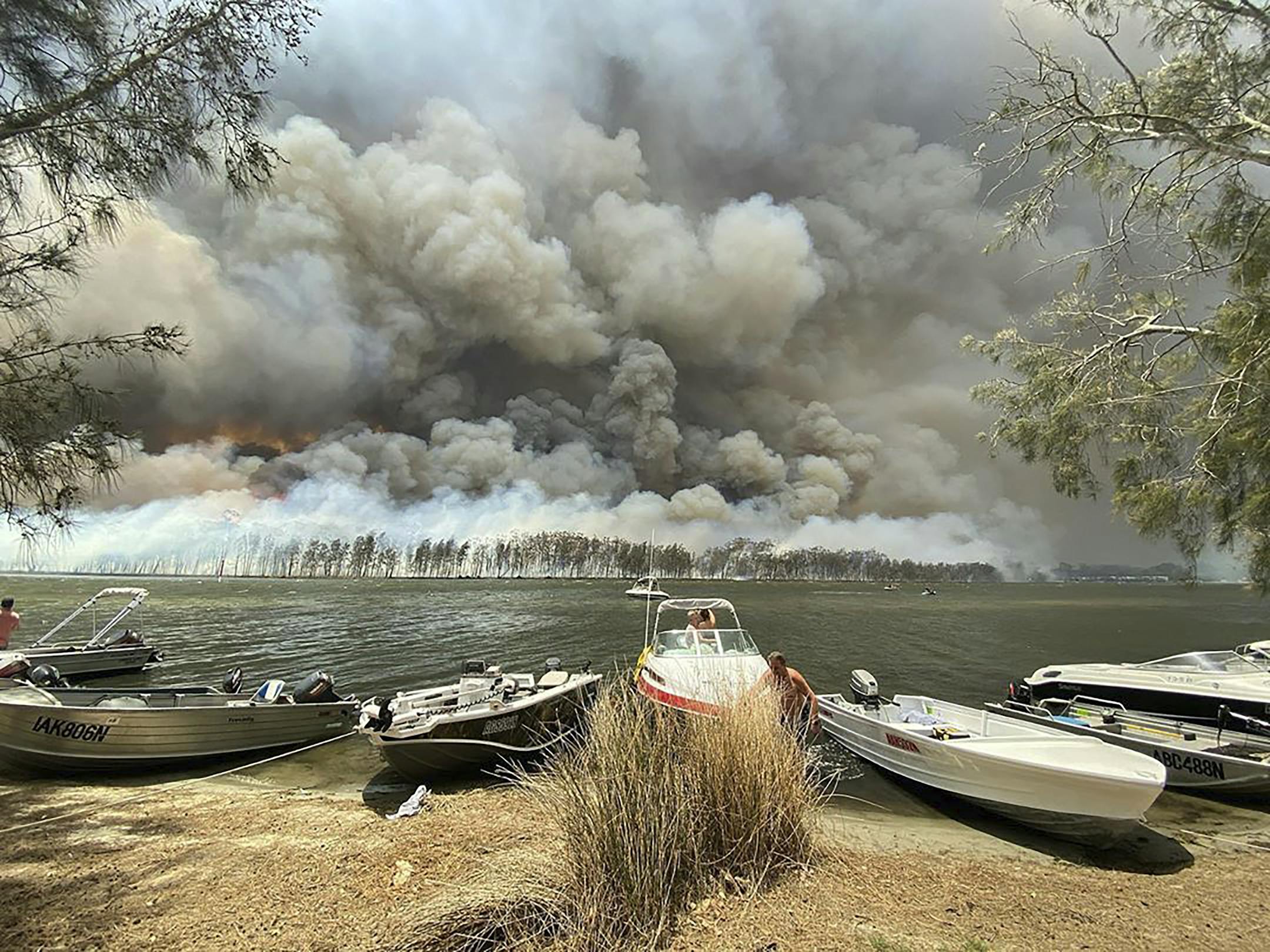
Over the last decade, scientists learned a great deal about the climate, much of it concerning the connection between global warming and extreme events — heat waves, hurricanes, floods, droughts and wildfires.
There has been, for many years, an understanding that a warmer world would be a more temperamental one, and measurements upon measurements show the average temperature is rising in step with those predictions. But until recently it was hard to prove that our changed atmosphere was having an influence on extreme events, which, after all, have been drowning and parching and starving people long before anyone started burning fossil fuels.
Asking whether climate change caused a particular wildfire or hurricane is the wrong question, said Benjamin Cook, a climate researcher with the Lamont-Doherty Earth Observatory. But in the last decade, the ability to model the climate has advanced so much, he said, that people can determine whether human-generated global warming made a storm wetter or a drought longer than it otherwise would have been. Such attribution, he said, is the biggest advance of the 2010s.
"This is important because extreme events are really where the impacts of climate change are being felt," he said. It's not necessarily alarming to hear that global temperatures will creep up another couple of degrees, but it's another thing to realize that human activity contributed to a string of deadly heat waves in Europe — with temperatures climbing well above 108 in Paris — as well as the apocalyptic fires that destroyed what had been some of the most beautiful parts of California. "There's a clear climate change signal," he said.
If there's any controversy now among scientists, it's over whether they were too reluctant to sound the alarm about extreme events in the past. There was a reluctance to make recommendations based on probabilities and reasonable assumptions. Now there's evidence to back them.
Over the last decade, climate researchers have been filling in gaps in their data on past temperatures, and improved models that are calibrated against the past to predict the future. That's led to better predictions for weather as well, thanks to more complete data, better science, and more computer power.
There's more data on cloud formation, on precipitation, on groundwater and on what's happening underneath ice shelves, said Gavin Schmidt, director of NASA-Goddard, Institute for Space Sciences. All that basic knowledge has come about from an exceptionally productive ten years of remote sensing.
The Arctic is warming faster than lower latitudes, and this is affecting the wind patterns — especially the jet stream. Researchers say that a weakening of those winds is part of the reason storms such as Hurricane Harvey stall, and dry air lingers in other places for weeks.


