

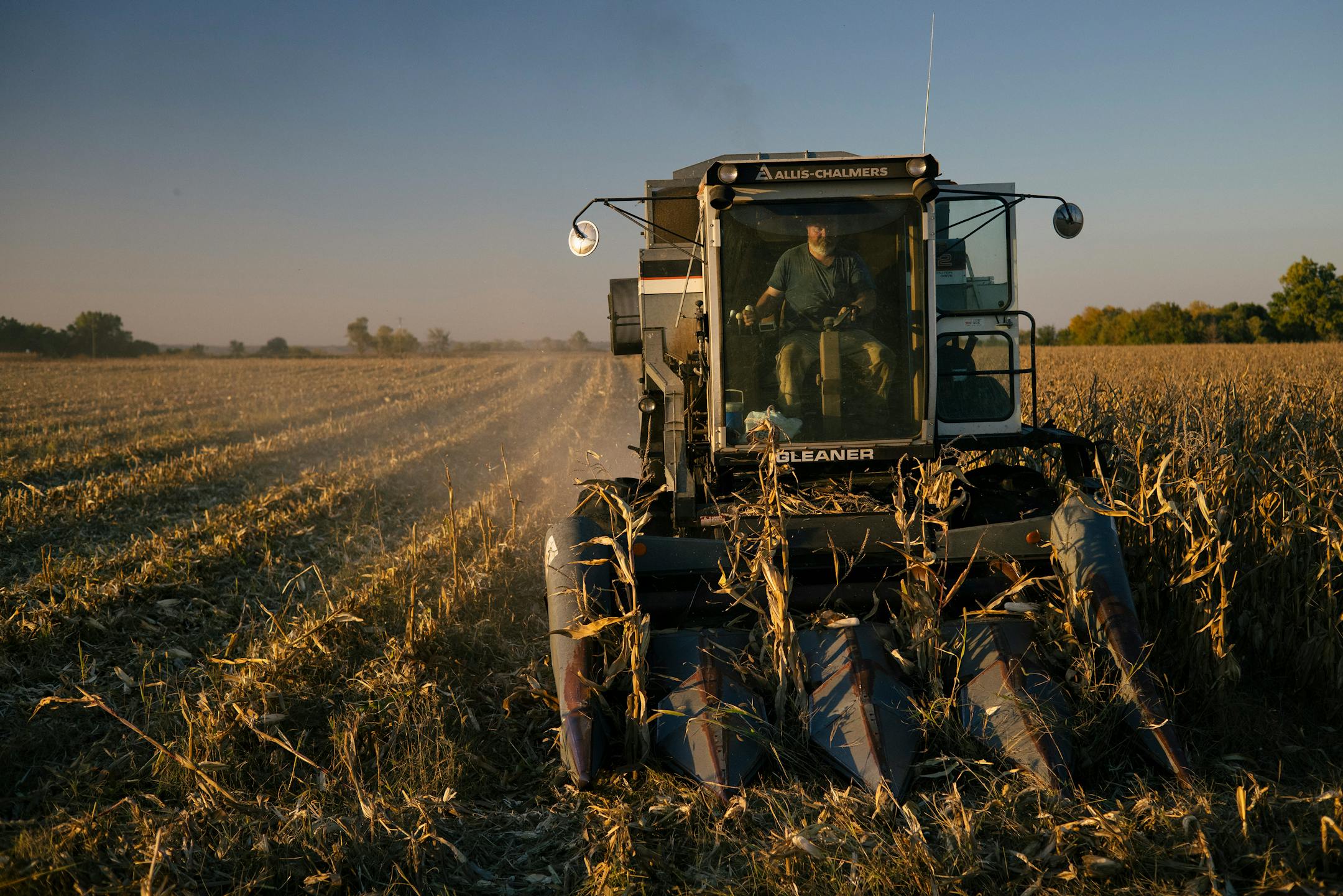
In his earliest memories of his family's farm, Ethan Uhlir rides in an old truck with his grandfather Arden, feeding cattle and mending fences.
Before Arden Uhlir's death five years ago, he "reminded me that I was a good cattleman," Ethan said, and "I have to keep it like that."
Ethan, now 17, still notices his grandfather's wiring technique in fence posts scattered across the farm in the rolling plains of northeast Nebraska, along the South Dakota border. He walks along the same paths as six generations of Uhlirs, but Ethan may be the last to work the land.
"There's enough labor for four people but not enough income for one," his father, Jeff Uhlir, said.
Like most farmers, Jeff Uhlir sells his cattle, corn and soybeans at prices set by a global commodities market, but only large farms can absorb the narrow profit margins.
Though the family's small farm is valuable — its 880 acres are assessed at $1.3 million — property taxes eat up most of the money it does make.
Even in a good year when the farm grosses $60,000, Uhlir feels lucky if he has money left over for savings.
"I'll have to work an hour before my funeral," Uhlir, 51, said. "I have no retirement."


