

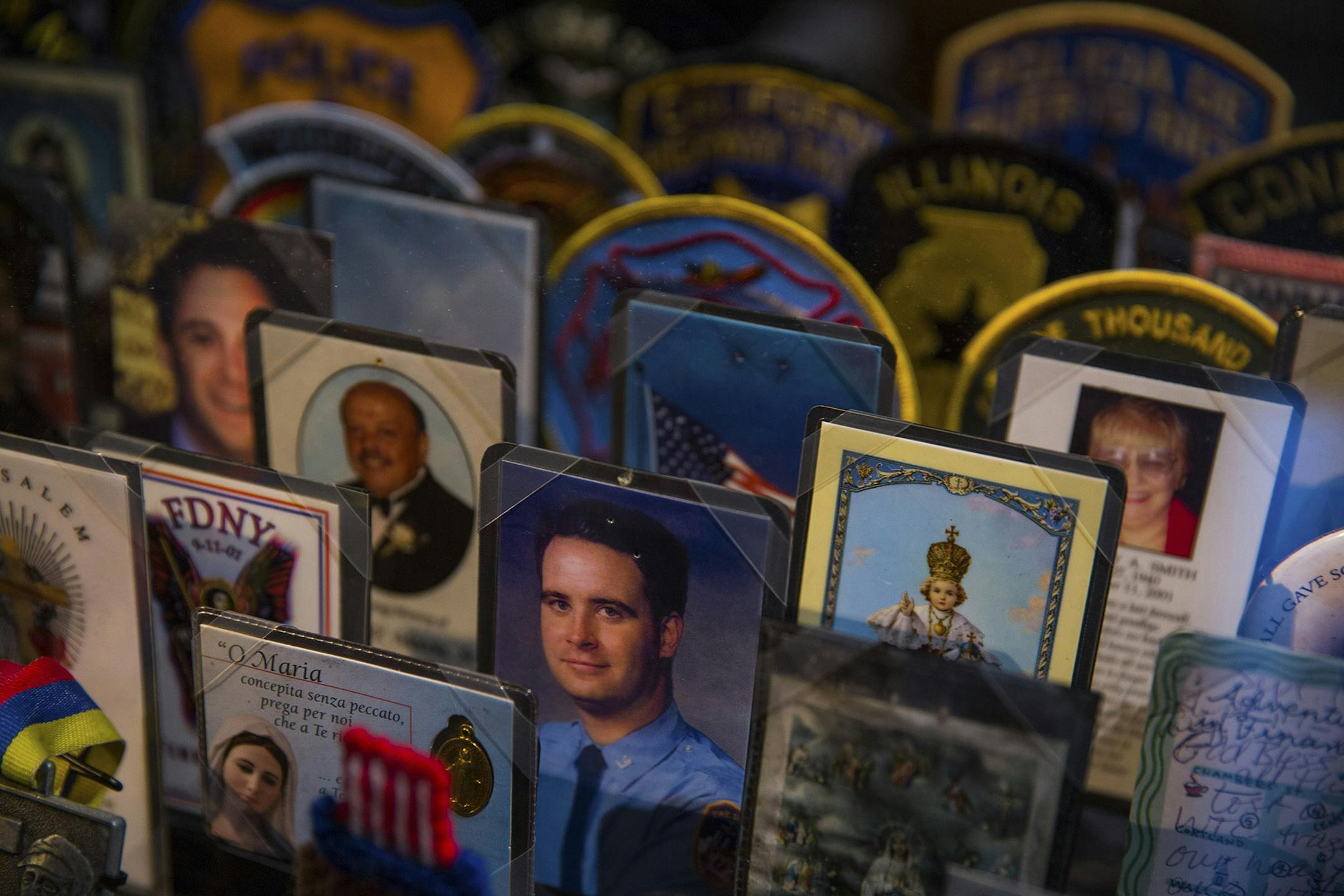
When it comes to tragedy, there's a thin line between solemn commemoration and crass commercialization. It's crossed all the time.
The New York Post recently reported that relatives of 9/11 victims are outraged that the National September 11 Memorial Museum will be home to a gift shop that peddles T-shirts, mugs and rescue-dog vests, as well as books and other educational material relating to the deadly terrorist attack.
"To me, it's the crassest, most insensitive thing to have a commercial enterprise at the place where my son died," the mother of one victim told the Post.
The visceral response of a parent who will always feel the agony of loss is understandable. But as a ThinkProgress article points out, museums dedicated to all sorts of tragedies — from the U.S. Holocaust Memorial Museum to the Oklahoma City Museum, which commemorates a domestic terrorist attack — have gift shops.
Indeed, as the article notes, not having a museum shop would be the aberration. The commercialization of tragedy is not just a U.S. phenomenon. There's a bookstore at the Auschwitz-Birkenau museum, and souvenirs are available at the Anne Frank House.
Museums rely on these shops for revenue. According to Sept. 11 memorial officials, the nonprofit relies on private fundraising, donations, ticket revenue and "carefully selected keepsake items for retail." And it is not alone when it comes to the tragedy trade.
Two days after the Boston Marathon bombing, the Daily Mail reported that the U.S. Patent and Trademark office received applications from two retailers rushing to market the "Boston Strong" slogan. Since then, "Boston Strong" has morphed into its own hashtag, and the slogan is used to sell T-shirts and hats, among a plethora of products. In some (but not all) cases, proceeds are donated to marathon-bombing-related charities.
A profit motive connected to tragedy is definitely offensive to some. New York magazine reported on a social media backlash to holiday ornaments and dog sweaters commemorating Hurricane Sandy. And the abundance of Boston Marathon-related merchandise has led to people asking if "Boston Strong" has gone too far.


