

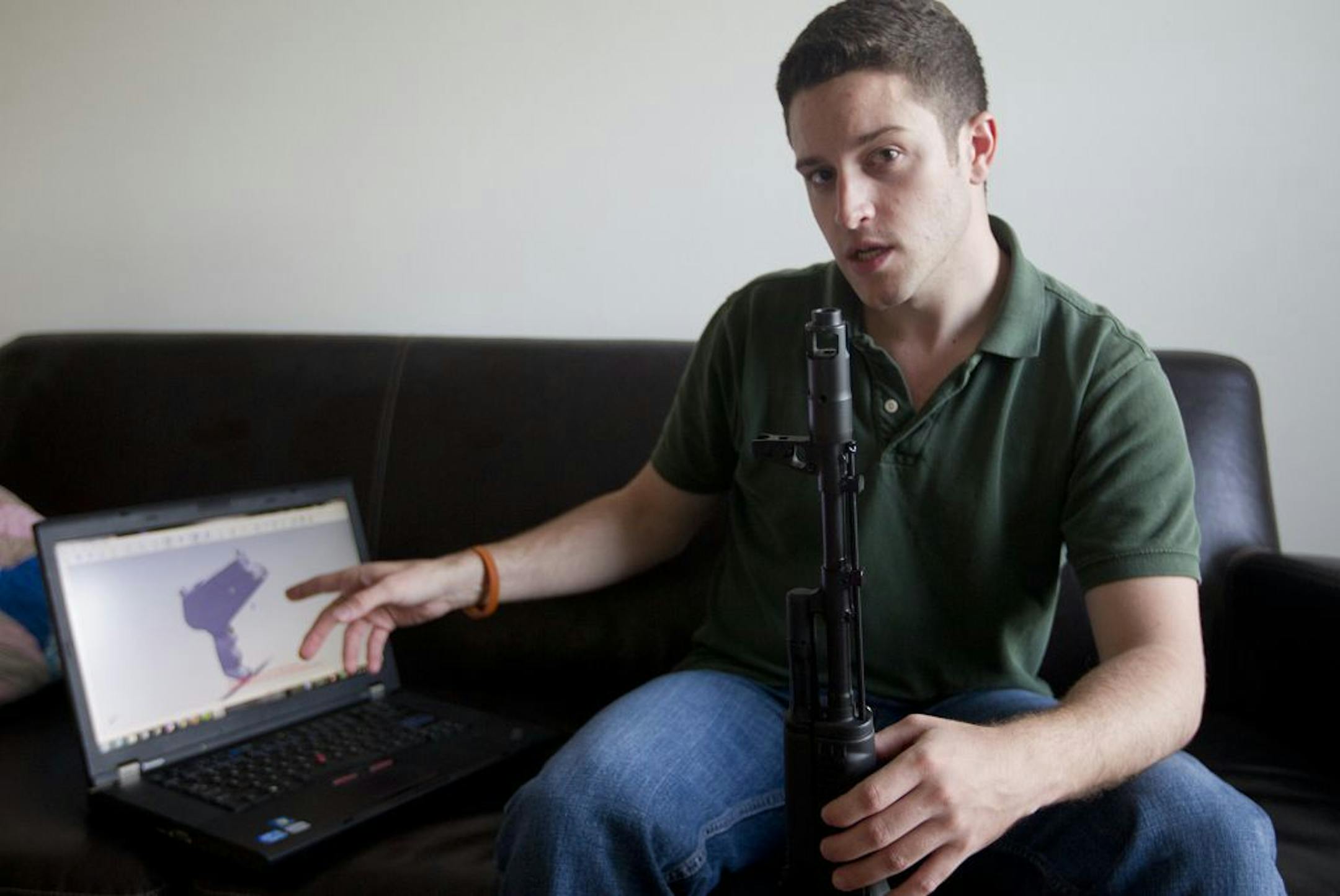
Forbes recently reported the successful test-firing of the world's first 3-D-printed handgun. The weapon, a plastic handgun that fires .380-caliber bullets, has been long in the making. For more than a year, Cody Wilson, a law student and self-described "crypto-anarchist," has been trying to create what he and his allies call a "wiki weapon."
This gun, in Wilson's description, will exist as much online as it does in the real world.
"What we're interested in producing is a digital file . . . containing the information for a 3D-printable weapons system," Wilson announced in a fundraising pitch last summer. "As long as there's a free Internet, that file is available to anyone at any time, all over the world."
After downloading the file, you need to feed it to a 3-D printer, a device that constructs a three-dimensional object according to computer-aided design specs. You'll also need to use a common hardware-store nail as a firing pin - as Wilson explained to Slate writer Will Oremus, the plastic pins they tried "were a little too soft." Add that one metal part and, voila, outside the control of any authorities, you'd have yourself a gun.
"A gun could be anywhere," as Wilson explained in his pitch video. "Any bullet is now a weapon."
For Wilson, creating a working gun is only an incidental aim. "What's great about the wiki weapon is that it only needs to be lethal once," he has said.
That's because the 3-D-printed gun's real purpose is to provoke debate. Wilson argues that once printable guns become a reality, they'll make all gun control efforts moot. Wilson and his allies take it for granted that in the Internet age, information is the one resource that is beyond the control of governments. Authorities may be able to take away your gun, but they can't delete the plans for the gun.
For gun advocates, the beauty of the 3-D weapon is that it shifts gun control from a fight centered on the Second Amendment to one focused on the First. It brings gun advocates into common cause with other global activists who are pushing for all manner of information to flow freely - document-leakers like Julian Assange, copyright fighters like the Pirate Bay, currency libertarians who favor alternative monetary systems (e.g., bitcoin), and Internet-abetted freedom fighters from Syria to Iran to China.


