

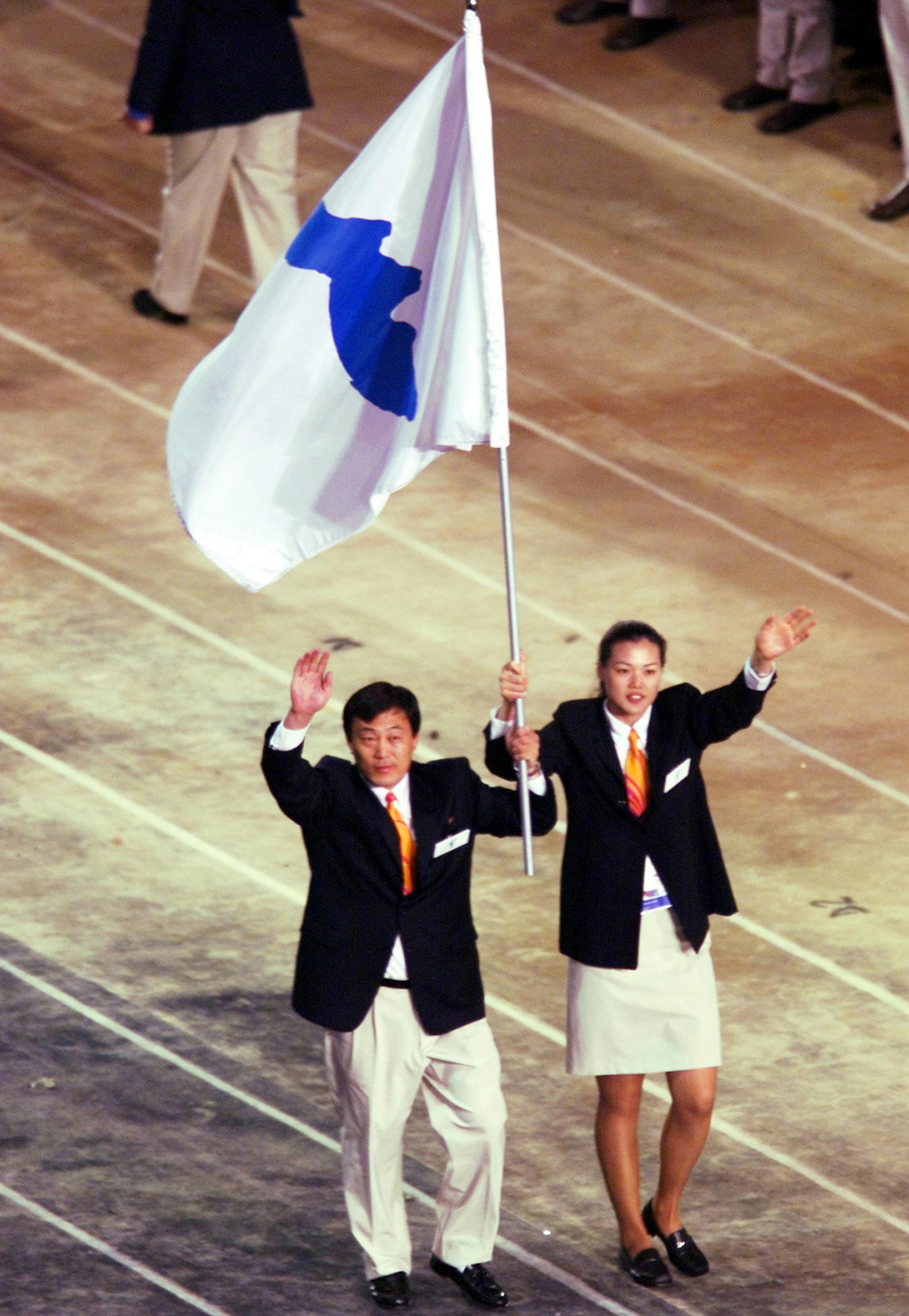
In the lead-up to the 2018 Winter Olympics, scheduled for Feb. 9-25 in Pyeongchang, South Korea, representatives of the two Koreas have resumed direct talks suspended two years ago, and Kim Jong Un's reclusive regime has elected to send a team to the games. South Korea, for its part, is expected to propose that the two squads march together in the opening and closing ceremonies behind a "United Korea" flag.
Such comity would be fully in accord with the modern Olympic ideal as fashioned by the movement's founder, Frenchman Pierre de Coubertin. He saw his project as a wonderful vehicle for international peace, global understanding and goodwill.
But if we go by actual history, rather than the lofty claims of Coubertin and his successors, promises of improved international relations could well turn out to be hollow. Participating nations have always seen Olympiads as perfect opportunities to strut their sovereignty on a global stage.
The disconnect between grandiloquent Olympic ideals and painful realities was established at the very first modern Olympics in Athens in 1896. Held against a backdrop of ongoing Greco-Turkish strife, the games included no Turks. (The Turks would have boycotted if only they'd been invited.) Hungarian athletes refused to participate as part of an Austro-Hungarian imperial squad, while the Irish rejected appearing alongside the English in a British Empire team. (Both groups competed separately, under their own colors.) A German delegation managed to make the show, though only at the last moment. Still reeling from the Franco-Prussian War, France had tried to get the Germans excluded.
Franco-German tensions were also evident at the Paris Games of 1900. On arriving in Paris, the German team encountered graffiti saying, "Pigs — Down with Prussia!" Germany's team captain found a pile of excrement in his bed. Denied opportunities to train on French equipment, the Germans performed poorly, and Germans who won their events often did not receive their medals.
It was the British and Americans who were at each other's throats at the London Games of 1908. The Yanks saw this confrontation as an integral part of America's larger challenge to Britain's political and economic leadership in the world. During the opening ceremony, the American team neglected to lower the Stars and Stripes when passing Britain's royal couple. English fans let out a chorus of catcalls. On the athletic field, too, things quickly got ugly between the Yanks and the Brits. The Americans cried foul when their opponents used heavy iron-soled boots to "pull them over" in the tug-of-war. U.S. President Theodore Roosevelt fully concurred with his country's protests over "so-called British sportsmanship," applauding a postgames parade in New York City at which revelers dragged a papier-mâché effigy of a British lion.
A key dimension of Coubertin's dream for the modern games was an "Olympic truce" modeled on an ancient Greek tradition, whereby warring factions either stopped fighting during the quadrennial Olympic festivals or ensured that the fighting did not disrupt the sacred competitions. In reality, this tradition often went unobserved in the ancient world, and the same has held true for the modern era. When the world went to war from 1914 to 1918, the 1916 Olympics — scheduled for Berlin, of all places — had to be canceled. (Likewise, the Summer Games planned for Tokyo in 1940 and London in 1944 fell victim to World War II.) As for Berlin, it got the Summer Olympics in 1936, and we know what a peaceful portent those "Nazi Games" represented.
Through all the modern Olympiads, the one we might want to keep foremost in mind is Munich's ill-fated summer festival in 1972. Those Munich Games were held in the pro-Western half of a once-unified nation brutally divided by ideology. A central purpose of the organizers was to promote reconciliation between the two Germanys.


