

Opinion editor's note: Star Tribune Opinion publishes a mix of national and local commentaries online and in print each day. To contribute, click here.
•••
Twenty years ago next week, I witnessed the opening salvos of the U.S. invasion of Iraq from the rooftop of the Palestine Hotel in Baghdad. I was among the few foreign journalists not embedded with the American military who remained to cover the start of the war from the capital. It was not my first war as a photographer, but it was the first time I had experienced bombardment in a densely populated urban center.
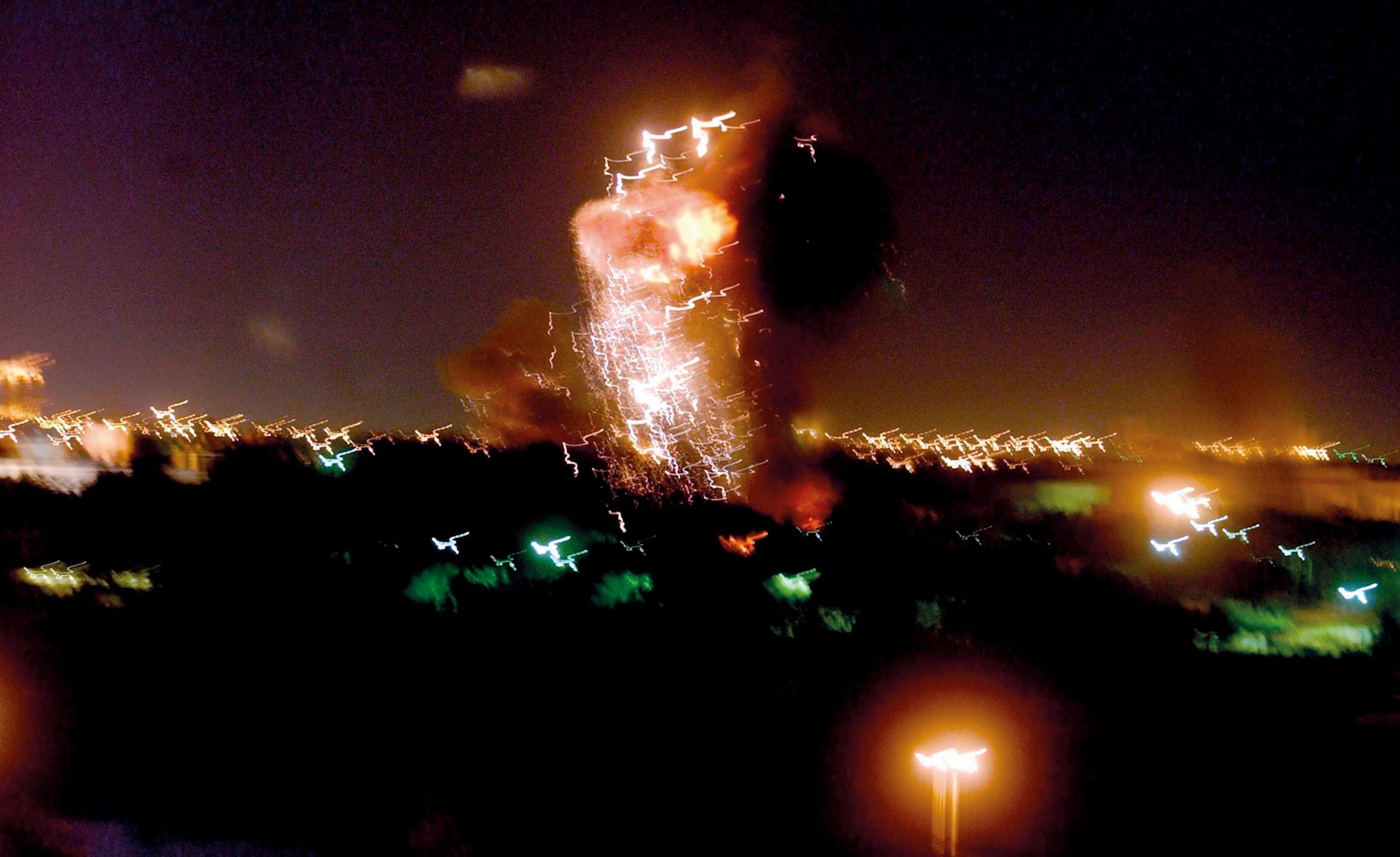
I recall the unnatural silence blanketing the city before the first American cruise missiles were launched. I saw them before I heard them, heading across the river from us toward their targets into what the U.S. military would later call the Green Zone. The silence ended with the reverberation of Iraqi antiaircraft guns, their green and red tracer rounds flashing in the sky like shooting stars. Out of the corner of my eye, a huge flash of light revealed where the first missile hit. Seconds later, the deep rumble of the explosion echoed across the city, its monstrous energy setting off every car alarm in the neighborhood.
Most of the photographs that my colleagues and I took on the hotel roof were out-of-focus shots of fire and smoke in the distance. They captured the spectacle the American military must have imagined when it called the operation "Shock and Awe." They did not show the families huddling in Baghdad that night. They could not capture the uncertainty and fear, and they could not grasp the significance of the moment for Iraq, the U.S. and the world. Still, those blurry pictures were published the next day on the cover of essentially every major Western newspaper, visually framing the public perception of those first days of the war.
As I continued to cover the war, I chased dramatic shots of violent conflict, the kind that make a war photographer's career. I was driven almost entirely by the demands of the daily news, and by the need to prove myself. But events along the way began to complicate my role as a chronicler of the war, and I was forced to reassess my work as a photojournalist.
During the first weeks of the invasion I was arrested by Saddam Hussein's secret police and held in Abu Ghraib prison for eight days. There in the darkest cells of Hussein's terror apparatus, the sounds of men being tortured filled the hallways. The battered bodies of fellow prisoners were occasionally paraded past my cell in the foreigners' wing of the complex, making me wonder if I would be next.
Never had my field of vision been more limited, more controlled than it was in prison, but ironically it was there that I got a glimpse of something usually hidden from view. My role had changed. I was still a witness but without a camera. I was still a journalist but now also a prisoner. I had become a character in the hidden narrative of the war.


