

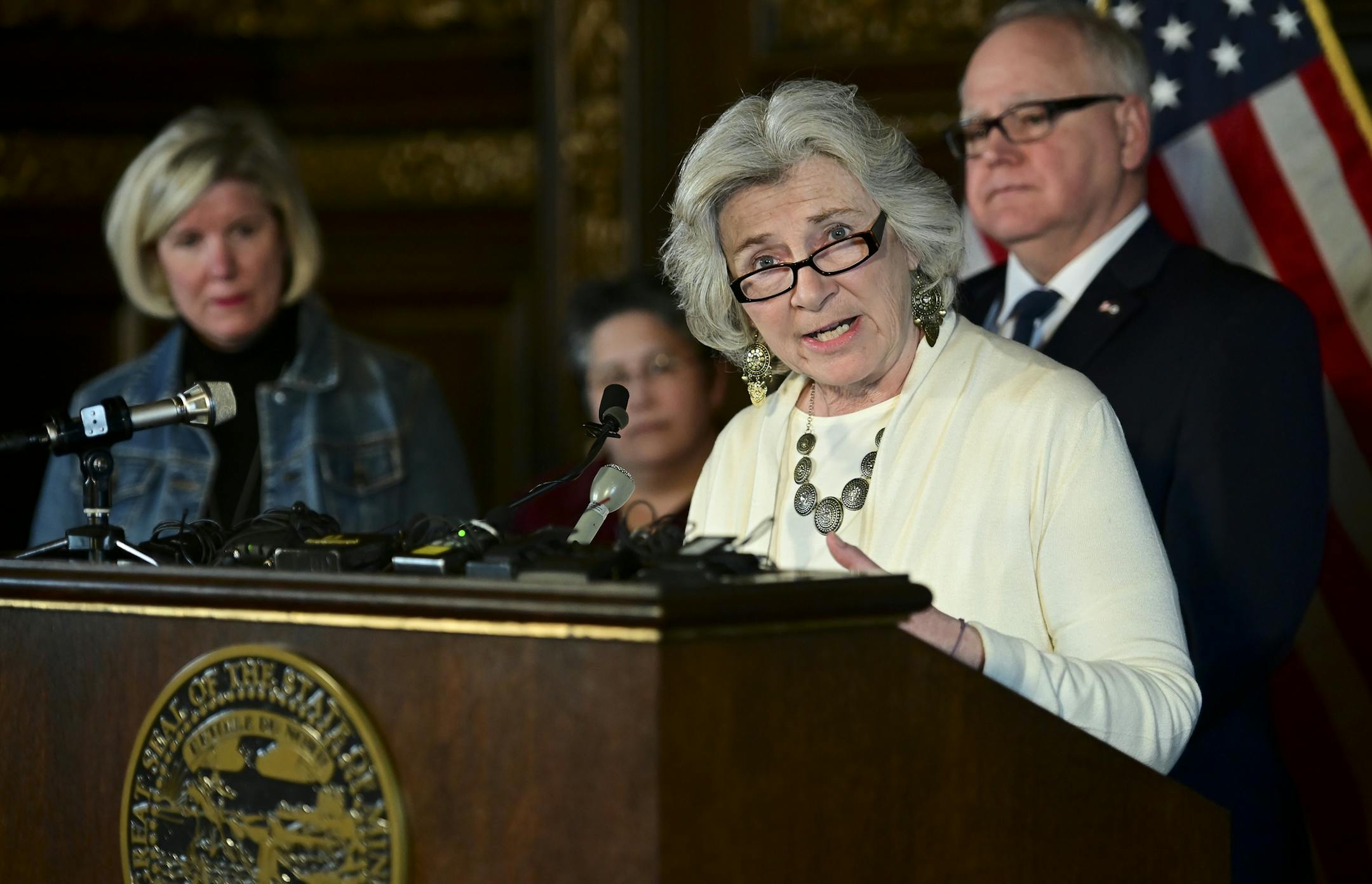
COVID-19 has officially arrived in Minnesota, with Gov. Tim Walz announcing Friday that a Ramsey County resident who had been on a cruise ship contracted the disease.
The news is jarring but shouldn't come as a surprise. The viral disease that originated in China has gone global and marched steadily across the United States this year. Fortunately, its Minnesota greeting party consists of the public health equivalent of a well-armed, battle-tested U.S. Navy SEAL team.
Yes, the aggressive disease trackers at the state Department of Health are that good. Not only that, they're backed up by some serious firepower — the infectious-disease experts at the University of Minnesota, Mayo Clinic and other medical centers in the state's world-class health care system.
That's no guarantee against more cases or that daily life won't be disrupted. But it should serve as a confidence-booster now that the virus has made its presence known here. It's also a reminder that taxpayer dollars spent fortifying the state's public health resources have been a wise investment. Few other states are as well-prepared to detect and contain COVID-19, the disease caused by a new coronavirus strain.
Thanks to strong staffing, Minnesota is able to put a large number of scientific boots on the ground during a public health crisis compared to many states. Its disease detectives are talented and experienced. In recent years, they successfully contained an outbreak of one of the world's most contagious illnesses — measles — that originated in the Twin Cities metro area's Somali-American community in 2017.
Many on staff also are veterans of the world's last pandemic, which happened in 2009 and involved influenza. Being on public health's front lines isn't new for Minnesotans. That's where their jobs routinely take them, and their record of working with patients and communities to stop disease spread is impressive.
This competent readiness didn't happen overnight. It's the result of decades of farsighted leadership within the Minnesota Department of Health and the support of state political leaders, both Republicans and Democrats. Minnesota has been especially well-served by the epidemiologists — scientists who specialize in disease distribution, spread and control — who have led outbreak investigations over the years.
Under former state epidemiologist Michael Osterholm, now at the University of Minnesota, MDH gained renown for its ability to quickly trace the origins of foodborne illness. A key part of its successful formula: mounting a ferocious effort to interview those who are ill. Casting a wide net, then sifting through the answers, allowed the team to identify commonalities and hone in on an outbreak's origin.


