

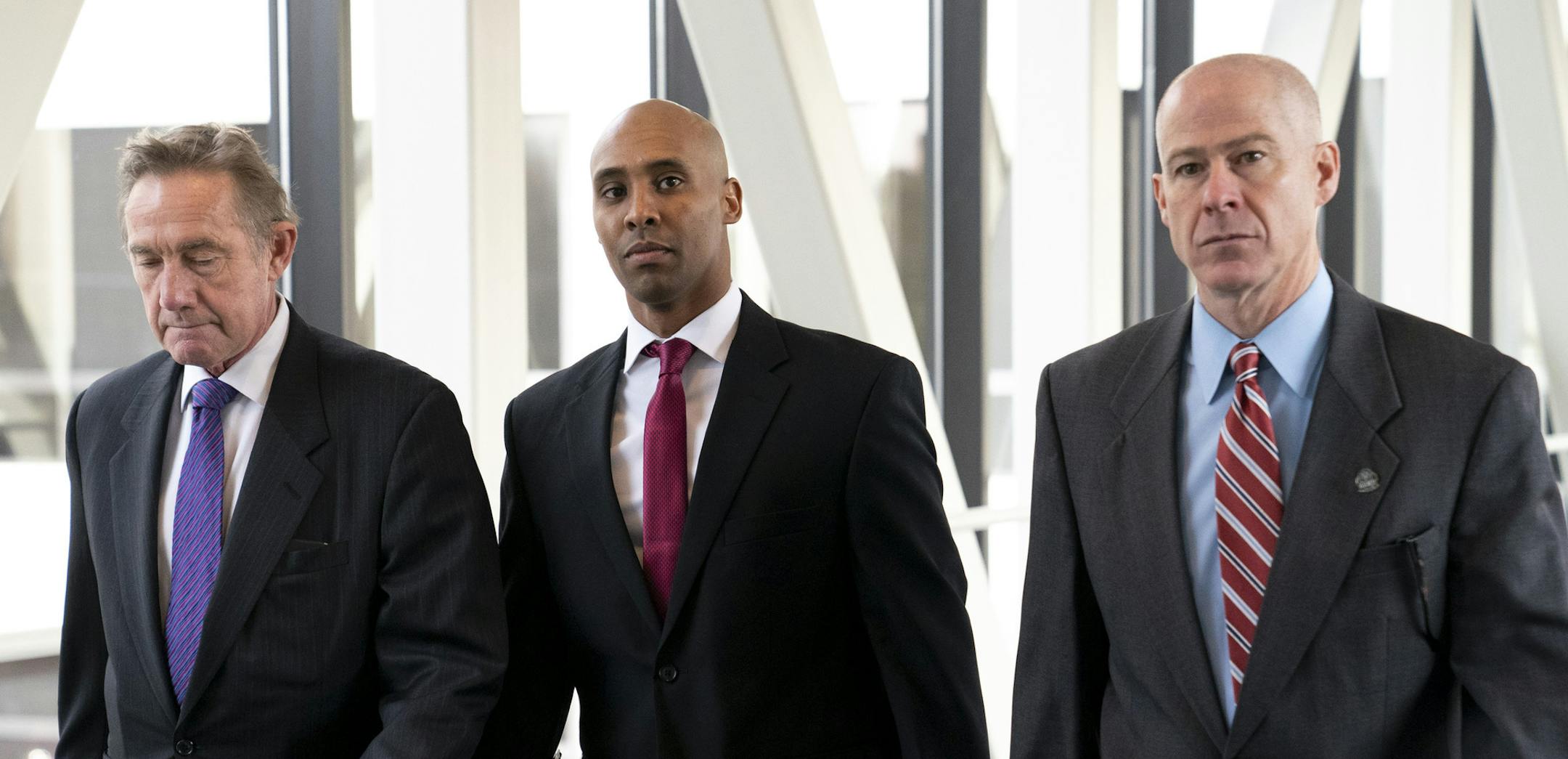
The most vital question to be answered at the trial of former Minneapolis police officer Mohamed Noor, which began with jury selection on Monday, will be whether Noor is guilty of second-degree murder with intent, third-degree murder and manslaughter in the July 15, 2017, killing of Justine Ruszczyk Damond, who had called 911 to report a possible rape in the alley behind her southwest Minneapolis residence.
But beyond the verdict, other concerns, including police-community relations and race (Damond was a white Australian and Noor is Somali-American), will weigh on the minds of a keenly interested public.
The court of public opinion will also be focused on the conduct of the trial itself. It is vital that both the local and international communities come away convinced that due process and fair justice have been provided to both the victim and the defendant in this sensitive case.
That is why it was appropriate that Hennepin County District Judge Kathryn L. Quaintance and Chief Judge Ivy Bernhardson decided to add seven seats to the small courtroom where the trial will unfold.
The newly added seats will accommodate some media organizations that were initially shut out of the main courtroom and instead shunted to an overflow courtroom with video and audio feeds of the proceedings. Initially, only four local-media seats were allotted, with those going to the Star Tribune, Minnesota Public Radio, KSTP-TV and KARE-TV.
The other four initial media seats went to the New York Times, the Associated Press, ABC Australia and Channel 9 Australia, attesting to the national and international interest in the case. More Australian news organizations will now be able to be present in the courtroom.
The seat limitations, which could have been avoided by using a larger courtroom, also impact citizens interested in the trial's outcome, including representatives from a group called Justice for Justine.
Another reassuring decision was to strike a sentence from the original order that the media must respect the "limitations" placed on lawyers, witnesses and jurors involved in the case. That language, according to a letter written by Leita Walker, an attorney representing a coalition of media organizations (which includes the Star Tribune), represented "a vague and ambiguous statement that, coupled with the specter of sanctions in that order, threatens to chill the exercise of the Coalitions's free speech rights under the First Amendment."


