

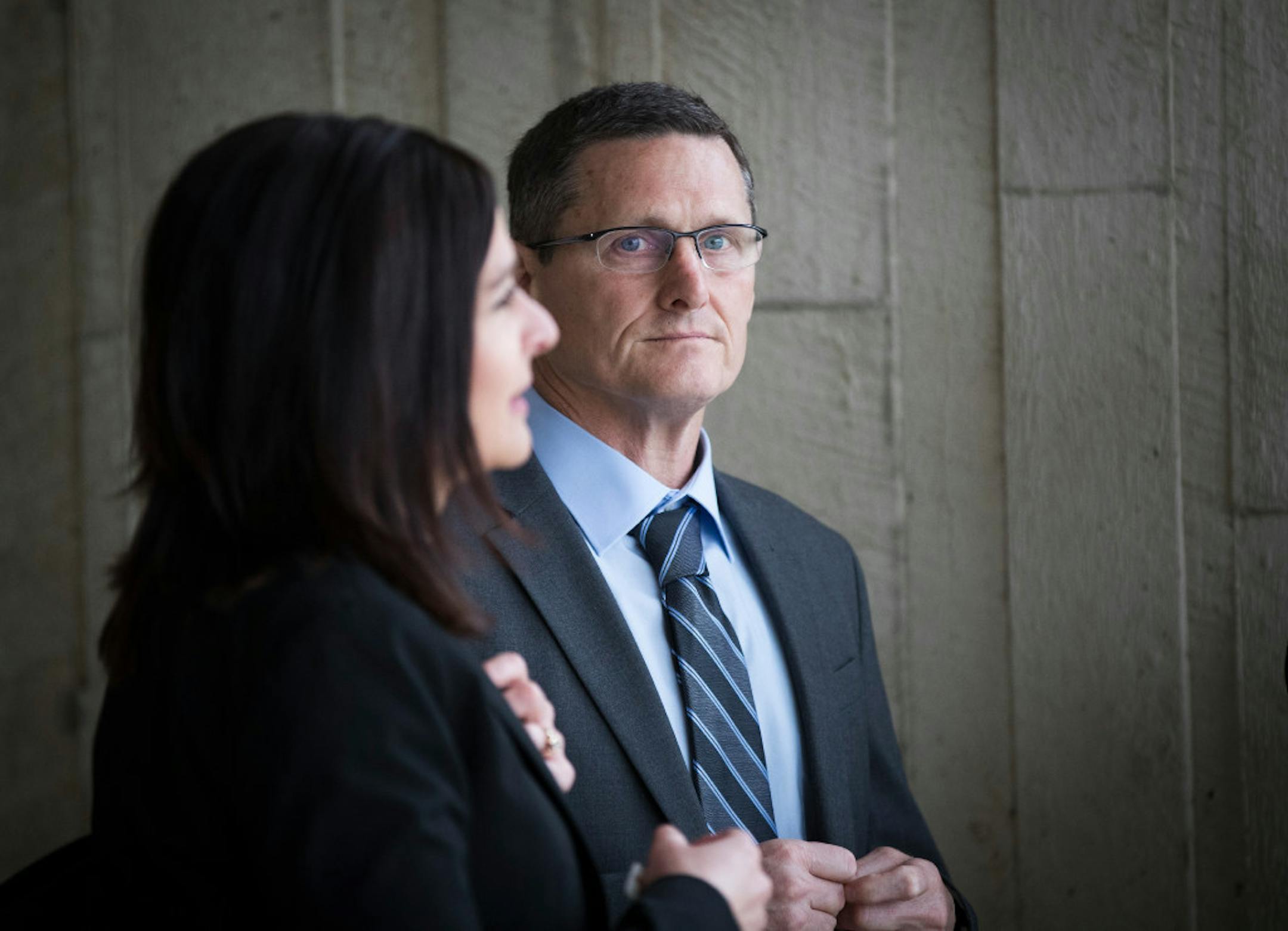
Thomas R. Duvall, one of the most violent sex offenders in state history, is one step closer to being released after spending more than 30 years locked up for a series of brutal rapes of teenage girls.
In a ruling issued Monday, a three-judge panel of the Minnesota Court of Appeals upheld a lower-court ruling in favor of Duvall's petition for conditional discharge from the Minnesota Sex Offender Program (MSOP). The judges determined the state failed to prove "by clear and convincing evidence" that Duvall did not meet the standards for provisional release into the community.
Human Services Commissioner Emily Piper, whose agency oversees the sex offender program, has already vowed to appeal the ruling to the Minnesota Supreme Court, setting the stage for another round of legal arguments over Duvall's future.
"I have grave concerns about this decision," Piper said in a written statement. "Three experts have previously testified that Thomas Duvall is not ready for life in the community and that he presents far too great a risk to public safety. I share that view and will exhaust every possible avenue of appeal."
The ruling upholding the release of Duvall, who has admitted to more than 60 victims, signals a shift in the way courts and the state are handling dangerous sex offenders.
Minnesota is one 20 states that operates a separate system for sex offenders known as civil commitment, in which hundreds of men who have committed violent sex crimes are confined indefinitely in prisonlike treatment centers after they have already completed their prison sentences. The system has been criticized in recent years for locking up too many offenders for too long, and state judicial panels have been approving a record number for conditional release. In June 2015, U.S. District Judge Donovan Frank ruled the program was unconstitutional, calling it a "punitive system" that violates offenders' rights to due process and access to the courts.
In response to those concerns, specialists at the MSOP have been more willing to support offenders' petitions for release, and judicial panels have been less likely to override their professional opinion. To date, just 20 offenders have been provisionally discharged from the MSOP in its more than 20-year history.
In an unusual decision in January, the state's appeals court ruled that sex offender Kirk Fugelseth no longer required inpatient treatment for a sexual psychopathic disorder and approved him for unconditional release, meaning he would no longer be monitored by the state. The decision was upheld by the Minnesota Supreme Court. Fugelseth, who abused children in three states, was only the second person ever to be fully released from the MSOP in its 24-year history. "Without question, the courts are looking at these cases with a bit more of an open mind than they have in the past," said Eric Janus, professor at Mitchell Hamline School of Law and author of a book on sex offender laws.


