

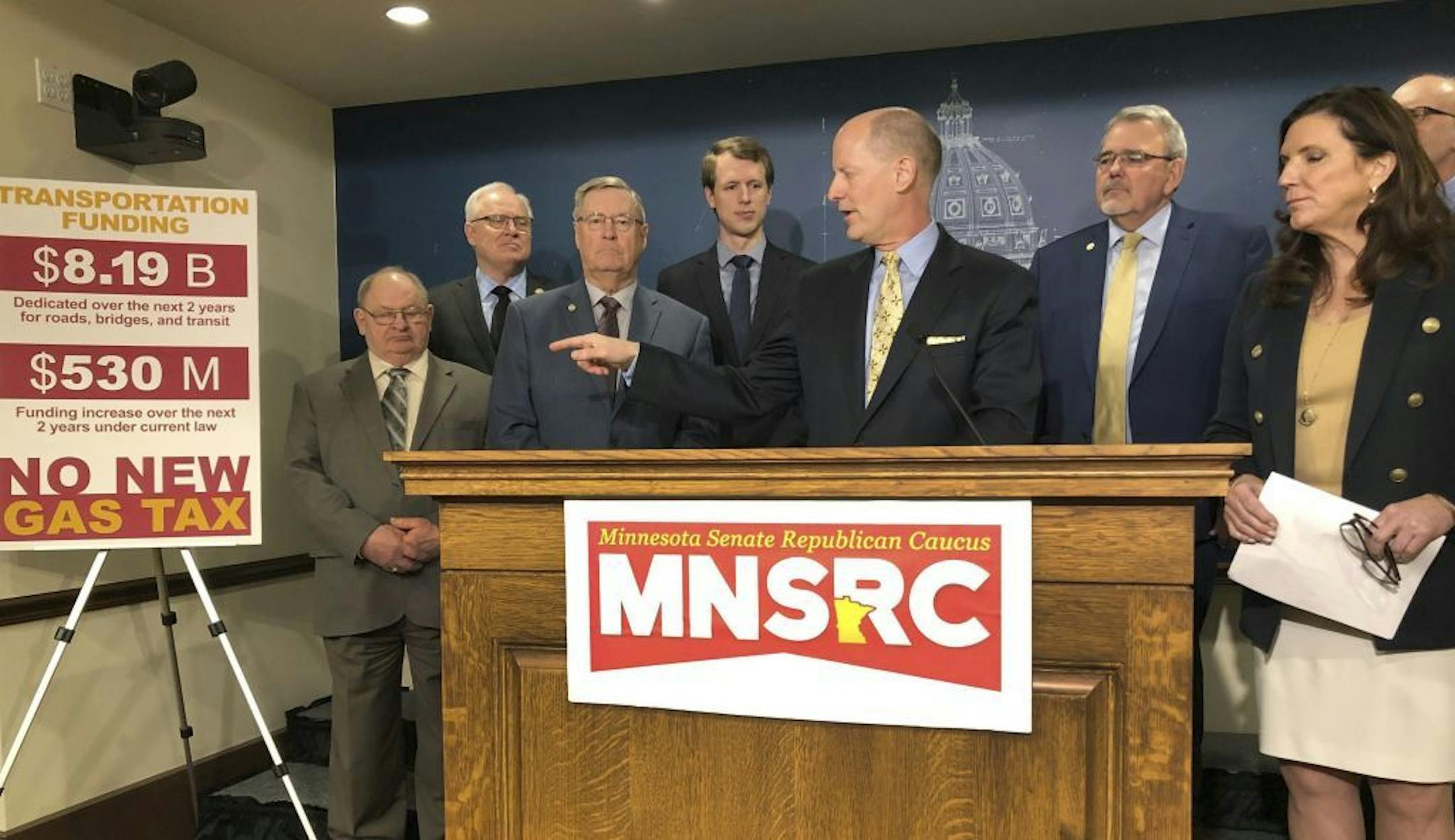
Republicans in the Minnesota Senate countered Democrats' spending and tax proposals Thursday with a budget they said would eliminate government waste and avoid raising taxes or fees.
Laying down a marker against two of Gov. Tim Walz's signature proposals, state GOP leaders made clear they will not support a 20-cent-per-gallon state gas tax for roads and bridges, nor his plan to extend a 2 percent tax on health providers, which Republicans call a "sick tax."
In all, the Senate Republican majority offered a $47.6 billion two-year budget, nearly $2 billion less than what Walz and House Democrats have proposed. Their plan sharpens the divide between the two parties, setting up spending negotiations that will dominate the next two months of the legislative session.
"These budget targets reflect a very serious, realistic and responsible attempt to balance the state priorities with the ability to live within our means," said Senate Finance Chairwoman Julie Rosen, R-Vernon Center. "We still remain concerned about the future of the economy of Minnesota and nationally, and this budget reflects those concerns."
The proposal cuts the budgets for a number of state agencies, but overall the GOP plan is about a 4.7 percent increase over what the state spends now. It includes one-time spending in some areas, including school safety, mental health grants, broadband expansion and reimbursements for deputy registrars burdened by problems with the state's vehicle licensing and registration system.
Health and human services would get the largest boost. Senate Majority Leader Paul Gazelka, R-Nisswa, said Republicans are looking for ways to curb health spending but want to take care of the state's most vulnerable residents.
Senate Democrats fired back at their Republican counterparts, saying the plan fails to keep pace with inflation and the state's growing population. Sen. Susan Kent, D-Woodbury, dismissed it as "accounting gimmicks and some fuzzy math."
"Their emphasis was on bending a spending curve, which in many of these areas will ultimately mean some form of cuts in services," Kent said, adding that the education budget would force schools to make layoffs and draw more from local property tax levies.


