

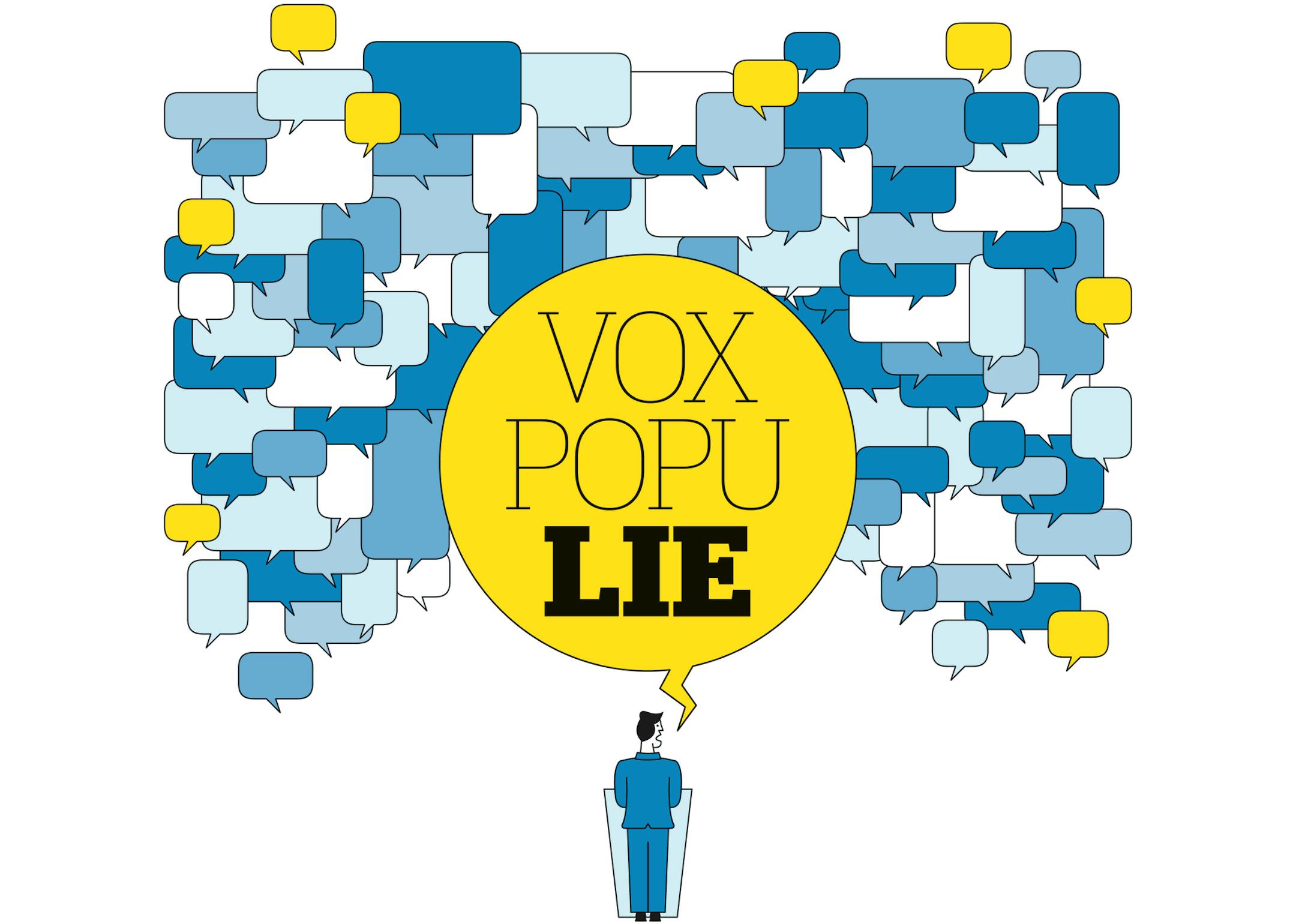
Doug R. Berdie's Oct. 27 commentary "Vox populie," about whom elected officials listen to in Minneapolis, certainly came with a lot of bona fides, a lot of hype, a lot of column-inch space, and some swell illustrating by Josh Jones. It also came with at least one false narrative — ironic, I know, in a piece essentially claiming the very thing — that of the "accelerated crime rate in the city." A very cursory Google search found two Star Tribune articles talking about the decreasing overall crime rate in Minneapolis while, yes, certain types of crime are on the increase.
I am not going to take the time to dissect Berdie's column point by point, although given how easy it was to refute this one assertion, I am certain it would be very possible to do so; thereby making the bona fides, hype, column-inch space and swell illustrations seem like some sort of compensation, to say the least.
David Singley, St. Paul
• • •
I hope the members of the Minneapolis City Council and Park and Recreation Board read and heed Berdie's commentary about how a democracy should function. In recent years it seems Minneapolis city government has devolved into government by the activists for the activists. The official rationale for ignoring or disregarding the will of the majority is that the decisionmakers are listening to voices not previously heard from. What this is really saying is that they are listening to people who think like them.
The vocal minority of all-season cyclists seem to have declared war on motorists. To appease them, Council President Lisa Bender and her cohorts are systemically creating gridlock by eliminating surface parking lots, nixing the parking ramp for the Federal Reserve Bank and granting developers exemptions from providing adequate parking for new high-density housing. Through-streets are constricted by reducing driving lanes and parking lanes to provide designated bicycle lanes that are often rarely used, especially during our long winters. The 2040 Plan just passed is heedless of the needs of older or disabled residents who cannot or will not cycle, walk, or scoot about on those nasty electric scooters that litter our sidewalks and terrorize pedestrians. The Park Board is no better. The clunky name change from Lake Calhoun to Bde whatever was railroaded through despite opposition from most of the nearby residents and homeowners. The strident voice of a proponent was apparently the only one heard.
As Berdie indicated, it is time for those in city government to start listening to those who quietly go about their daily business as well as those who show up at meetings shouting, chanting and drowning out the voices of all those who disagree with them. It is time to restore government by and for the people, not just the most strident activists.
Donald Wolesky, Minneapolis
PRESCRIPTION DRUG PRICES
The better question: What do current practices cost us?
It is worth considering the points in D.J. Tice's Oct. 27 column. ("What might drug price controls cost us?") As a physician, I see on a daily basis what a complete mess drug pricing is — both for prescribers and patients. Prices constantly change, vary substantially from one pharmacy to another and require endless hours of prior authorizations to get medications covered. There is no question there are reforms that need to be made, but there is also no question that there will be unintended consequences that will necessarily become the new norm.
However, why not consider reversing the ridiculous 1997 FDA ruling on allowing prescription drug ads on television? Thirty billion dollars is reportedly spent annually on medical marketing (though not necessarily all on TV). The exorbitantly expensive TV ads target an audience that cannot actually buy the product. Physicians pay no attention to the ads — except to get angry that the money spent on them isn't instead being used to lower the prices of the drugs our patients need. Only pricey, brand-name drugs are advertised — so any conversations that our patients initiate to inquire about "what they saw on TV" is usually very short, when they learn the advertised drug is 10 times the cost of what they are already on, or that their insurance does not cover it. And then the industry obfuscates the pricing through ridiculous layers of pharmacy benefit managers.
Eliminating the ads wouldn't solve the whole problem, but might be a step in the right direction.

