

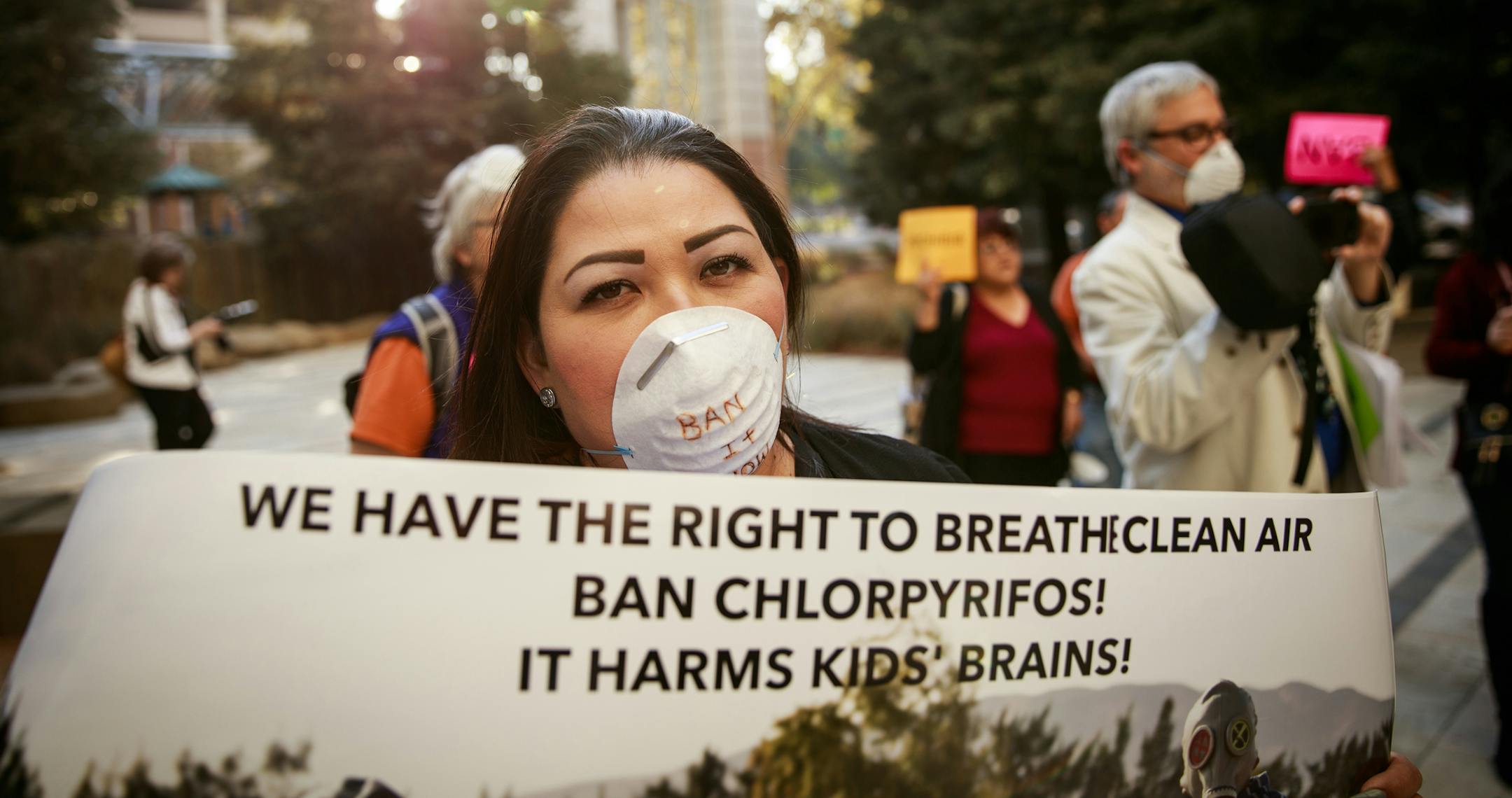
The Minnesota Pollution Control Agency has found that at least 10 Minnesota watersheds have been contaminated with a pesticide called chlorpyrifos. Don't worry about how to pronounce it, worry that you're eating it for breakfast since our government has let it be used for decades as an insecticide on crops including apples, corn and wheat. According to the Minnesota Department of Agriculture, more than 1 million pounds of the pesticide were sold in 2017.
Chlorpyrifos is a wide-spectrum pesticide and kills insects including bees, butterflies and dragonflies. It's been proven to be highly toxic to birds. Even worse, chlorpyrifos has been shown to damage the developing brains of children. Multiple scientific studies link exposure during pregnancy to lower birth weight, delayed mental and psychomotor development, attention and behavior problems, and reduced IQ.
Other civilized countries have already rid their environments of this killer. The Environmental Protection Agency was on its way to a final ban until the Trump administration took over. With the federal government unwilling to act, it's now up to the states. California, Hawaii and New York have already banned chlorpyrifos.
Minnesota needs to get on board. Contact your state senator and representative and tell them you don't want this pesticide in your water or in your breakfast. If they fail to act, remind them there's an election next year.
Greg Larson, Excelsior
JUSTICE SYSTEM
Closure of Boys Totem Town guides us into a more just future
This week our community celebrated and commemorated the closure of Boys Totem Town ("End of an era for troubled boys," Aug. 15). BTT was Ramsey County's male juvenile incarceration facility. The closure shows a bottom-line message that the county has made a true and direct commitment to progressive reform in its juvenile justice systems.
From my first day on the County Board to today, I reflect on the direction we have taken to rethink and address the overincarceration of our youths and the ripple effect it has had downstream in our communities. A decade ago many would have barely believed that we could change the trajectory of our justice systems, but here we are, deep in conversation with the community about what is next. When we look to our data, it shows a nearly 80% reduction in youth detention admissions over the past dozen years, which I attribute to our persistent and committed effort as a community to reduce incarceration and duration of lockup, mindful of the disproportionate engagement of young people of color in these systems.
It is clear that lasting reform will require deeper discussion and planning for prevention services and trauma-informed interventions, done intentionally with community-based organizations and those families experiencing the justice system. For services and offerings to young people and families in the justice system, keeping our focus on alternatives to incarceration and deeper impact strategies for our young people will be paramount.
While we will always need responses to young people who offend, we will continue with our community to pursue and build more effective methods to ensure public safety while also addressing youth development and equity. In that regard, I am excited to encourage our community to help shape our Ramsey County 2020-21 budget as we look to further our upstream justice reform efforts that will provide us direction for wider and deeper systems transformation.


