

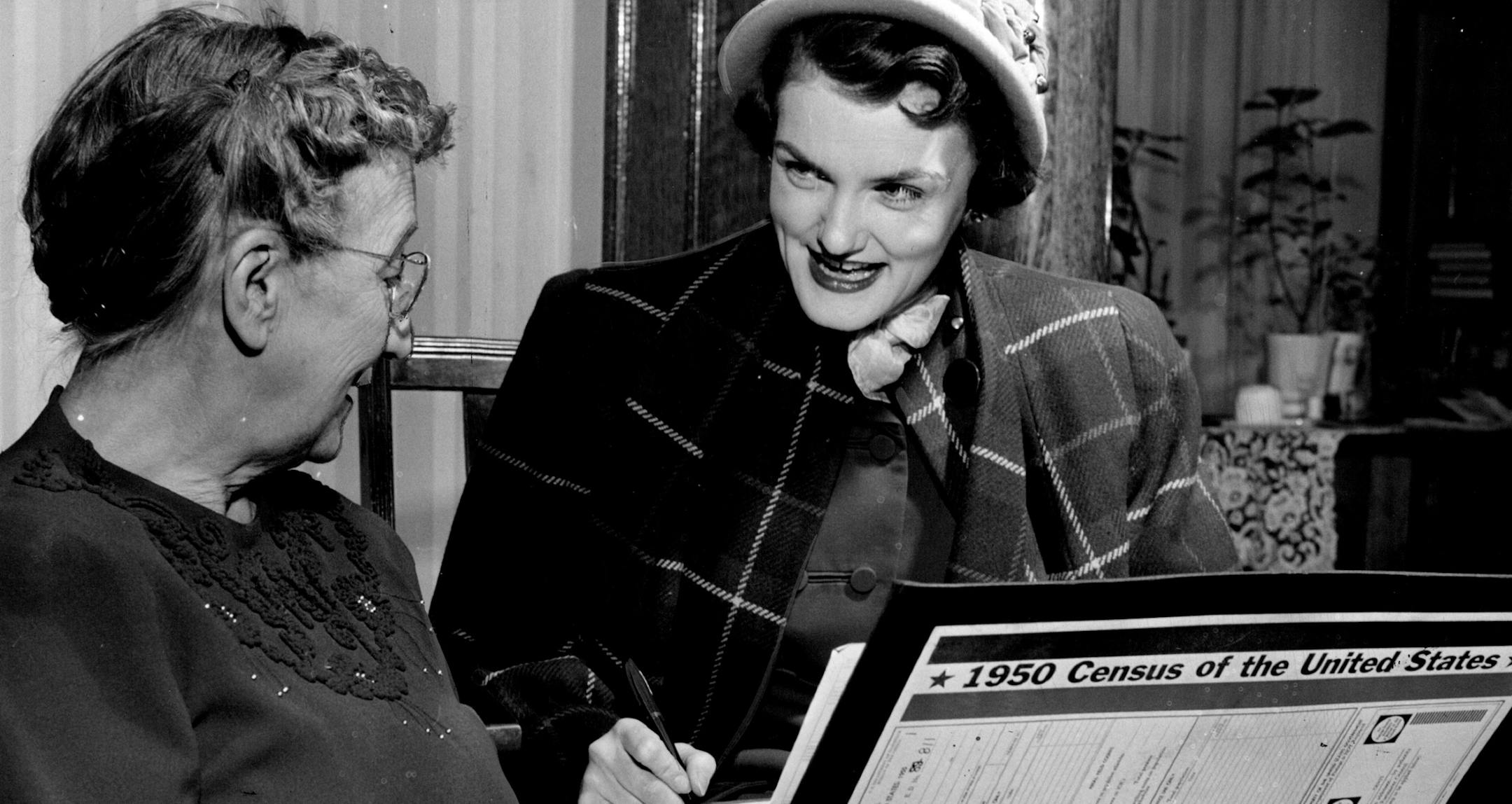
What is the real controversy over asking the citizenship question on the 2020 census? ("Minnesota to join lawsuit against census citizenship question," March 30.) A review, though not exhaustive, shows that from 1900 to 1950 it was a standard question in the household census. It was not in the 1960 census, but the question of naturalization was posed in the 1970 census. The citizen question reappears in 1980, 1990 and 2000, and was dropped in the very brief 2010 census.
In addition to collecting population data for the purposes of accurately apportioning congressional districts (think Electoral College), census data also are used to determine the allocation of federal funding for education programs in states and communities. So if a state has a disproportionate number of undocumented residents, the calculus is shifted to this state and away from others if the census counts undocumented persons. Counting undocumented persons who have come to this country illegally skews the system away from a true representative government. The number of undocumented is not accurately known, but estimates range from 11 million to 25 million, which creates a serious impact on the country. So as a taxpayer I want to know how many people are in the country legally as well as in the state I reside in to assure me that the allocation of representation is based on a true census.
Robert Mac Murdo, Minneapolis
Editor's note: The last year that the Census Bureau asked all U.S. households a question about citizenship was 1950. The question was skipped in 1960, and in subsequent decades was asked only of the 1 in 6 households that received the long-form questionnaire.
UNITED WAY
Fundraising evolves, but still a tremendous asset to community
I feel compelled to respond to the March 27 front-page article on the decrease in Greater Twin Cities United Way funding over the past two years.
I have been president of the Montessori Center of Minnesota for 20 years. All of MCM's programming either directly or indirectly benefits children. This includes teacher training as well as seven partner Montessori preschools. MCM has received generous and continuous funding through United Way for more than eight years.
United Way remains passionate about advancing our mission to broaden access to high-quality education as well as helping to remove obstacles for women of color to complete the rigorous teacher-training program, paving a path to financial stability. Most critically, United Way provides operating funds for MCM's on-site early childhood program, in which more than 60 percent of families are at or below 100 percent of the federal poverty level. It is not an exaggeration to say that without United Way, our school could not operate and our families would be without this fundamental educational opportunity.
Our community is fortunate to have United Way, an organization that truly funds with a purpose. Its process is thoughtful and its mentoring promotes clarity within organizations. Yes, the shape of foundation giving is rapidly changing. However, I don't feel United Way has lost sight of our community's needs. Now more than ever, I am full of gratitude for this steadfast partnership.
Molly O'Shaughnessy, St. Paul
DISABILITIES
No strategy can help enough if it is not properly funded
The March 28 article "Disabled kept isolated, poor" points out how the state has a long way to go and that the governor wants to add to the work in progress under the Olmstead decision. This is a great plan, but the problem has been and continues to be that local politicians like to make all kinds of rules and regulations but seem to not feel a need to fund them. As of this moment they want to do a 7 percent cut to the funding of these types of nonprofit programs that they want to do the work for them. These programs seem to be the first that they cut over the last five years! It would always at least look like they want things to get better for our disabled adults if they would back it up with proper funding, don't you think? This also is not just local; it includes federal cuts to the work that needs to be done in this ongoing area. People should be supporting SF 2889 and HF 3191 in the Legislature if they truly want things to improve for disabled Minnesotans.


