

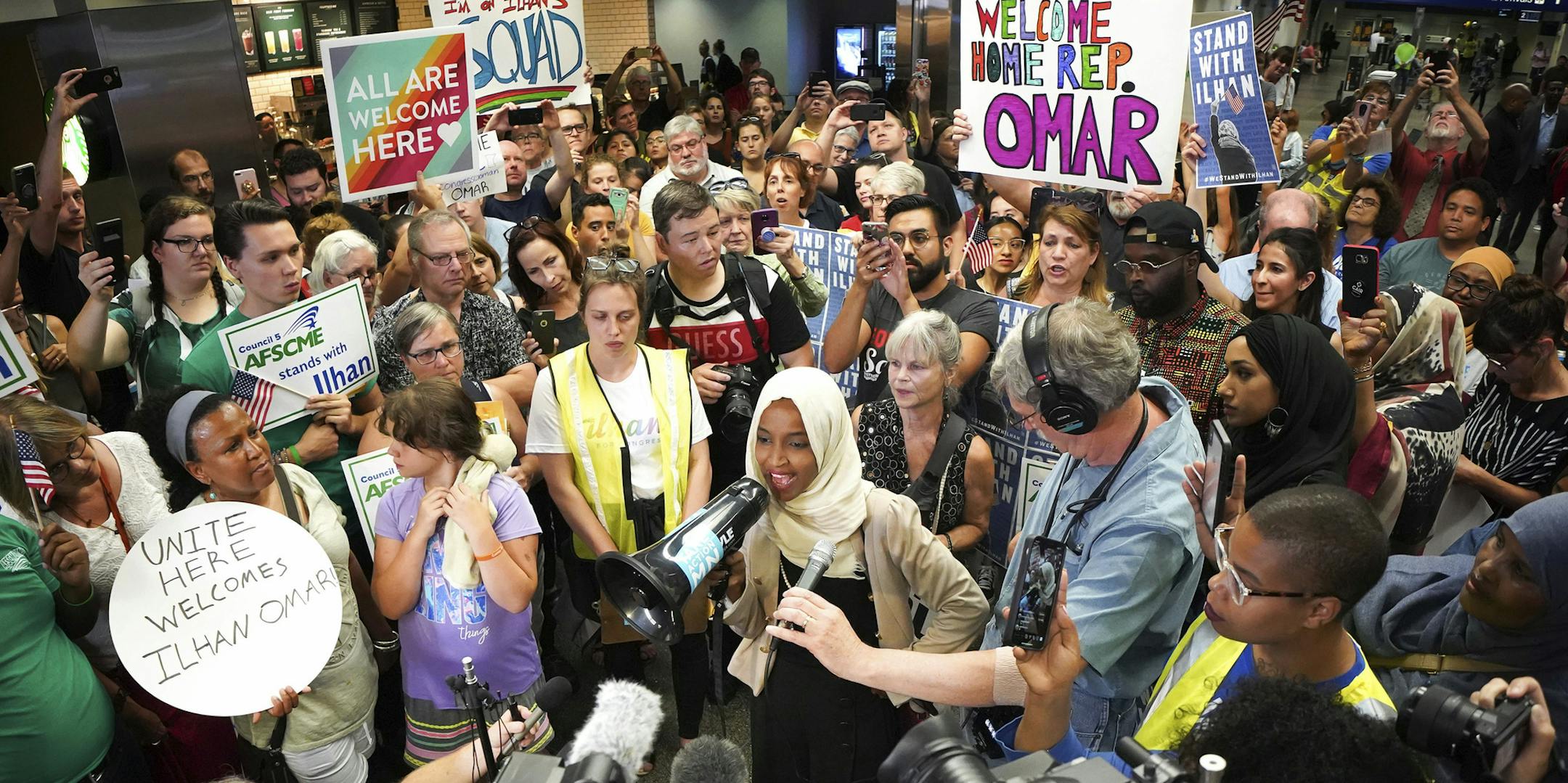
Golden Valley, a community in the Minneapolis urban area, is an idyllic place to visit during the summer. Lush green grass, tall majestic trees, expansive lawns and nature trails, ample parks and playgrounds, and neighborhoods where there are no fences and the neighbors actually know each other. It's also located in U.S. Rep. Ilhan Omar's congressional district.
Over the July 4th weekend, I visited our adult children and two preschool-age grandsons who live in Golden Valley. What a wonderful place to raise a family. Children can safely walk to the playground, local libraries are nearby, and outdoor activities are plentiful. On a day we were there, the "Puppet Wagon" was entertaining kids at the park. In a summer program sponsored by the town, teenagers stage an upbeat musical show that thrills and delights the little ones.
But here's what really amazed me. Our son and 4-year-old grandson invited us to attend Sunday service at the Church of the Ascension, a Catholic congregation not far from their neighborhood. I witnessed a parish of ethnic and racial diversity the likes of which I have rarely seen. Alongside us older white worshipers were former African refugees, black Americans, Hispanic Americans, as well as veterans and the disabled. They were praying together, sharing stories, gulping down coffee and cookies, and, most important, finding common ground.
This is the America I want my grandchildren to grow up in. If this is what it means to "go back home where you came from," then may we all someday be so fortunate to go there together. It will be a better America.
Peter N. Francis, Tucson, Ariz.
TRANSPARENCY
A public institution like the U of M should act, well, publicly
The attempt to withhold public records regarding the work of a faculty task force on the names of buildings is the latest action that demonstrates a penchant for secrecy by the University of Minnesota administration ("U admits to improper redactions," July 18).
The university has repeatedly used a "sole finalist" process to evade the law on disclosure of names of candidates for positions of leadership.
The meetings of two major faculty committees (the Faculty Consultative Committee and the Senate Committee on Finance & Planning) have been closed for discussions of sensitive issues, such as the management of the university and the status of the relationship of the university to the Legislature. A former university general counsel issued an opinion in 2010 that closing these meetings is lawful because the committees do not have authority to make final policy decisions. But Minnesota's Open Meeting Law expressly applies to "any committee" of a public body.
A public institution must operate in the open to generate public support for its goals.

