

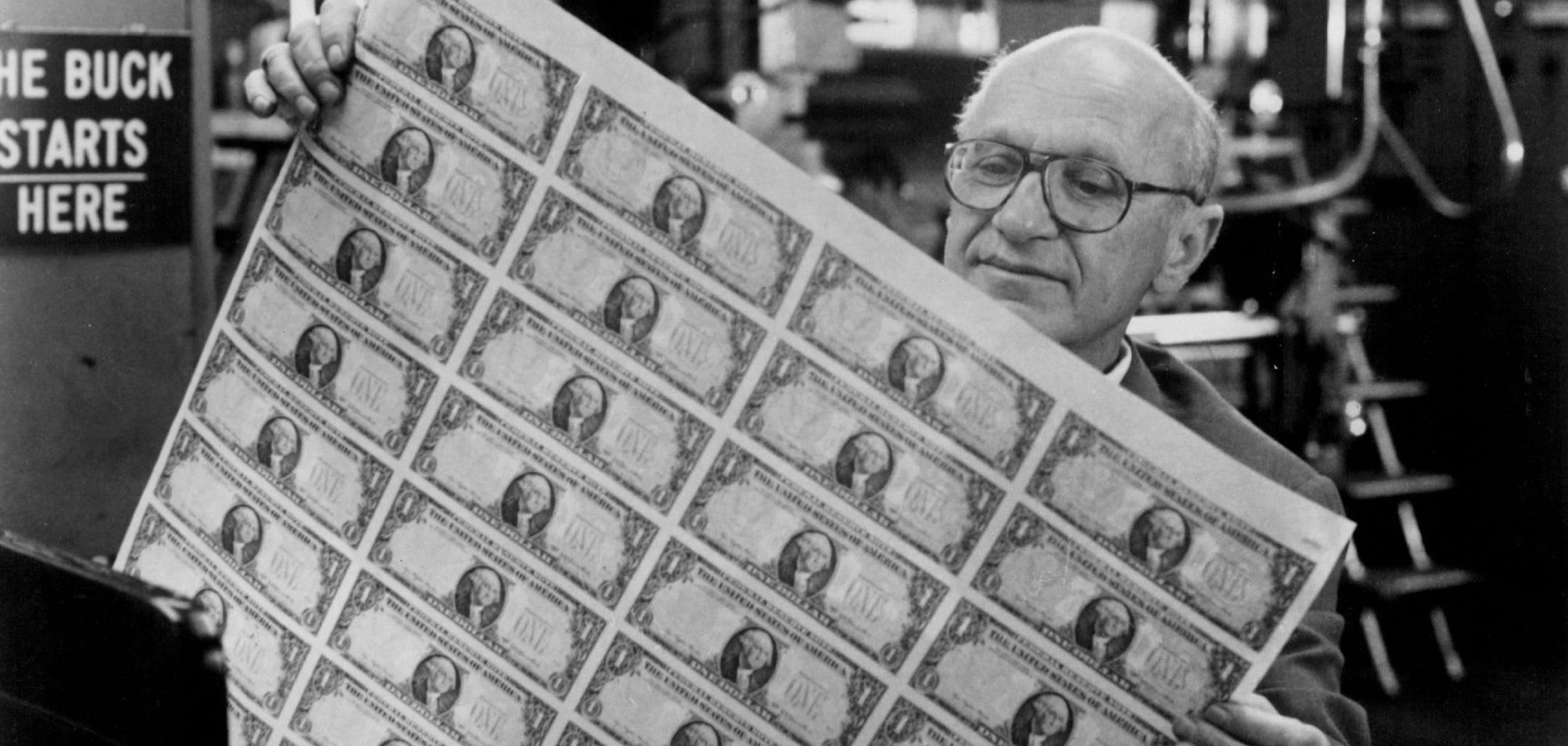
The "shareholders first" mantra that Megan McArdle of the Washington Post ("Hard to argue with kinder capitalism, but let me try," Opinion Exchange, Aug. 23) and others of similar view have been espousing for the last century has finally been revised by the Business Roundtable, a national organization of major corporate CEOs. Milton Friedman's theory of "shareholder über alles" vs. community benefit has always been a false choice. A corporation can be profitable and beneficial; there is a middle way. Those seeking to operate at either end of that spectrum find their businesses not as successful either through weakening focus and do-gooder distraction or by mortgaging their futures for short-term profits and stock option increases.
The Roundtable is not advocating a switch from shareholder value to community benefit, as McArdle mistakenly cautions against, but a reordering of the stakeholder priority. If you read their summary, it subtly puts the stakeholders exactly in the order they need to be: customers, employees, business partners, community, shareholders. You'll see that shareholders are at the end, but any business that delights its customers, takes good care of its employees (who, as Henry Ford recognized, are also customers), plays nice with its suppliers and benefits the community with sound building and environmental practices and ongoing local investment will find that the business's commercial success, reputation, brand value, favorable terms from business partners and enthusiastic support from the community will provide more ample growth to shareholder value. Certainly more than the current practices of manipulating the business operations and finances for next quarter's earnings and share prices.
Thanks to all the CEOs at the Roundtable for finally seeing the way and stating so out loud.
Dennis Fazio, Minneapolis
• • •
The instructive debate on shareholder vs. stakeholder theory (Opinion Exchange, Aug. 23) skips over the fundamental starting point for business ethics, that the economy has to serve the society. Indeed, the economy as a system of exchange is a constitutive element of any society. For a society to thrive, the economy has to support and provide livelihood for the whole society. A thriving society will have a distributive economy in which goods, services and prosperity reach all its members. Any discussion of the rights of owners rests on this foundation.
FRANK SCHWEIGERT, St. Paul
• • •
In Peter Zeller's counterpoint ("Article on CEO pay lacked balance, perspective," Aug. 22) on soaring CEO pay, he asserts that star CEOs are worth what they are paid. As evidence, he quotes British journalist Daniel Hannan as saying "the difference between a moderately competent CEO and a brilliant one is worth billions." This may be true, but many extensive studies have found little relation between CEO pay, CEO competence and company performance.
Corporate-governance research firm MSCI, for instance, released a study in 2016 showing little evidence between CEO pay and performance. In fact, it showed the opposite. A hundred dollars invested in the 20% of corporations with the top-paid CEOs would have grown to $265 over the study's 10-year window. Meanwhile, $100 invested in the companies overseen by the lowest-paid CEOs would have increased to $367. Other studies at Stanford, the University of Pennsylvania and New York University have come to largely the same conclusion. Each of these studies then goes on to offer possible explanations for their somewhat counterintuitive findings.
Zeller ignores this evidence, and in doing so, does a disservice to his readers.
Paul Stearns, St. Paul
THE ECONOMY
Trump critics have it wrong
An Aug. 23 letter writer suggests that Trump is leaving the next president with a recession. The writer insinuates that Trump is using "quantitative easing" as a tool to reduce the severity and duration of a recession — a recession that does not exist, and quantitative easing that is not happening. The Federal Reserve employed quantitative easing during the Obama administration, as the target federal fund rate was under 0.5% for the entire Obama presidency. As soon as Trump took office the target fund rate began increasing and has risen steadily to over 2% during Trump's time in office.

