

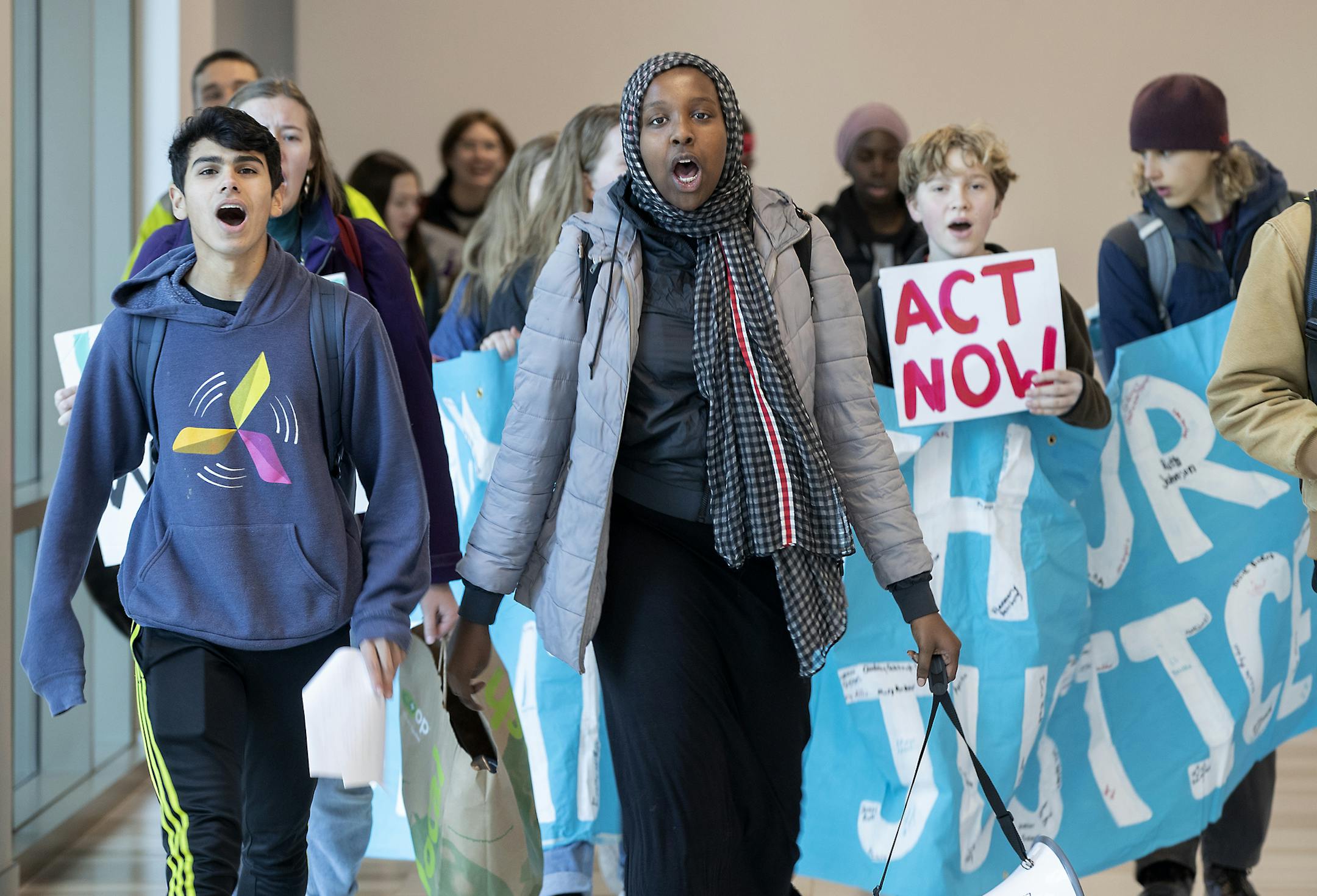
As world leaders gather in Madrid for a United Nations summit on climate change, youth activists in Minnesota are trying fresh tactics aimed at transforming their rallying cries into action.
The strategy was on full display in the Twin Cities on Friday as students once again skipped class to push for changes they believe will mitigate the effects of global warming. This time, in addition to calls for national policies like a federal Green New Deal, activists focused their attention on state and local leaders.
Dozens of protesters camped out in the State Capitol beyond the building's 5 p.m. close Friday, demanding that top elected officials, including Gov. Tim. Walz, hear their demands on fossil fuel divestment and blocking Enbridge's Line 3 oil pipeline project.
Earlier in the day, smaller clusters of students dispersed across the metro area to stage demonstrations targeting city councils, congressional offices and university presidents. Just after noon, about 100 activists filled the skyway entrance to Xcel Energy to urge the company to stop buying energy from a Hennepin County trash incinerator because of air quality concerns. Instead of waving signs and delivering fiery speeches, organizers led "teach-ins" on environmental justice during an afternoon rally at the Capitol.
"It's easier to get stuff done when it's specific," said Lee Lang, a 15-year-old from south Minneapolis. "Instead of demanding the whole city or the whole nation or the whole world do something, if we target these companies individually, we can make a bigger difference."
The demonstrations across the metro attracted considerably smaller crowds than a September rally, which drew thousands of students to the State Capitol steps. Organizers said the decline was expected, reflecting an effort to encourage deeper involvement from dedicated supporters. They hope the shift will increase pressure on elected officials.
"As we grew this movement we hoped that politicians would take advantage of us telling them what we wanted to see and what we hoped they would adopt policywise," said Mia DiLorenzo, an Edina sophomore and organizer of state and local youth climate strike efforts. "But when they didn't do that we decided we had to start pushing for those policies ourselves."
By encouraging followers to become more politically engaged, youth climate activists are following a playbook that's grown in popularity among grass-roots campaigns. Supporters of the Tea Party movement flooded town halls in 2009 to confront lawmakers over the Affordable Care Act.
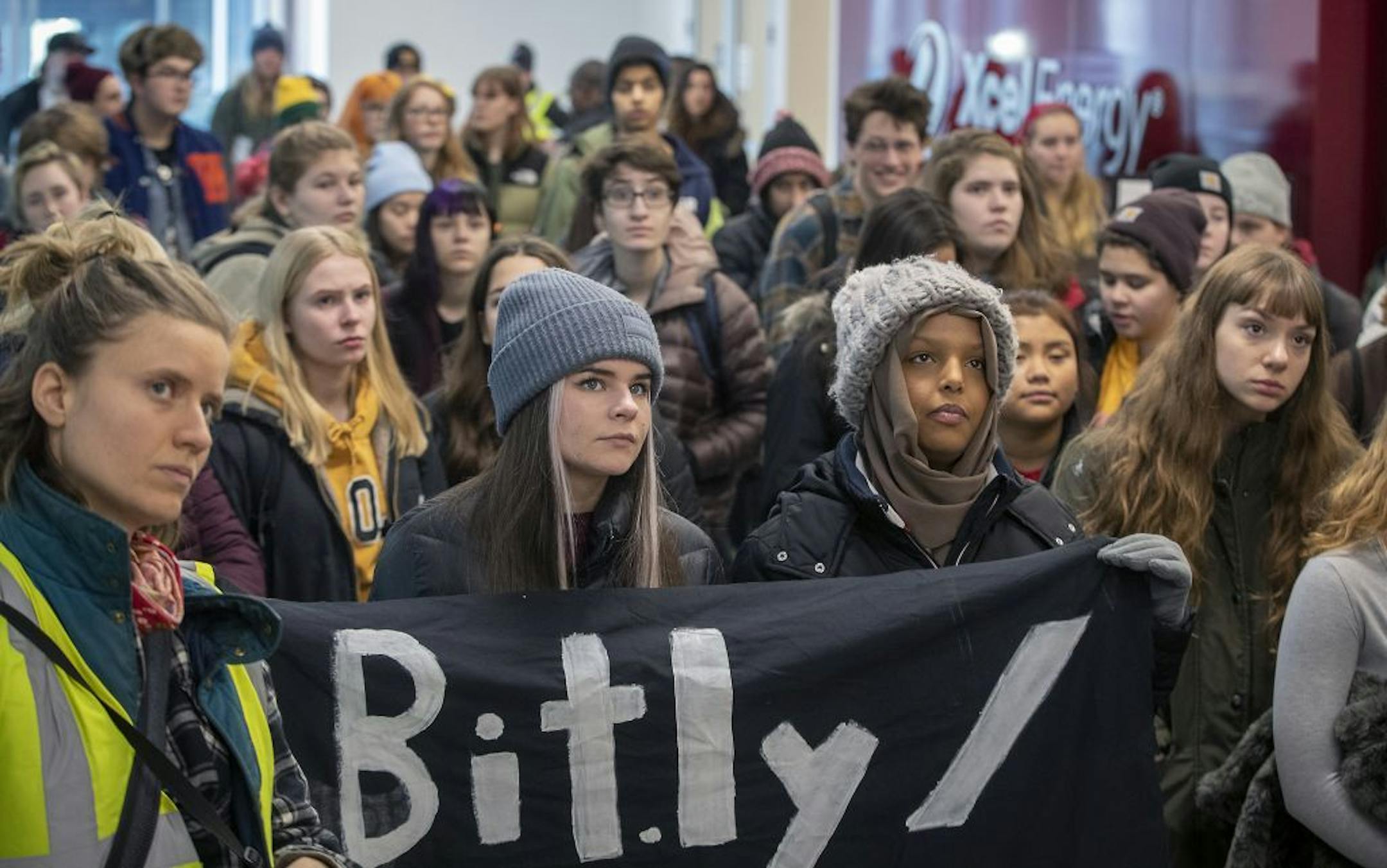
![Protesters gathered at the Capitol to protest climate change inaction. ] LEILA NAVIDI • leila.navidi@startribune.com BACKGROUND INFORMATION: Hundreds of protesters gathered to march from Western Sculpture Park in St. Paul to rally at the Minnesota Capitol to call for government action to fight climate change, part of a global day of climate protest on Friday, September 20, 2019.](https://arc.stimg.co/startribunemedia/C6IORLAFFYVIFNSP2UXPDU2M44.jpg?&w=1080)


