
Advertisement

Minnesota is falling short on its climate goals, new state data shows

Carbon pollution has fallen by one-fifth over the last two decades, but the state likely missed its 2025 target.

The Minnesota Star Tribune
February 19, 2026 at 7:41PM
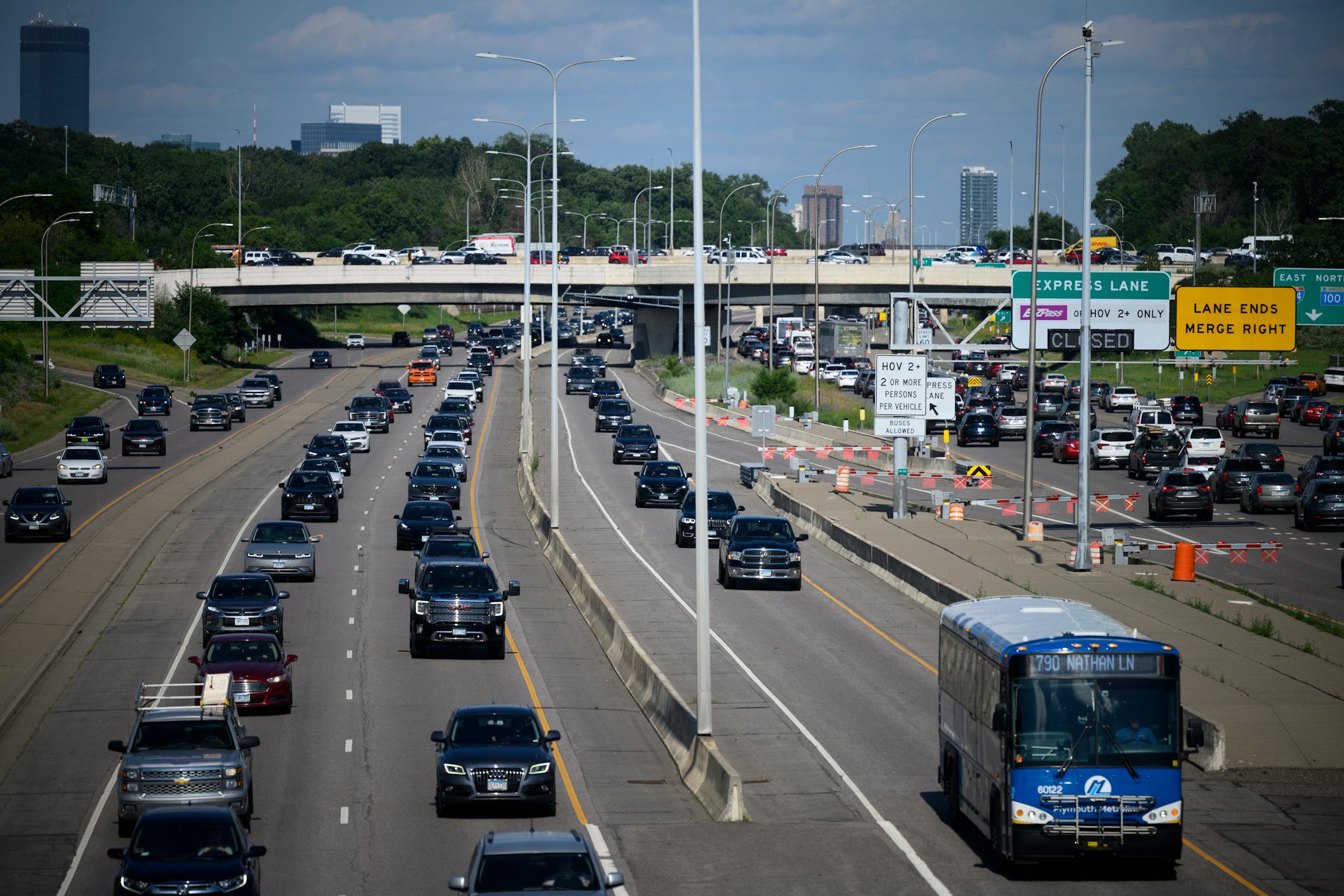
Traffic moves along I-394 during afternoon rush hour in St. Louis Park. The state's transportation sector has reduced its footprint by 9%, or about 4 million metric tons, since 2005. (Aaron Lavinsky/The Minnesota Star Tribune)
Advertisement

Minnesota is struggling to achieve its climate goals despite decades of falling greenhouse gas emissions, newly released state data shows.

State law requires Minnesota’s electric utilities to reduce their carbon emissions to zero by 2040. Minnesota lawmakers also set a series of statutory goals to cut overall emissions compared to the state’s 2005 levels. Those goals aim to reduce carbon pollution 15% by 2015, 30% by 2025, 50% by 2030 and 100% by 2050.

Minnesota failed to hit its 2015 target, and data released Feb. 18 by the Minnesota Pollution Control Agency suggests the state likely missed last year’s target as well.

State carbon pollution fell by one-fifth between 2005 and 2023, from 146 million metric tons to 117 million metric tons. To meet the 2025 target, Minnesota would have needed to slash an additional 15 million metric tons of carbon pollution in just two years — or about the same amount that was cut between 2005 and 2012.

“Minnesota has taken important steps to address climate change, but this data shows that we cannot rest on our laurels — we need to dig even deeper and adopt the next level of climate solutions,” said Amelia Vohs, the climate program director for the Minnesota Center for Environmental Advocacy, an environmental nonprofit.

State progress on slashing emissions has largely been driven by the power and transportation sectors. Since 2005, Minnesota power plants have managed to reduce their emissions by a whopping 26 million metric tons, essentially cutting their carbon footprint in half. The transportation sector reduced its footprint by 9%, or about 4 million metric tons. Emissions from agriculture, industry, and residential and commercial buildings, however, all went up between 2005 and 2023.

Minnesota’s struggle isn’t unique. Recent reports show that both New York and California, states considered to be the nation’s pioneers for ambitious climate policy, are not on track to achieve their own targets to reduce carbon emissions.

States are also contending with a federal government that is openly hostile to efforts to address climate change. Last week, the Trump administration repealed the “endangerment finding,” a series of official reports in 2009 by the U.S. Environmental Protection Agency that gives the agency legal authority to regulate greenhouse gas emissions.

Advertisement

The administration also pulled the U.S. out of the Paris Agreement, the international treaty aimed at keeping global warming below 2 degrees Celsius, and rescinded billions of dollars in federal climate spending.

The lack of federal support isn’t helping Minnesota achieve its climate ambitions, said Minnesota Rep. Jamie Long, a Democrat who helped write the state’s 2023 climate law.

“The federal government has certainly tried their best to bury their head in the sand when it comes to climate change,” Long told the Minnesota Star Tribune. “But I think that just makes it all the more important for states to pick up the federal government’s slack.”

Pete Wyckoff, a commissioner for the state Department of Commerce, said his agency has had to delay the roll out of several state-administered programs as it waits for the federal government to sign off on its funding obligations. Those programs include a rebate for Minnesotans to install heat pumps and a federal program to weatherize buildings, both of which could help reduce carbon emissions in the buildings sector.

Carbon pollution from residential properties grew by 22% between 2005 and 2023, while emissions from commercial properties increased by 15% during that time, state data shows.

“We’ve been waiting for the federal government for a while to roll these things out,” Wyckoff said. “We hoped to roll them out more than a year ago.”

Advertisement

Andrea Vaubel, deputy commissioner for the Minnesota Department of Agriculture, also said federal funding complications have made it more difficult for Minnesota farmers to cut their emissions. Vaubel said many Minnesota farmers were confused last year when the Trump administration froze federal grants they were awarded to install solar or buy electric farm equipment.

The administration eventually re-opened that funding, but asked farmers to submit new grant applications that didn’t mention climate change.

State data shows that Minnesota agricultural carbon emissions rose by about 1 million metric tons, or 1%, between 2005 and 2023.

Last week, Minnesota released an updated version of the state’s Climate Action Framework, a blueprint of how the state plans to reduce emissions and meet its climate goals. Strategies listed in that plan included an expansion of programs to help farmers adopt cover crops and other practices that can improve soil health and reduce carbon emissions, as well as additional efforts to increase the adoption of electric vehicles, heat pumps and electric home appliances.

Long said he retains hope that Minnesota can still hit future climate goals. He and other lawmakers plan to introduce legislation this year that could help the state more quickly bring down its carbon footprint.

Those proposals include a bill that would expand funding for homeowners to install heat pumps, and a bill that would set new energy efficiency standards for existing buildings, which would push more building owners to invest in electric appliances when replacing old ones.

Advertisement

“There is still an opportunity to move the needle,” he said. “Minnesota certainly has been a leader in that.”

Yvette Higgins, an intern for the Minnesota Star Tribune, contributed to this story.

about the writer

about the writer

Kristoffer Tigue

Reporter

Kristoffer Tigue is a reporter for the Minnesota Star Tribune.

See Moreicon

More from Environment

See More
card image
Aaron Lavinsky/The Minnesota Star Tribune

Carbon pollution has fallen by one-fifth over the last two decades, but the state likely missed its 2025 target.

card image
card image
Advertisement