

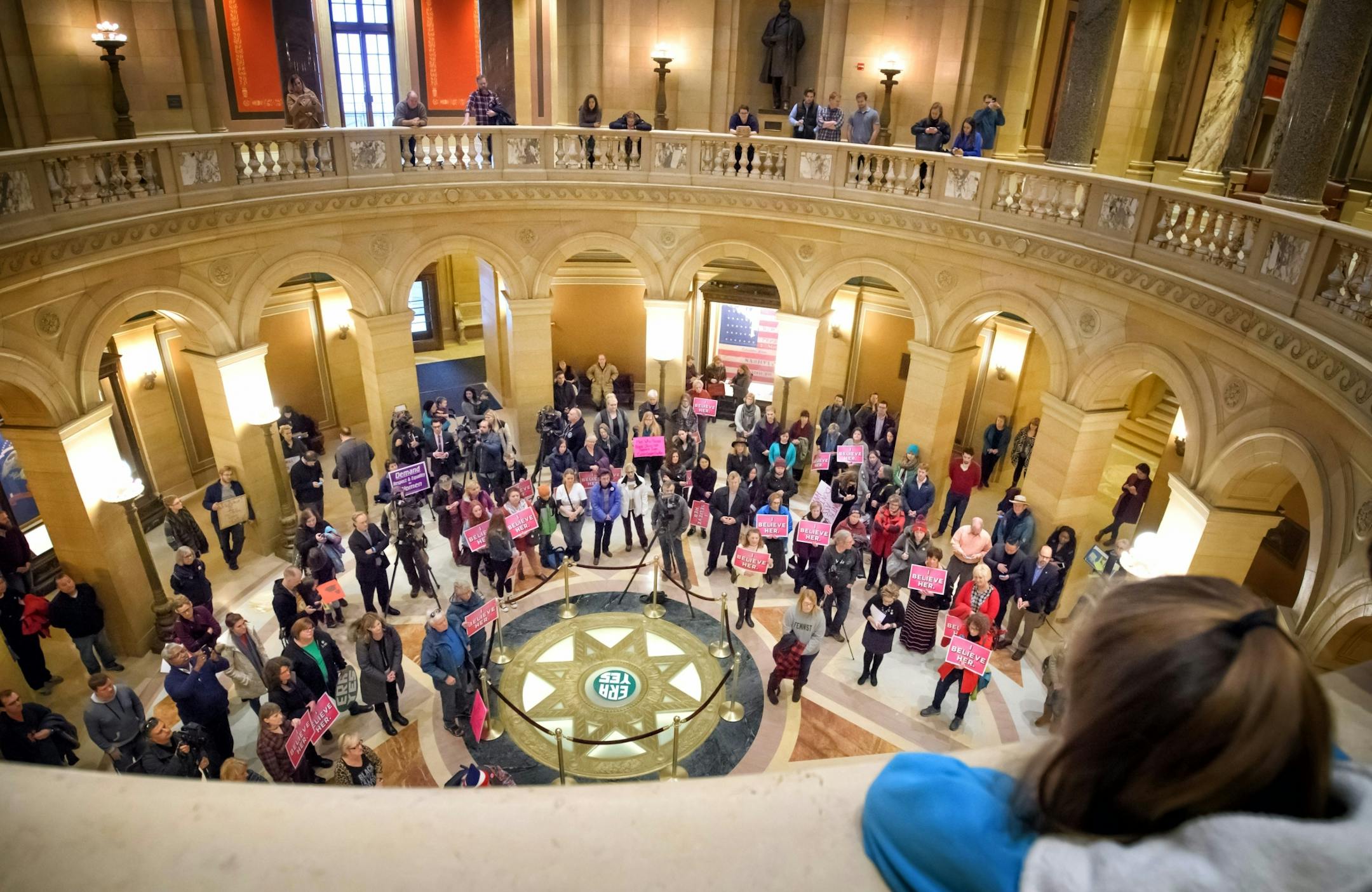
Sexual harassment will be one of the first issues legislators contemplate when the session kicks off Tuesday.
The Minnesota House and Senate both scheduled sexual harassment training the first week of the session. House Speaker Kurt Daudt said he would take away members' committee assignments if they do not attend the full-day training Wednesday, which will also focus on implicit bias and discrimination.
Senate training is scheduled for Thursday morning. Some senators already participated in training sessions in December, but not all members could attend. Senators and staff must complete training every five years, Senate spokeswoman Katie Fulkerson said.
House staff also will go through training every five years. Representatives, however, get a "tiny dose" of training when they are first elected and are not trained on sexual harassment again after that, House Minority Leader Melissa Hortman said at a legislative preview event last week.
Allegations emerged last year of sexual harassment by a representative and a senator — who later resigned — which prompted lawmakers to review their policies. A new House subcommittee will hear public and expert testimony and make recommendations. The group will start meeting in the first couple weeks of the session, House spokeswoman Susan Closmore said.
Senate Majority Leader Paul Gazelka asked the Senate's legal counsel and human resources staff to review Senate policy, which he said hasn't changed since the 1990s. Senate Minority Leader Tom Bakk said he would like to hear what other states are doing and learn from them.


