

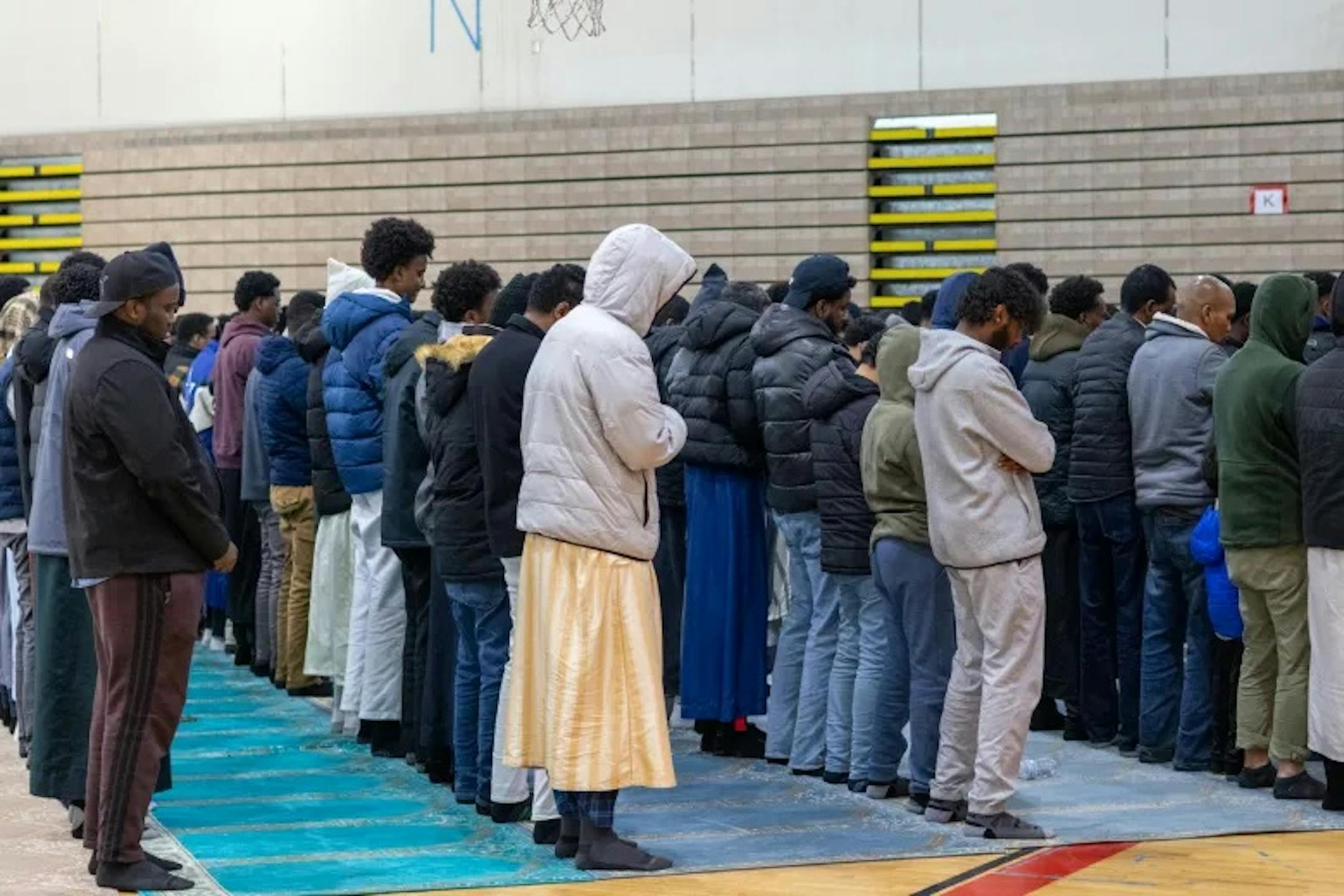
The Muslim holy month of Ramadan, which begins in mid-February this year, is traditionally a time of celebration for Minnesota’s Muslim communities.
Prayer halls are packed, and long tables are set for iftar, the evening meal that breaks the daily fast. Families and friends visit each other. Mosques hold extra night prayers. Businesses sell dates, rice, spices, new clothes and gifts for Eid.
But this year, many people are planning for Ramadan with a knot in their stomach.
Across the Twin Cities and in cities like St. Cloud and Willmar, immigrant Muslims say they’re feeling pressure from two directions.
Immigration enforcement, including a crackdown in St. Cloud, along with the rising cost of food, have affected his customers, said Noor Yussuf, owner of Midnimo Halal Grocery in St. Cloud.
Economic pressures are not entirely new, but the recent surge in harsh federal immigration enforcement measures has led to a Minnesota winter like no other, making many people fearful to socialize, shop and move about.
“Fear now shapes everyday decisions,” said Imam Aden Hassan of the Islamic Society of Willmar. “Some people avoid large gatherings, while others stop attending mosque programs they once treated as routine. Talks about safety precede any decisions related to Ramadan and Eid gatherings.”
Sheikh Abdirahman Bashir, an imam at Dar al-Farooq Center in Bloomington, said the unprecedented situation could have lasting effects on Muslim communities. “This will extend far beyond the immediate term,” he told Sahan Journal.


