

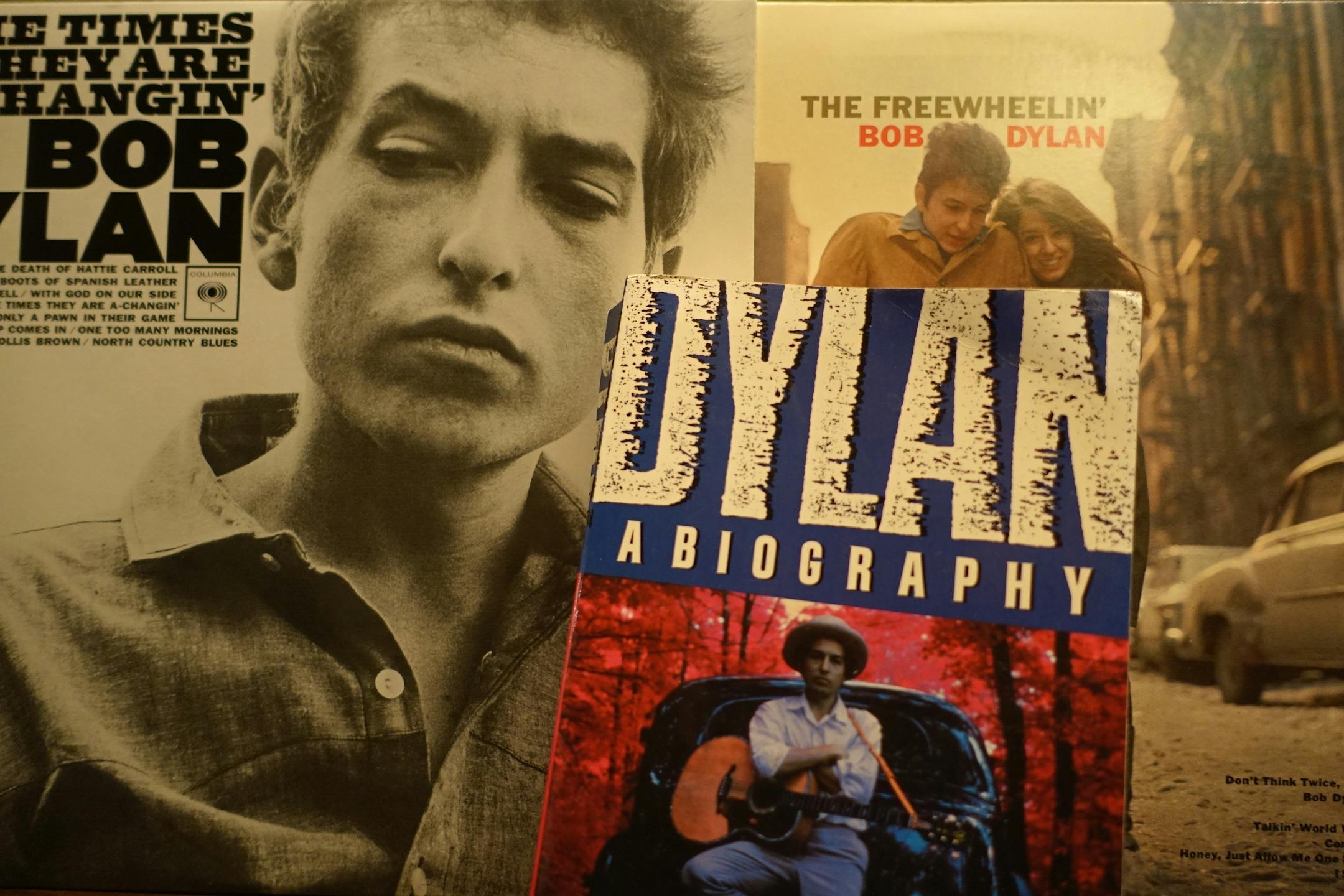
I first heard of Bob Dylan in the late 1980s.
I was a high-school junior in suburban Milwaukee and came across his albums at the public library. They were his folk records from the early 1960s, heavy on protest songs such as "Blowin' in the Wind" and "The Times They are a-Changin'," their sleeves encased in thick rubberized plastic like fragile relics.
I assumed his name was pronounced dialin' as in stylin'. I did not yet associate him with the paunchy guy in the Members Only jacket who was the worst thing about "We Are The World."
He sounded, of course, like an 80-year-old asthmatic trapped under a barbell. Like he just didn't care.
Here is a guy, I thought, who knows how to get chicks.
My instincts were not great. At 17, I had a mullet and a pencil-thin mustache, as though I couldn't decide whether to play hockey or open a speakeasy. I watched a lot of old movies, and my romantic role models were Errol Flynn and Bob Hope. I was all set to seduce your grandmother.
It didn't matter to me that Dylan was less hip in 1988 than Rice-A-Roni. Our heroes have a way of collapsing time. They're there when we need them — for whatever reason, in whatever form we require. Young Elvis Presley. Old Johnny Cash. Folkie Dylan.
There was something of Dylan in his scruffy, earnest, protest-song incarnation that I wanted: idealism, self-invention, a young Joan Baez.


