

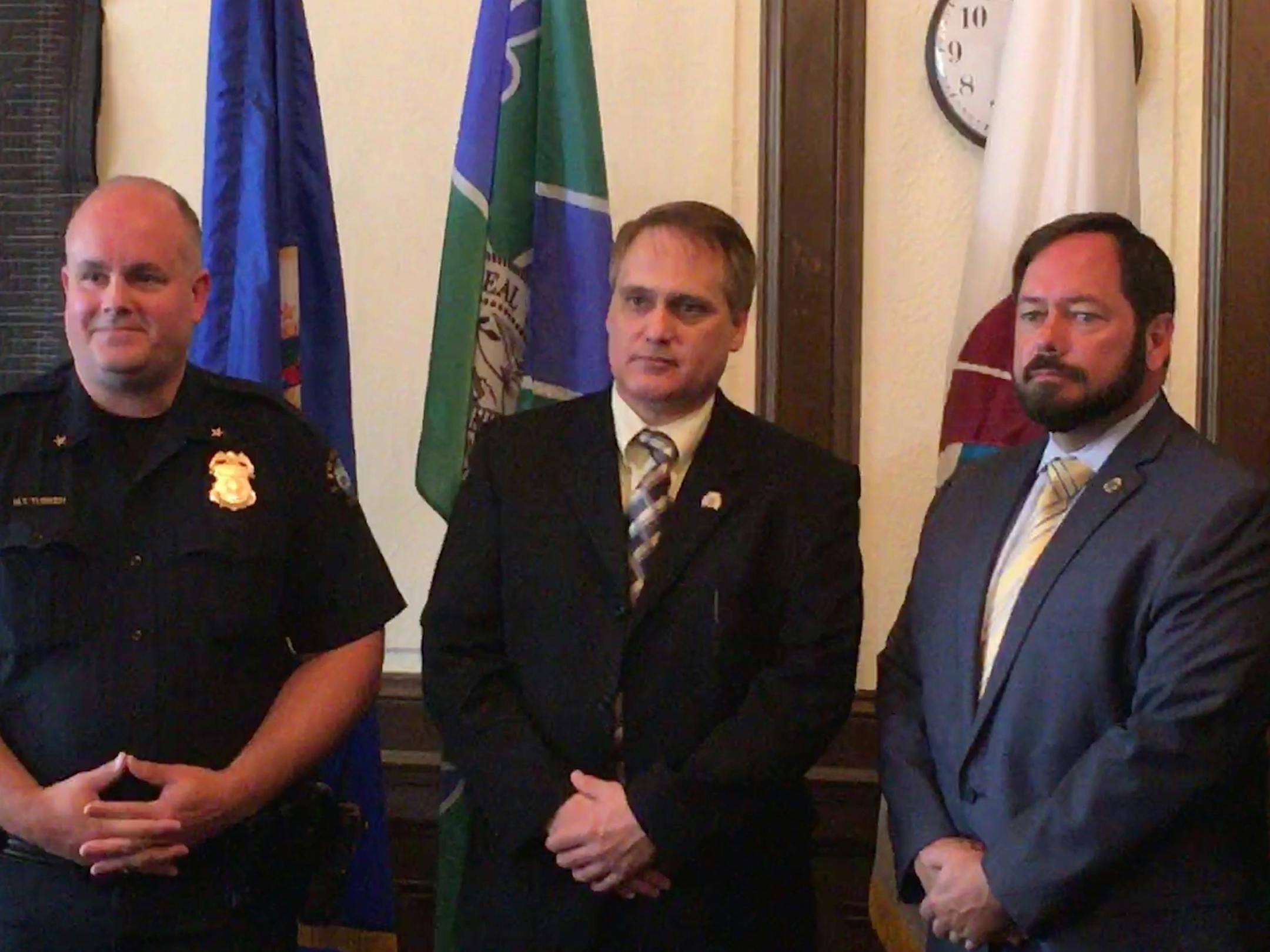
DULUTH – Federal drug officials announced Wednesday they will ramp up their presence here, in an attempt to disrupt mid- to high-level traffickers in a region ravaged by meth, heroin and prescription opioids.
The U.S. Drug Enforcement Administration will open the new Duluth post this year, embedding two DEA agents and two federally deputized officers into a regional drug task force that operates around the North Shore area.
"By adding DEA agents to the Lake Superior Drug Task Force, our ultimate goal is to save American lives," said Omaha Division Special Agent in Charge Richard Salter Jr., speaking at Duluth City Hall. With the added officers, in collaboration with local and tribal law enforcement, the task force will aim to expand regional drug busts to prosecute national traffickers and ultimately reach the supply chains in China, Mexico and Colombia, he said.
In Minnesota, tracking with the rest of the country, overdoses from heroin and prescription pills rose to historic levels over the past decade. In 2018, 331 people died from opioids across the state, a 22% decrease from 2017, yet still drastically higher than before the epidemic hit 10 years ago.
Salter blamed the increase on doctors overprescribing medications in recent years. He said the Duluth area has a higher overdose rate than any other part of Minnesota.
"Duluth and our surrounding area — we are not immune to the ravages," said Duluth Mayor Emily Larson. "Heroin and opioid drug overdose deaths have more than doubled in the past few years. The commitment from the DEA to expand in Duluth offers new hope to this community and this region."
Duluth Lt. Jeff Kazel, commander of the Lake Superior Drug and Violent Crime Task Force, called the added DEA agents "much-needed help" in the area's war against meth and opioids. "As many of you know, this region as a whole has one of the highest per capita opioid-related death rates in the state," he said. "Opioids and methamphetamine continue to be the driving catalyst for crime and overdose deaths."
Duluth Police Chief Mike Tusken also spoke to the prevalence of opioid overdoses. Since his officers began carrying Narcan — a drug that can reverse the effects of an opioid overdose — in 2016, they've saved nearly 90 lives, Tusken said.


