

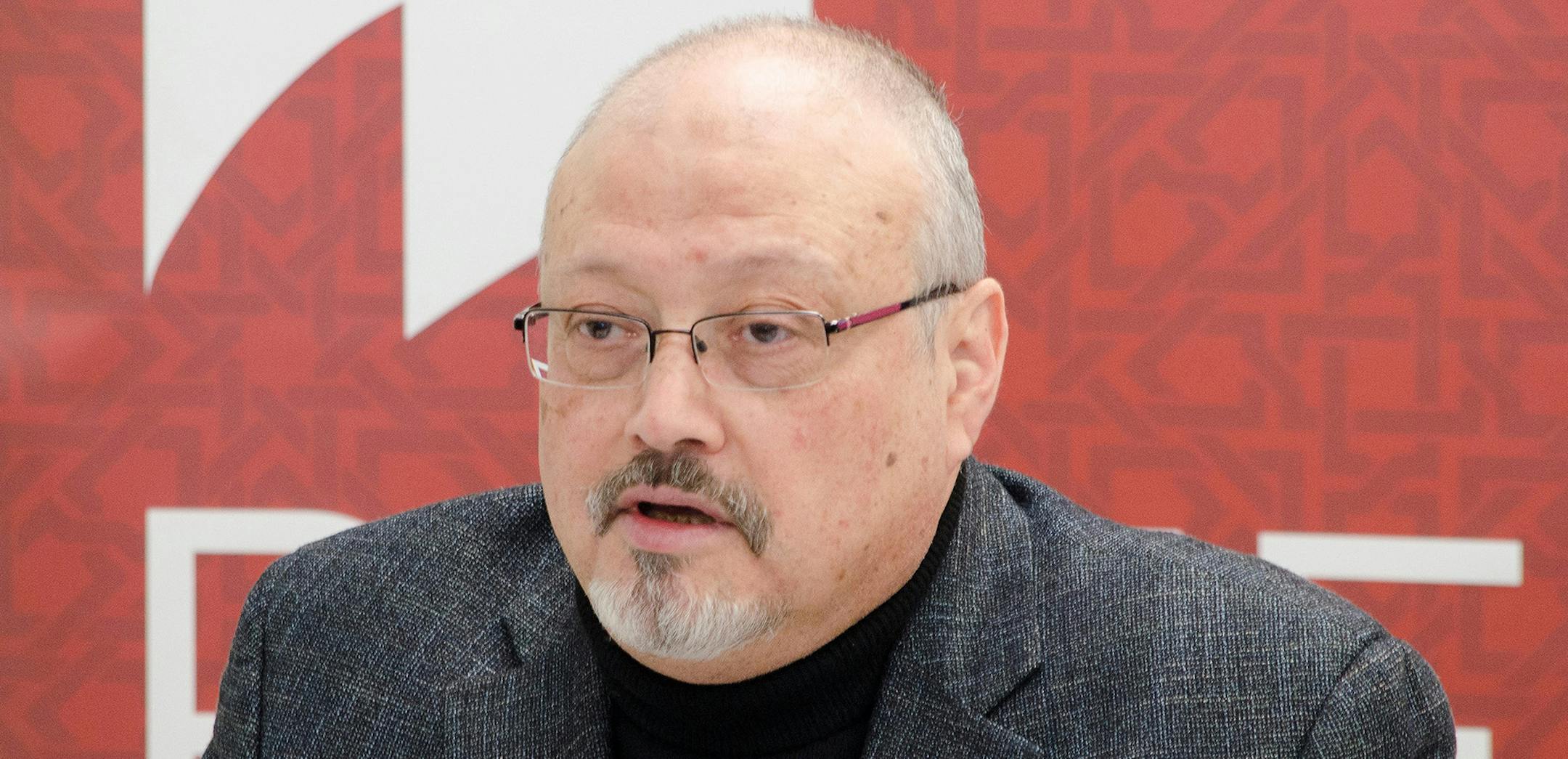
President Donald Trump defied Congress by refusing to issue a legislatively mandated report that would indicate if Saudi Arabia's crown prince is responsible for the murder of Saudi dissident and journalist Jamal Khashoggi.
Trump's defiance is deeply troubling and sends a signal to the world that the United States is relinquishing its role as a beacon of media freedom and human rights. It's especially cynical, and damaging, if the president's stance is at least partly related to arms sales to the Saudis, as he has indicated in the past.
The congressional trigger for Trump to respond was lawmakers invoking the Magnitsky Act, which gave the president 120 days to determine if Crown Prince Mohamed bin Salman (often referred to as MBS) had a direct role in the slaying and dismemberment of Khashoggi, who was a U.S. resident.
The Senate, reflecting the CIA's conclusion, voted unanimously last year to hold the crown prince accountable for the hit at the Saudi consulate in Istanbul, Turkey. Among the intelligence gathered is a recording of MBS telling a top aide in 2017 that he would use "a bullet" on Khashoggi if he didn't curtail his criticism of the regime.
A preliminary U.N. report issued last week also suggested government culpability: "The evidence presented to us during the mission to Turkey demonstrates a prima facie case that Mr. Khashoggi was the victim of a brutal and premeditated killing, planned and perpetrated by officials of the State of Saudi Arabia and others acting under the direction of these State agents."
The Saudi government, after repeatedly lying about the case, finally admitted Saudi operatives killed Khashoggi, who was then allegedly dismembered with a bone saw. But now Saudi officials are blaming a "rogue operation," according to the Saudi minister of state for foreign affairs, Adel al-Jubier, who told reporters that "mistakes happen."
The carefully planned murder on foreign soil of a U.S. resident isn't a mistake; it's a deliberate slaying of a dissident that Saudi officials evidently assumed would be met with impunity. Instead, reacting to the blowback, 11 Saudis have been charged, with five facing the death penalty. But MBS remains above reproach in Riyadh, and unless Congress acts assertively and forces Trump's hand, he won't even pay a diplomatic price.
Fortunately, on a bipartisan basis, Congress has been intrepid and independent in refusing to accept a White House whitewash, which to most is so apparent that Secretary of State Mike Pompeo this week had to say that "America is not covering up for a murder."


