
Zoos mark World Elephant Day with poaching message

Campaign uses social media, "elphies" to draw attention to poaching.

August 11, 2014 at 10:56PM
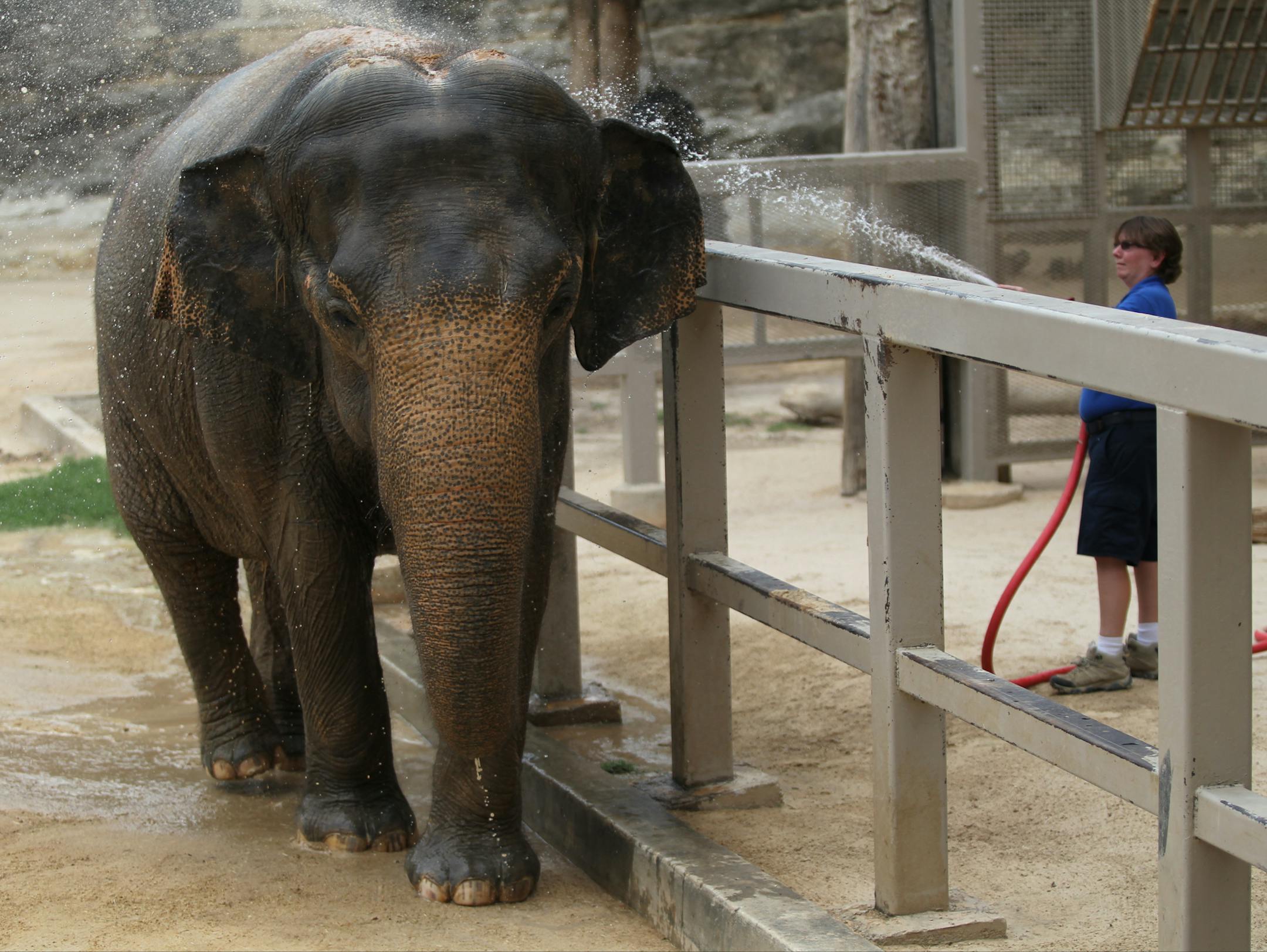
Zookeeper Randee Gonzalez, not seen, sprays water onto Lucky, a 54-year-old female elephant, on June 12, 2014, at the San Antonio Zoo. Gonzalez said Lucky receives a bath every morning but will be hosed down again on hot days to cool off. If she is thirsty, Lucky will open her mouth to indicate so, and will even use her trunk to splash water on the rest of her body. After Lucky is sprayed, Gonzalez said, the elephant will shower sand on herself, which sticks to her moist skin and helps her cool
Lucky, a 54-year-old female elephant at the San Antonio Zoo, receives one bath every morning and more if it’s unusually hot. Lucky may not know it, but Tuesday is World Elephant Day. (The Minnesota Star Tribune)

OAKLAND, Calif. – Those magnificent gray giants that symbolize the wonders of the wild may be big, but they are very vulnerable these days.

That's the message behind World Elephant Day on Tuesday, an effort involving the 96 Elephants campaign and more than 100 zoos across North America to highlight the plight of African elephants.

Conservationists worry that relentless poaching of the animals, slaughtering them for their ivory tusks, could drive the species to extinction within a decade.

"We will be raising awareness of both captive and conservation issues that surround elephants," said Gina Kinzley, senior elephant manager at Oakland Zoo, which is participating in Tuesday's event. (The Minnesota Zoo in Apple Valley does not have elephants.)

The numbers tell the story. In 1979, there were an estimated 1.3 million African elephants; by 1989 numbers fell dramatically, to 600,000. That's when an international ban temporarily slowed poaching, but numbers are still falling, Kinzley said. In 2012, an estimated 35,000 elephants were killed for their tusks, which equates to about 96 per day — or one every 15 minutes.

Conservationists now estimate there are 400,000 left, said Kinzley, and without action, those numbers could dwindle further.

Earlier this year, the Obama administration enacted regulations on importing ivory, with the U.S. Fish and Wildlife Service taking steps toward a near-total ban on commercial elephant ivory trade.

"Today, because of the actions of poachers, species like elephants and rhinoceroses face the risk of significant decline or even extinction," President Obama said in announcing the National Strategy for Combating Wildlife Trafficking in February.

Tuesday's event is part of the 96 Elephants campaign, to send 96,000 messages to U.S. public officials to support a ban on the sale of ivory. The campaign was named for the estimated 96 elephants slain each day for their ivory.

Supporters at the Oakland Zoo are being asked to don a gray ribbon, available at the zoo, or simply wear gray. Participants can then take "elphies" at the elephant exhibit, or hold signs of support and post images on social media using the hashtag GoGrey.

about the writer

about the writer

Kathleen Kirkwood, Oakland Tribune

More from No Section

See More
FILE -- A rent deposit slot at an apartment complex in Tucker, Ga., on July 21, 2020. As an eviction crisis has seemed increasingly likely this summer, everyone in the housing market has made the same plea to Washington: Send money — lots of it — that would keep renters in their homes and landlords afloat. (Melissa Golden/The New York Times) ORG XMIT: XNYT58
Melissa Golden/The New York Times

It’s too soon to tell how much the immigration crackdown is to blame.