

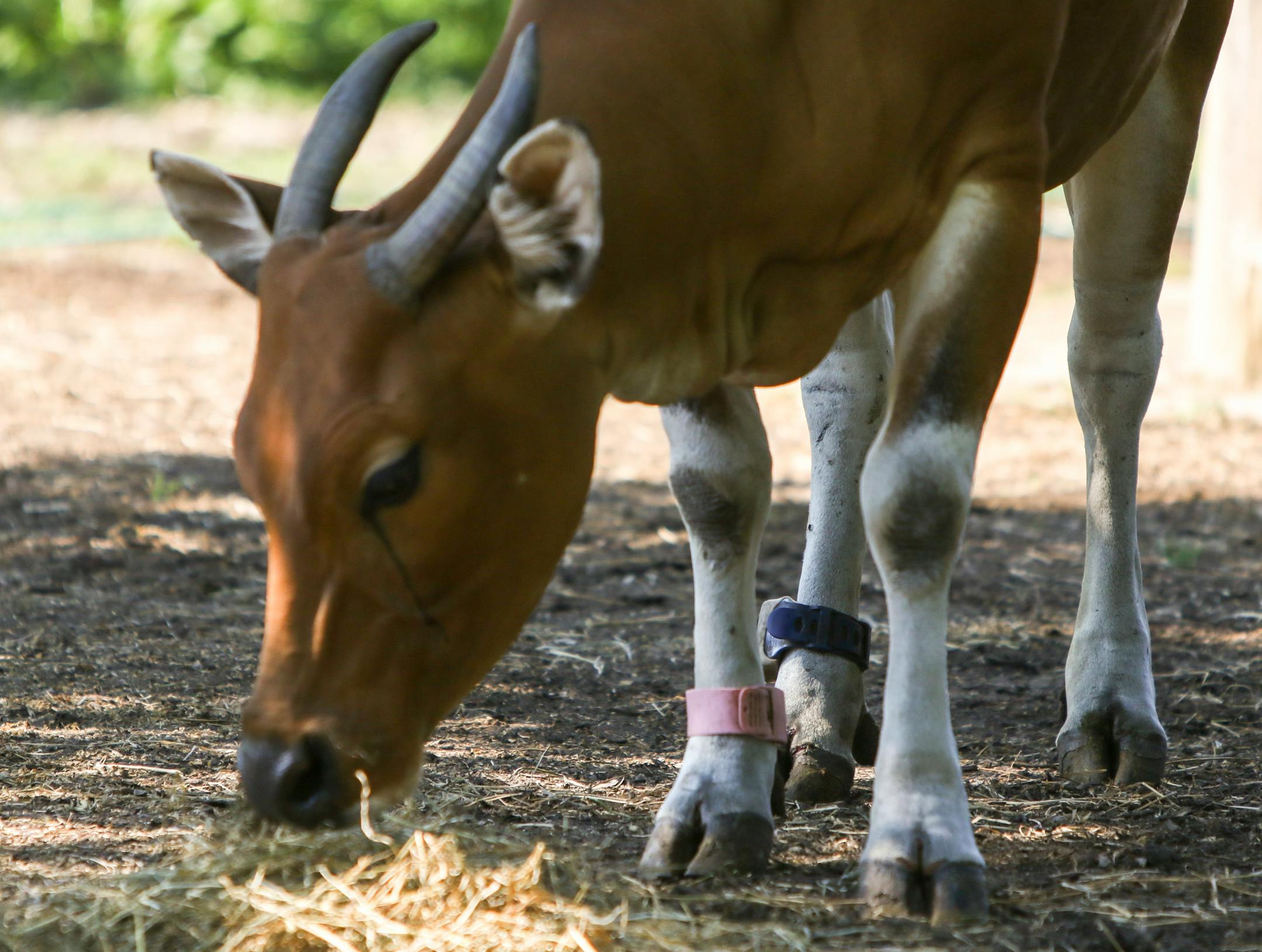
The St. Louis Zoo is using fitness trackers to help save endangered cattle. Researchers at the zoo are using the bovine version of a Fitbit, combined with fecal samples, to uncover hidden patterns in the animals' reproductive cycles.
The results could be key to protecting the animals, called banteng, and scientists hope the data will boost the success of breeding efforts.
"It's like a jigsaw puzzle in a sense," said Karen Bauman, the zoo's manager of reproductive sciences. "Each little piece of scientific data helps us make a better, completed picture for conservation."
The current picture isn't pretty. There are likely fewer than 5,000 banteng left in the wild in their native Southeast Asia, including Indonesia, Cambodia and Myanmar. That's a 95% decrease in their population from the 1960s, according to the Asian Wild Cattle Specialist Group.
Poachers hunt the elusive cattle for its meat and horns, and human expansion has fragmented their habitat and isolated remaining populations.
Zoos around the world have been building a backup plan by growing a captive population as a bulwark against extinction. The St. Louis Zoo is home to five banteng, part of a total of 42 in U.S. zoos. Breeding among them is accomplished mostly by artificial insemination.
"I can FedEx a semen sample and get it there tomorrow," Bauman said. "I can't FedEx a cow."
But it's still an uphill battle. Female banteng have lost their calves in 30 to 50% of pregnancies attempted by artificial insemination at the zoo, Bauman estimated.

