

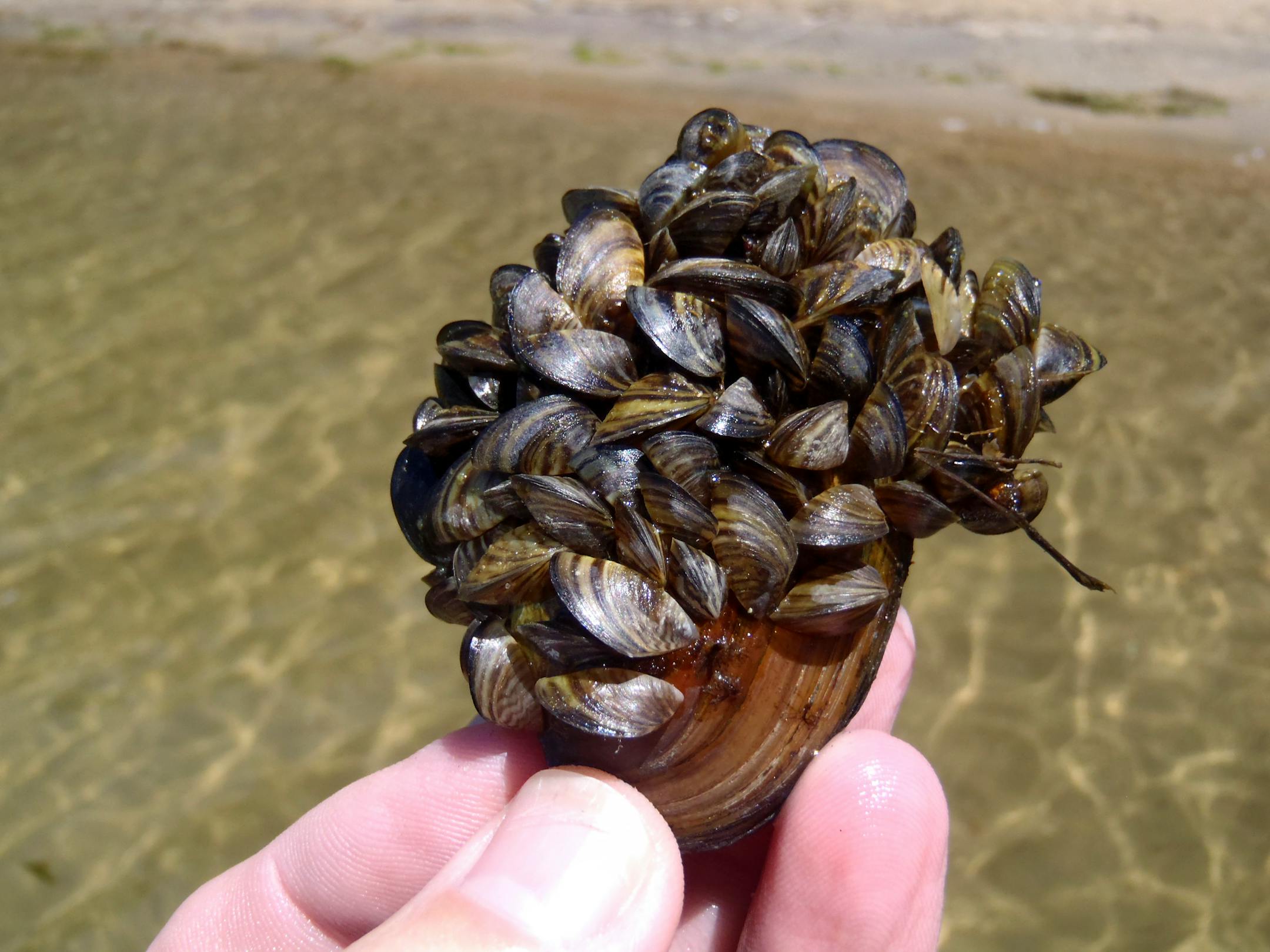
Zebra mussels have been discovered in Lake Melissa, the first confirmed sighting of the invasive species in the Detroit Lakes area, one of Minnesota's most popular summertime destinations for boaters and anglers.
A citizen discovered the mussels this week while gathering shells on the south end of the Becker County lake, the Minnesota Department of Natural Resources (DNR) said Friday.
"We're extremely pleased that this discovery was reported so quickly and with such detail," said Barry Stratton, the southern district manager for the DNR's ecological and water resources division. "The report included specific location information and photos that allowed us to respond immediately to the exact spot."
Department staffers, lake residents and county officials have been on the lookout for zebra mussels in the Detroit Lakes area for years. In 2011, the tiny striped mussels were found in Pelican Lake, about 10 miles downstream from the new infestation.
That discovery amplified efforts to educate lake visitors about the damage done by zebra mussels, which filter nutrients from lake water, leaving it clearer but with less food for fish and other native aquatic species. They are prodigious hitchhikers, adhering to the sides of boats, personal watercraft and heavy equipment.
"I always tell people it's not just boats you have to be careful about," said Tera Guetter, Pelican River Watershed District administrator. "If you have lake property, you'd better know where all your equipment has been used before you set it in the water."
Zebra mussels were first found in Minnesota in Duluth-Superior Harbor in 1989. Natives of Eastern Europe and western Russia, they were probably transported in the ballast water of oceangoing freighters.
Since then, they have spread throughout the Great Lakes and Mississippi River watershed, as well as to numerous inland lakes and streams in nearly two dozen Minnesota counties. Infested waters include popular lakes in the Brainerd area, Lake Mille Lacs, Lake Minnetonka and Minnehaha Creek.


