

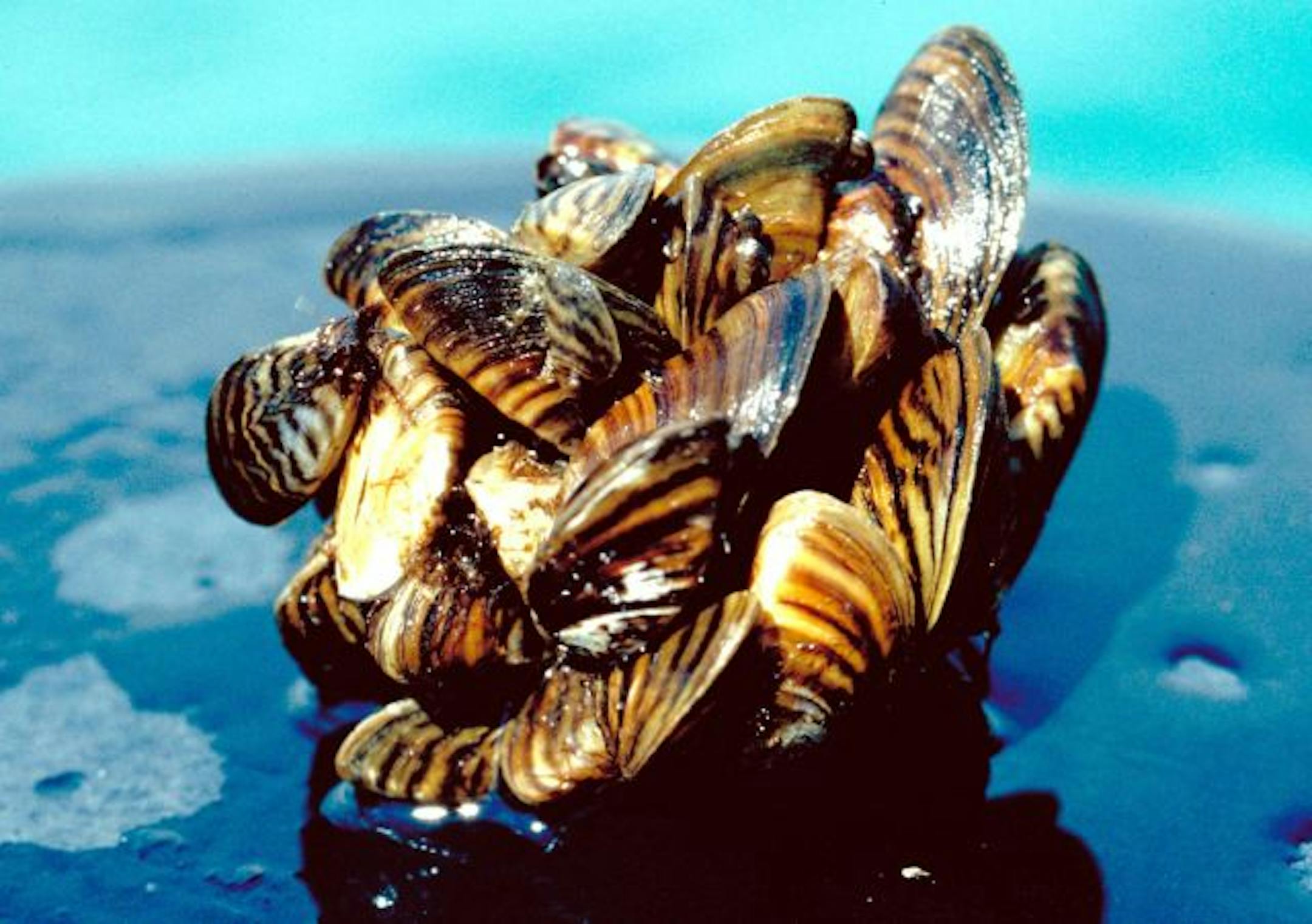
Zebra mussels may be infesting Prior Lake, which would make it the first recreational lake in the metro area to be invaded by the tenacious pest. The discovery is adding urgency to efforts to halt the spread of invasive species to other Twin Cities waters, including Lake Minnetonka.
The DNR is following a homeowner's report of zebra mussel shells on a Prior Lake beach, and won't make a final determination until the water warms and divers can explore the water, but "likely it's infested," said Luke Skinner, supervisor of the DNR invasive species unit.
Skinner said the possibility is disappointing but not surprising, considering the amount of boat traffic and extensive access to Prior Lake, a large and popular lake in Scott County. Zebra mussels are spread most commonly by people hauling boats, water, boat lifts and other materials from an infested water body to a clean one.
The non-native mussels proliferate and can smother native clams, cling in great clusters to boats, docks, plants and water intakes and can be hard on beachcombers' feet. Their impact on fish populations varies from lake to lake, Skinner said. Transporting zebra mussels is against the law, and boaters have long been urged to clean and dry their vessels and dump water from live wells and bait buckets before moving from one water body to another.
The DNR will step up its zebra mussel education and enforcement efforts around the metro area, Skinner said, in an attempt to limit the spread of the mussels, which were first detected in Minnesota in Duluth Harbor in 1989. So far only nine lakes have been infested in Minnesota, but the mussels have colonized the Mississippi and St. Croix rivers.
The discovery of zebra mussels in Lake Mille Lacs in 2005 has heightened fears that the pest might be carried by boaters to Lake Minnetonka, the state's busiest lake, and other metro area lakes.
Last year, 99 of the 13,573 boats the DNR inspected on Lake Minnetonka came from Mille Lacs, 69 came from the Mississippi River and 80 from the St. Croix, Skinner said. But none were found with zebra mussels.
The Lake Minnetonka Association, a landowners' group, estimates that 1,000 to 2,000 boats a year come to Lake Minnetonka from Mille Lac and other waters infested with zebra mussels, so it wants more monitoring at boat ramps and possibly boat launch fees. Skinner said the DNR will write more tickets for violations at metro boat ramps this year.


