

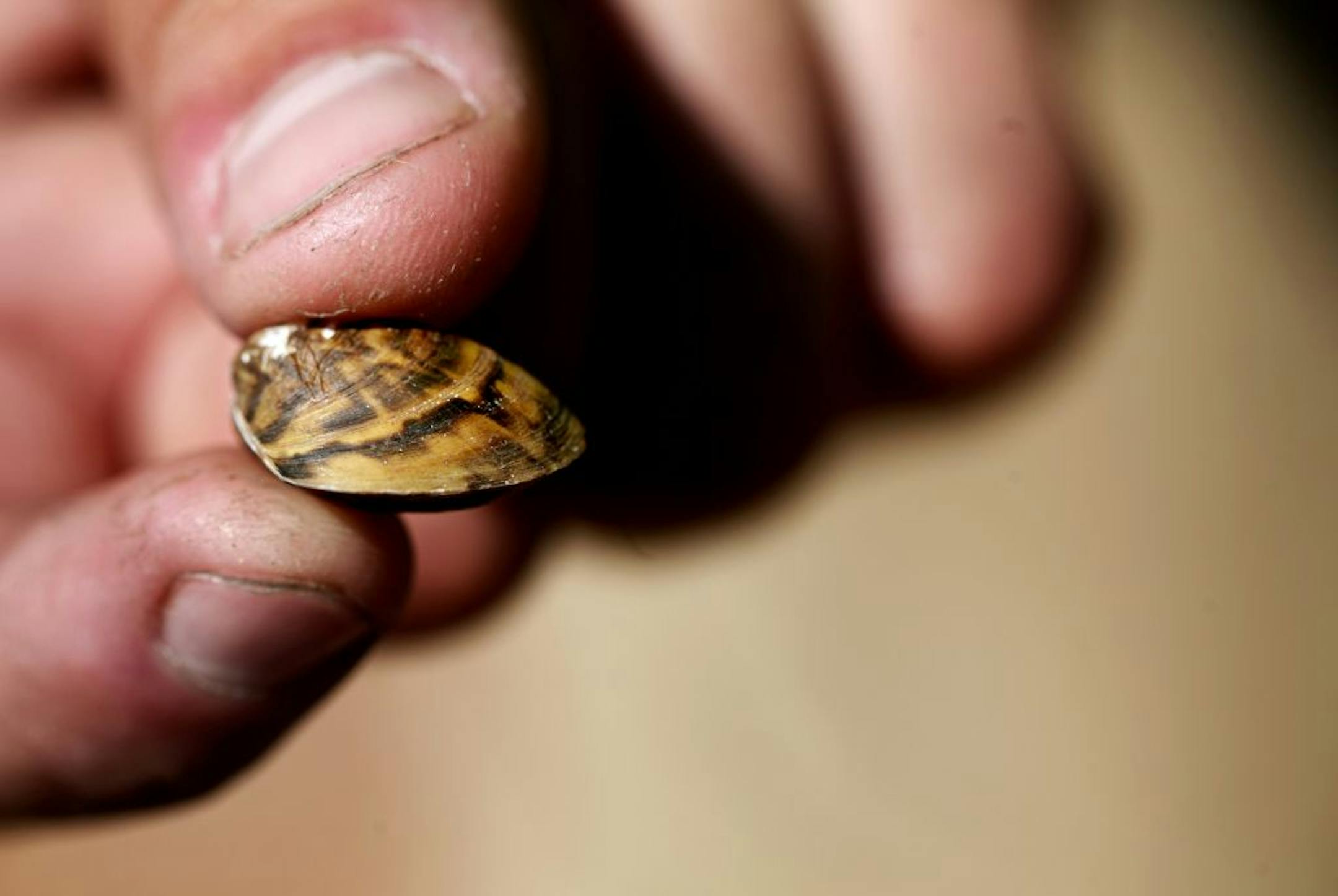
Suddenly, zebra mussels are knocking on the door of the Boundary Waters Canoe Area Wilderness.
The recent discovery of the invasive critters in a small Iron Range mine pit lake poses an ominous threat to northeastern Minnesota lakes, including those in the BWCA. And because many northeast lakes already have low nutrient levels, biologists say zebra mussel infestations there could potentially affect the fisheries even more than in other state lakes.
Officials don't know how zebra mussels got into little Lake Ore-Be-Gone, also called Gilbert Pit, near Gilbert -- the farthest north to date the invasive species has been found in the state.
But they are concerned.
"The spooky part is the proximity to Burntside Lake [near Ely] and Lake Vermilion [near Tower]," said Rich Rezanka, Department of Natural Resources invasive species specialist. "All of a sudden it's not a four-hour drive from an infested water to those bodies, it's a short drive.
"Zebra mussels in Vermilion or Burntside would be catastrophic," he added. "The whole BWCA watershed would be susceptible."
Zebra mussels in the relatively sterile northeast lakes pose a greater risk for a fisheries food chain collapse, biologists say. Zebra mussels filter up to a quart of water daily and consume algae, also the main diet of zooplankton, tiny animals essential to small fish.
Algae eat phosphorus, so in lakes with low phosphorus levels -- and thus low algae levels -- zebra mussels could further reduce algae levels to the point that there is no longer enough food to sustain zooplankton populations. And the northeast lakes tend to be low in phosphorus.


