

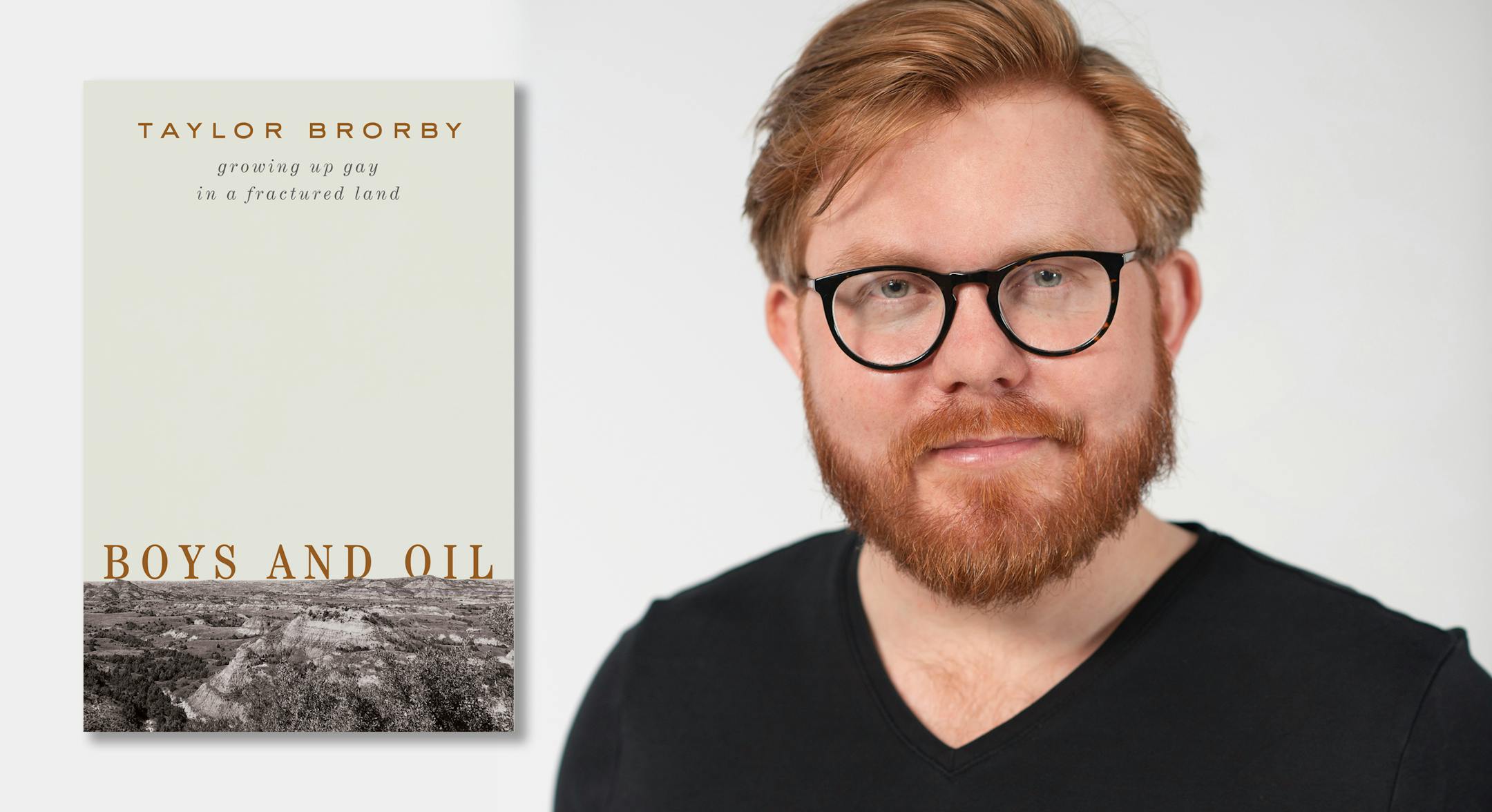
The prairie taught Taylor Brorby to see nuance. The prairie reveals.
Brorby suggests we visit his home state of North Dakota, preferably over the golden hour in November, when "the sky fires fuchsia and it smolders into orange, and then as it deepens, it goes into indigo, and wheat fields all of a sudden look like you're in a wash of amber," he tells me. "People like filters on Instagram. But I'm like, no [bleeping] filter on Instagram has done what my home has done!"
The writer and environmentalist speaks of the land that reared him from a place of love. But it's a complicated love, forged by the goodness of grandparents as well as the harshness of hate. His new memoir, "Boys and Oil: Growing Up Gay in a Fractured Land," is winning accolades from publications like the New York Times, particularly for his depiction of a kind of rural America that crushes its most vulnerable inhabitants.
Brorby, 34, says it's important for him to share his story — a true one, in which the gay kid stays alive.
"If you were to say, 'Name a famous piece of LGBTQ literature from the American West, everyone would say, 'Brokeback Mountain.' And then after that there'd be a long silence," Brorby says. "There's not a lot of nonfiction writing from that part of the world. No wonder why people feel so alone."
Brorby remembers feeling the heft of that loneliness in the eighth grade, when he made a list of reasons to live, and a list of reasons to die. Being gay was one of the reasons to die. He grew up in a place called Center, N.D., "a place where people only end up," as he writes in the first few pages. Kids in town called him gay slurs before he even knew what being gay meant.
"Boys and Oil" is the book he wishes he had back then. It's not just for the 12-year-old gay boy growing up in a small town, he says, but for the 12-year-old straight boy who's also living there — and who yearns to take oil painting lessons, but whose father dreams of him being the football star. He believes children "largely bend toward softness," even joking that every 4-year-old boy "sounds gay when he's around flowers."
But after puberty, boys who read, paint or play music can raise suspicions in hometowns like his.


