

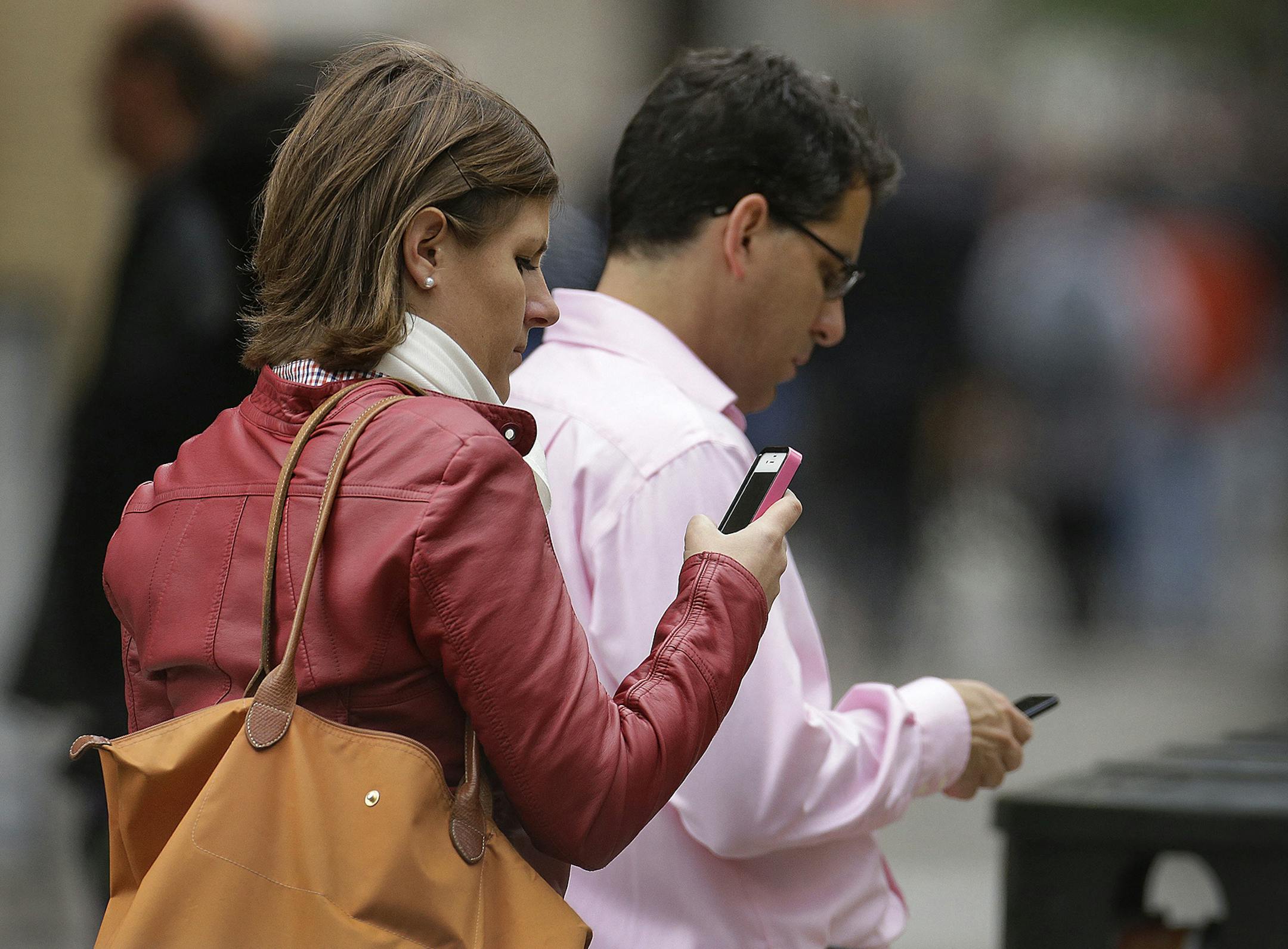
Every time you pull out your smartphone in public, you're making yourself a target.
The mobile gadgets are easy to spot, easy to steal and fetch hundreds of dollars quickly on the black market.
Protect Your Bubble, a company that sells insurance for personal electronics, says 113 smartphones are stolen every minute in the United States. In New York, those thefts account for 14 percent of all crime.
Cops have a name for it — Apple picking — but the iPhone maker is actually out front in the effort to curb gadget-snatching. An activation-lock feature on Apple's iOS 7 allows the owner to wipe data from a stolen phone, which can't be reactivated without the owner's password.
Other manufacturers have been slow to add antitheft features to their phones, though, despite urging from police. Now, a coalition of law enforcement officials, including Illinois' Attorney General Lisa Madigan, is pushing an initiative called Secure Our Smartphones.
The group has been pressuring cellphone makers to provide a remote antitheft feature called a "kill switch." If a phone is lost or stolen, the owner simply reports it to the carrier and the phone is rendered inoperable. If the phone doesn't work, there's not much reason to steal it.
So why hasn't the industry embraced the technology? The coalition has some troubling theories. Phonemakers have a disincentive: If your phone is stolen, you will probably buy another one, and fast. The carriers who service those phones have reason to resist, too. They make a lot of money selling insurance against loss or theft.
San Francisco District Attorney George Gascon, who cochairs the SOS, was working with Samsung, which wants to install a "kill switch" on its phones. But Samsung needs permission from the carriers, and Gascon says they're balking.


