

Many of the signs of aging are invisible, slow and subtle — changes in cell division capacity, cardiac output and kidney function don't exactly show up in the mirror. But gray hairs are one of the most obvious clues that the body isn't working like it used to.
Our hair turns gray when melanin-producing stem cells stop functioning properly. A new study in mice, but with implications for people and published this month in the journal Nature, provides a clearer picture of the cellular glitches that turn us into silver foxes and vixens.
"This is a really big step toward understanding why we gray," said Mayumi Ito, an author of the study and a dermatology professor at New York University's Grossman School of Medicine.
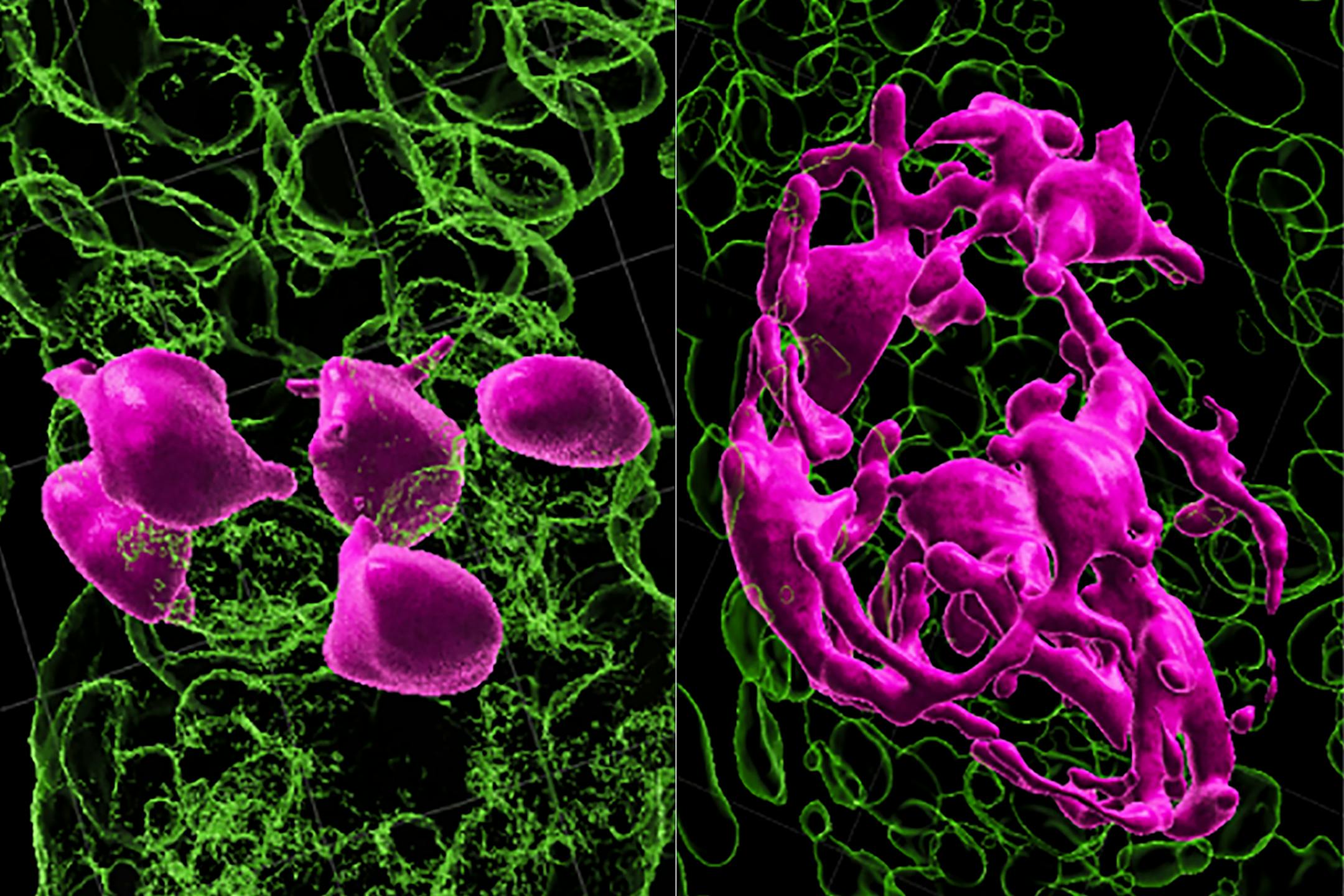
Unlike embryonic stem cells, which develop into all sorts of different organs, adult stem cells have a more set path. The melanocyte stem cells in our hair follicles are responsible for producing and maintaining the pigment in our hair.
Each hair follicle keeps immature melanocyte stem cells in storage. When they're needed, those cells travel from one part of the follicle to another, where proteins spur them to mature into pigment-producing cells, giving hair its hue.
Scientists assumed that gray hair was the result of that pool of melanocyte stem cells running dry. However, previous studies with mice made Ito and her co-author, Qi Sun, wonder if hair could lose its pigment even when stem cells are still present.
To learn more about stem cell behavior throughout different phases of hair growth, the researchers spent two years tracking and imaging individual cells in mouse fur. To their amazement, the stem cells traveled back and forth within the hair follicle, transitioning into their mature, pigment-producing state and then out of it again.
"We were surprised," said Sun, who said seeing one group of stem cells switching back and forth between mature and young states did not match up with existing explanations.


