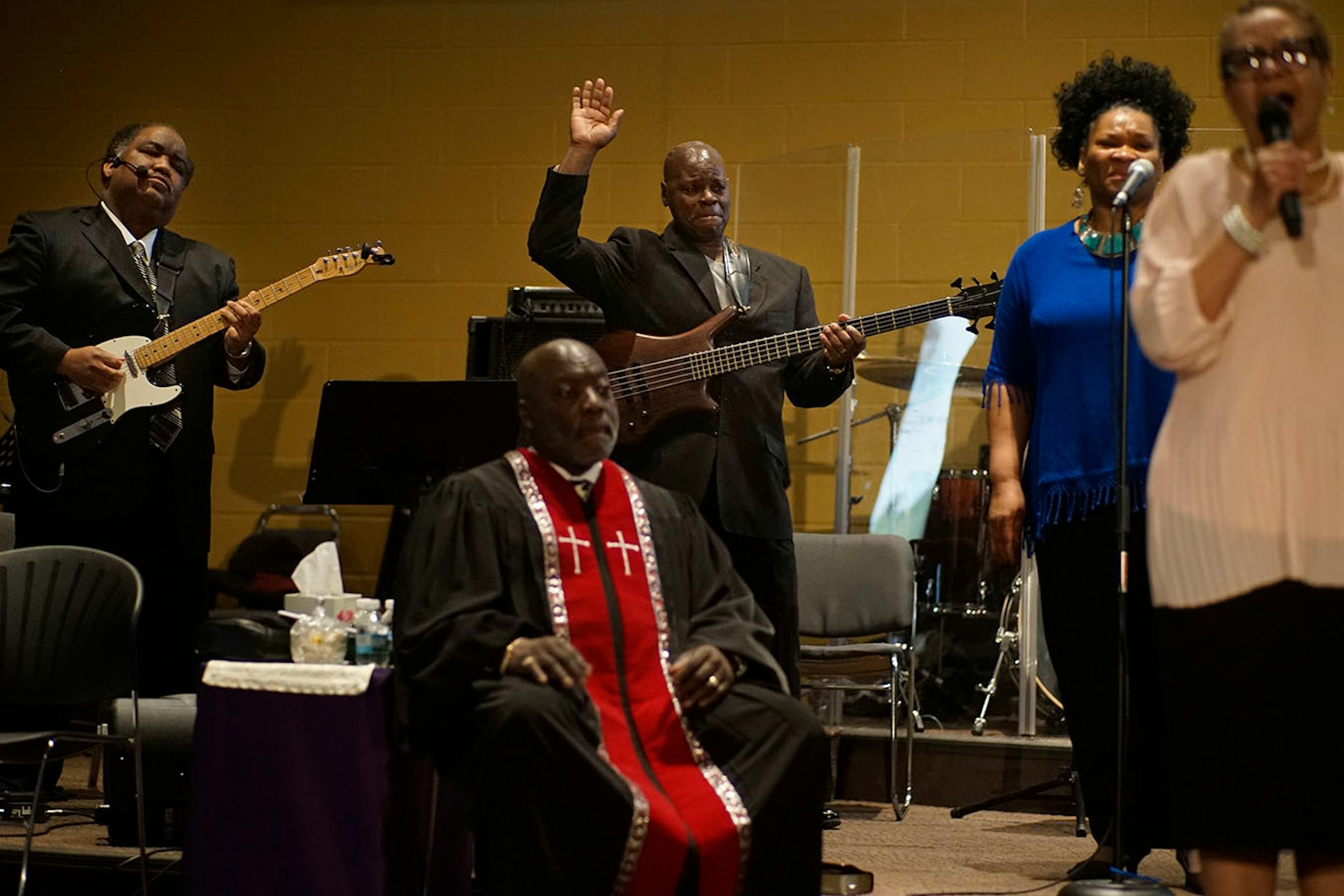
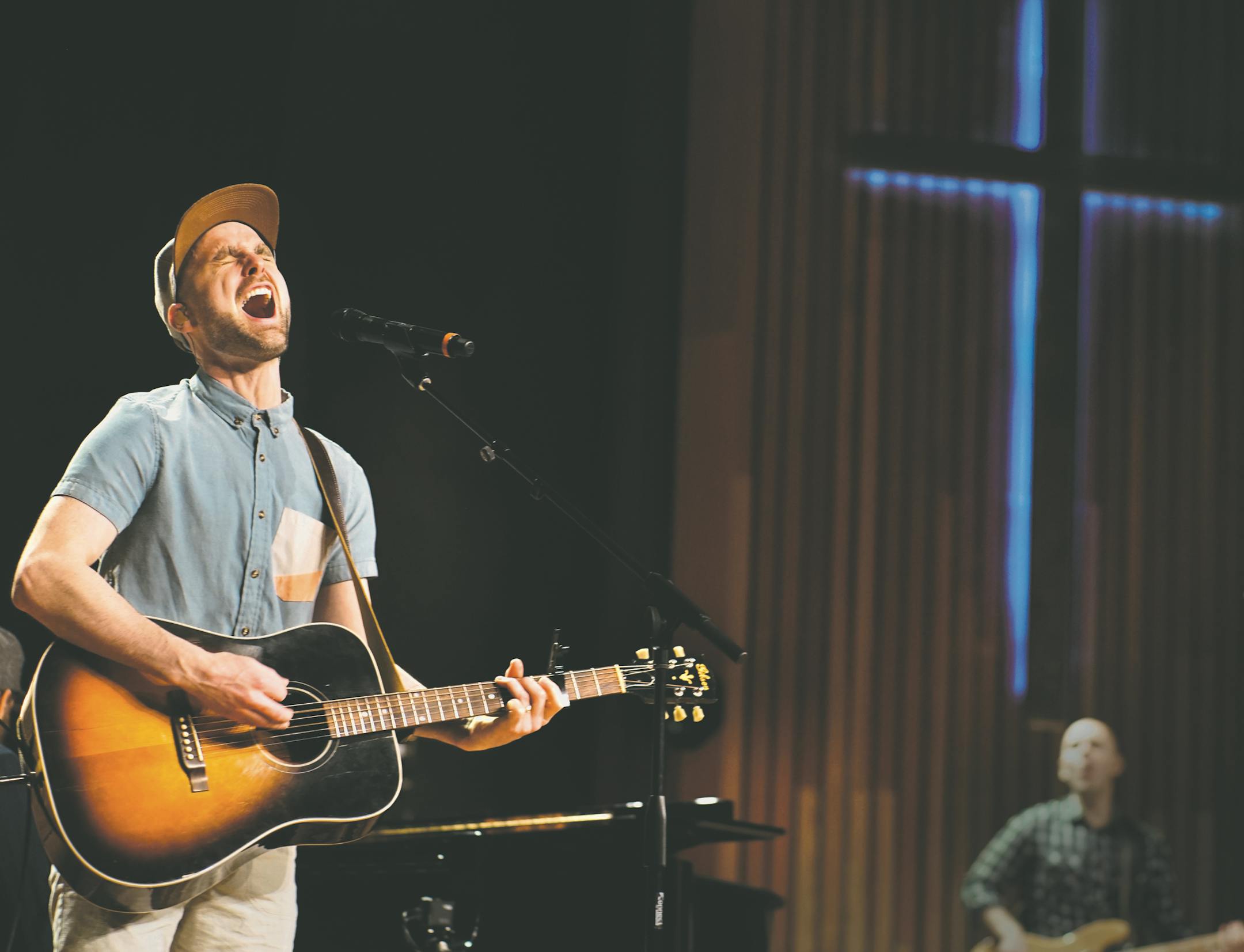
Backed by six musicians, a singer wearing skinny jeans and Converse sneakers raised her voice, then her hand. Hundreds in the crowd sang along. Minus the lyrics — "We will not fear/for God hath willed/His truth to triumph through us" — this Sunday morning song felt very Saturday night. But it took place in a sanctuary, not a stage. At a church in Chanhassen, not a downtown venue.
Members of this band, at Westwood Community Church, know those stages, too.
Across the Twin Cities each Sunday, musicians who headline First Avenue, the Dakota Jazz Club and Orchestra Hall are performing at a lesser known venue: church. Singers and instrumentalists from rock bands and classical ensembles, folk groups and gospel choirs are paid to play at the weekly services, adding expertise and oomph to old hymns and new worship songs.
For some, it's a gig. ("For lack of a better term, it's an easy cover band gig," said bassist Matt Call.) Others see it as an expression of their faith. ("For me, it comes straight out of heaven," said singer Jevetta Steele.) Either way, most view the steady income as a key piece of making a living as a musician.
"When you're 18 and starting a band, you don't think, 'Man, I'm going to grow up and be a rock star playing churches,' " said Quillan Roe of the Roe Family Singers. "It's not sexy — it's not part of the romantic image of the traveling musician."
But his old-timey bluegrass band plays churches regularly these days. And each Sunday at 5 p.m., Roe leads the band at the House of Mercy, a St. Paul church that spotlights country-gospel music in its worship: Hank Williams on a recent Sunday, alongside "Amazing Grace." Other musicians in the church's Blood Washed Band are volunteers, but as music leader, Roe gets paid. (It's a post previously held by Page Burkum of the harmonious Cactus Blossoms.)
"For the Roe family, it helps a lot," Roe said, then laughed. "The Roe family both as a band — and the Roe family as my wife and my children."
Churches, then, are a sometimes invisible supporter of the Twin Cities area's robust music scene, helping fuel musicians' passion projects or simply cover rent. "In a funny way, churches are… allowing us to be artists," said Jourdan Myers, a keyboardist and vocalist, continuing a tradition that dates back to Bach. "They're paying us as musicians, valuing us in a way that a lot of venues don't, a lot of clubs don't."