0:38
0:38SANTA FE, N.M. - The fragrance of roasting peppers was as effective as a trail of bread crumbs as I looked for the farmers market on Guadalupe Street. The closer I got to the railroad station, where the vendor stalls began, the more pungent the peppers' aroma.
By the time I reached Reynaldo Romero and his wire roaster on the outskirts of the plaza, the chile oils in the air were making me cough and my eyes burn.
Romero seemed unaffected by the volatile oils or intense heat. His safari hat and long sleeves protected him from the sun and roaster as he quietly and constantly turned the wheel to rotate the chiles. Each batch took about five minutes to blister, at which time the chile skins could be easily removed and the peppers were ready to eat, freeze or cook.
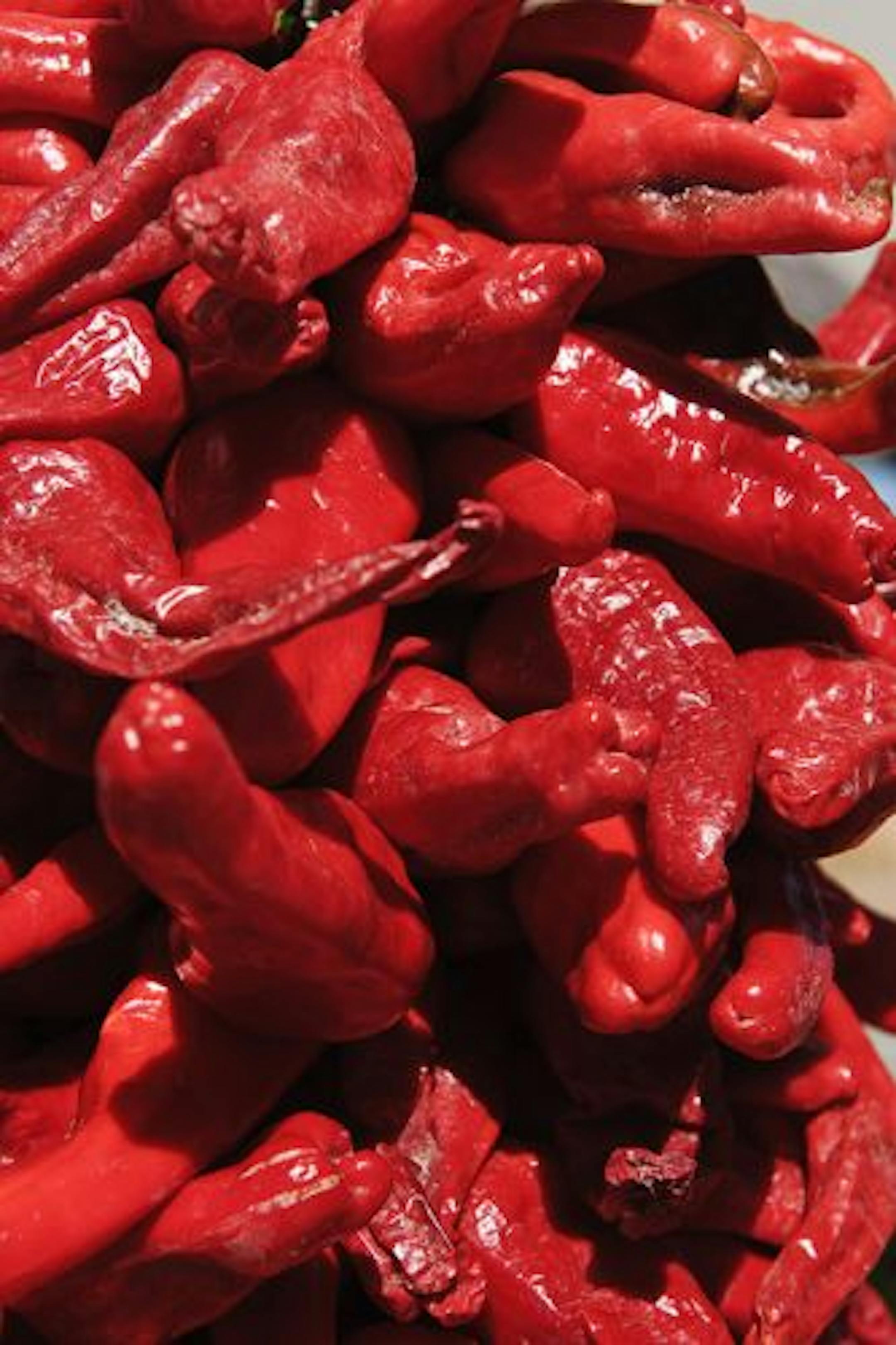
It's chile harvest season in New Mexico, a glorious time when 40-pound burlap bags of chiles are sold in markets and from the backs of trucks. Some chiles are hung and dried in the colorful strings of peppers called ristras. But many are sold in quantities to be roasted en masse.
My cabdriver pointed out the bags of chiles for sale in vacant corners of parking lots as we zipped through the city. It was a good year for chiles, and he and his wife expected to spend a weekend roasting and canning peppers to carry them through a year's worth of recipes -- an annual fall event in kitchens throughout the region.
Not surprising in a state where a U.S. senator entered the official spelling of "chile" -- not chili or chilie -- into the Congressional Record. Or where state legislators voted on an official "question" as a symbol.
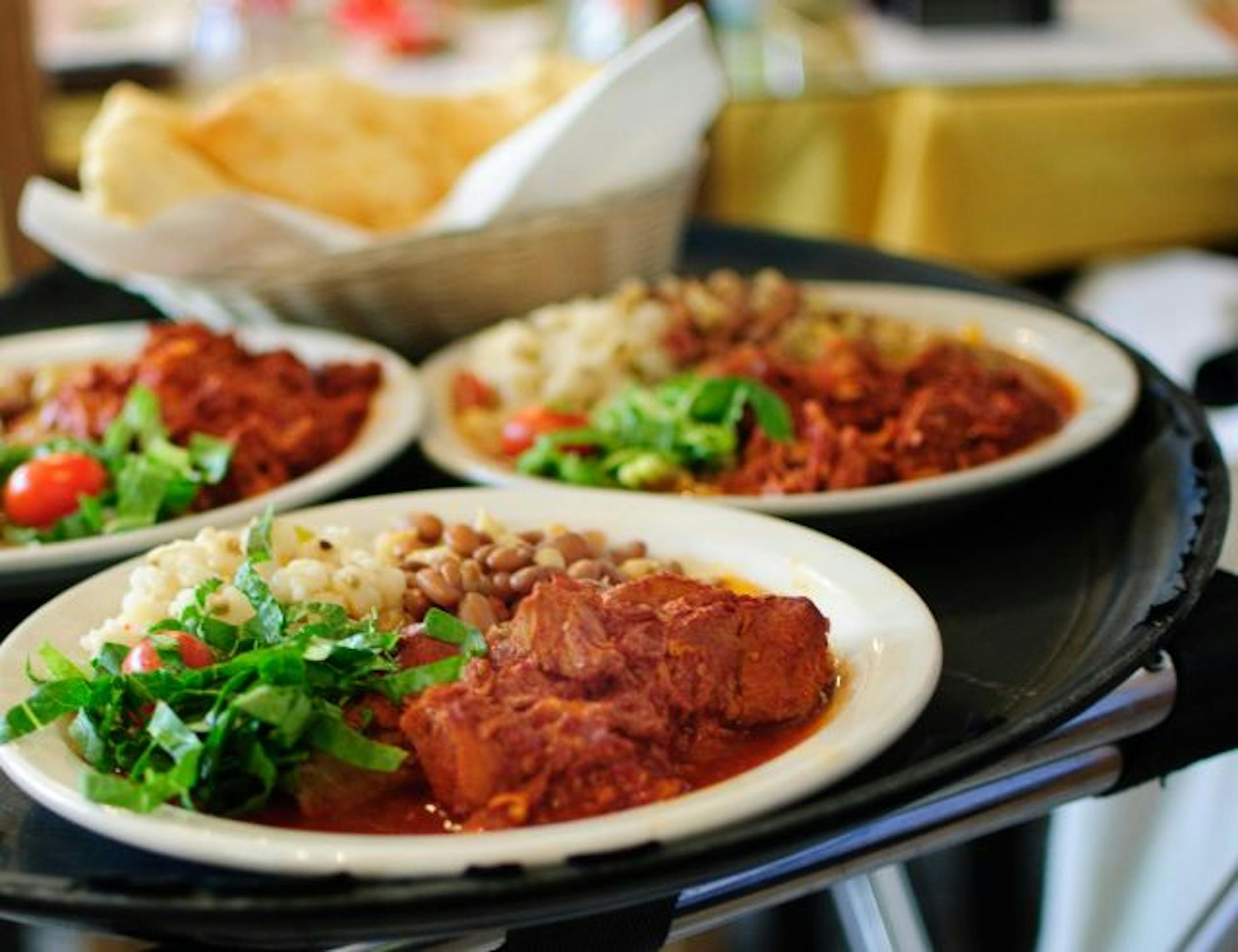
"Red or green?" is asked at any New Mexican restaurant, signifying "red or green sauce." For those who can't make up their minds -- or who simply like the taste of both -- there's another possibility: "Christmas," meaning both red and green sauces.
The New Mexican chiles -- green in the summer and red in the fall as they ripen -- offer two very different choices, depending on their color, the green being more, well "green" and vegetative in flavor, and the red a much deeper, darker and more complex taste.