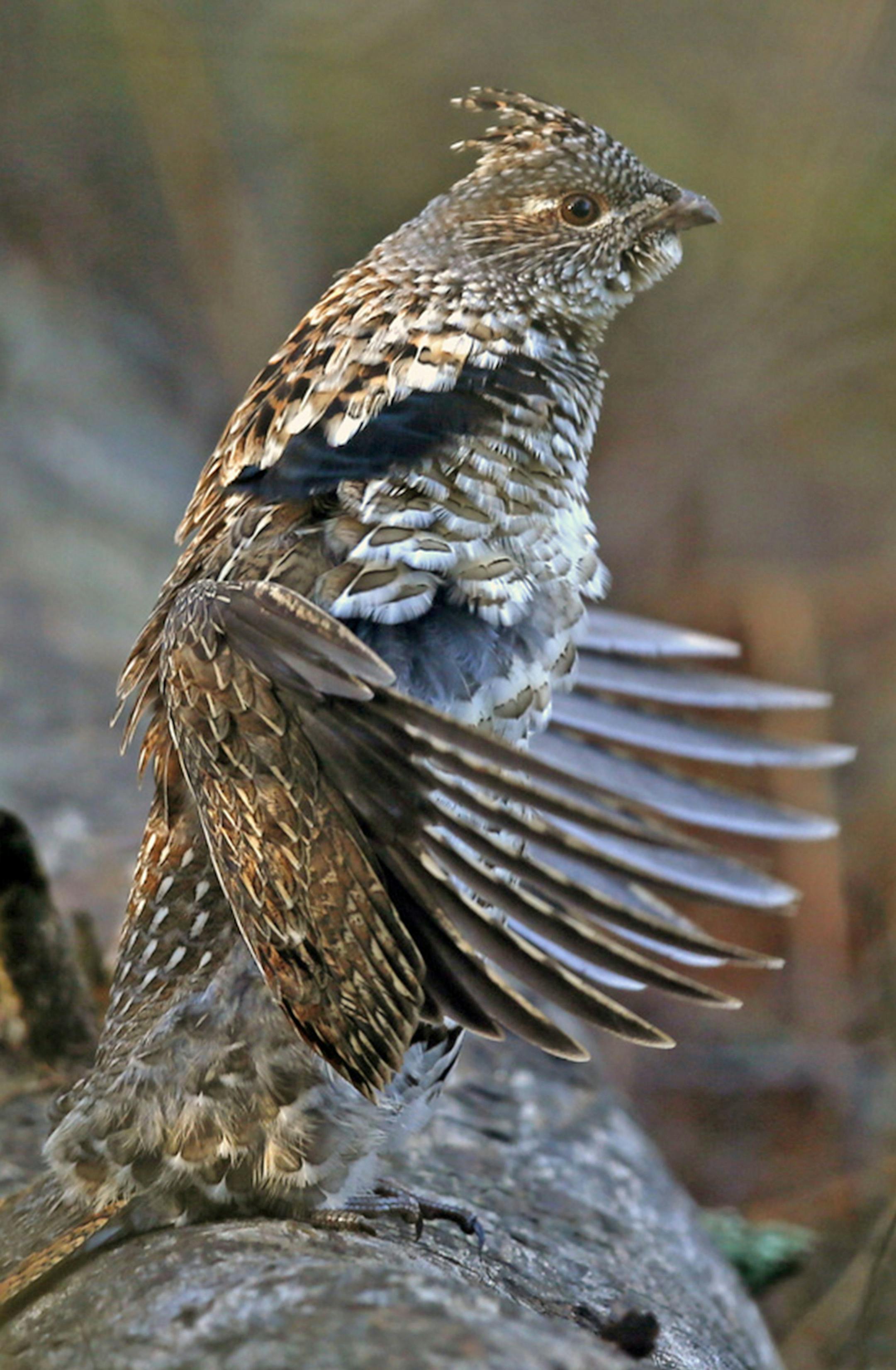
If ruffed grouse hunters enjoyed last year's season, they're in luck: The annual fall and early winter ritual that will begin in mid-September will be similar.
Or not.
Put another way: The Great Grouse Mystery continues.
Until recent years, spring drumming counts undertaken by Department of Natural Resources (DNR) staff and cooperators to estimate the size of the ruffed grouse breeding population correlated, approximately, to hunters' fall sightings and harvests.
Which, if still true, would mean the number of ruffed grouse that hunters see and harvest this fall will be approximately similar to the number they encountered and harvested last year — because the average statewide drumming count was the same both years: 1.5 drums per stop.
Yet whatever connected the spring drumming counts to fall sightings and harvests over a period of many decades seems to have disconnected, a phenomenon never more true than in 2017, when spring drumming counts showed an unprecedented 57% increase from 2016, yet many hunters that fall reported one of their worst seasons.
"Since the early 2000s the drumming counts have not been reliable forecasters of fall populations," said DNR grouse project leader Charlotte Roy, headquartered in Grand Rapids.
Integral to the conundrum is the belief that baby ruffed grouse are being hatched in spring but are disappearing as summer wears on. No one knows this for sure. But loggers and others in the woods during June and July have reported seeing "usual" or "average" numbers of grouse broods in recent years. But the young birds don't seem to survive until fall.