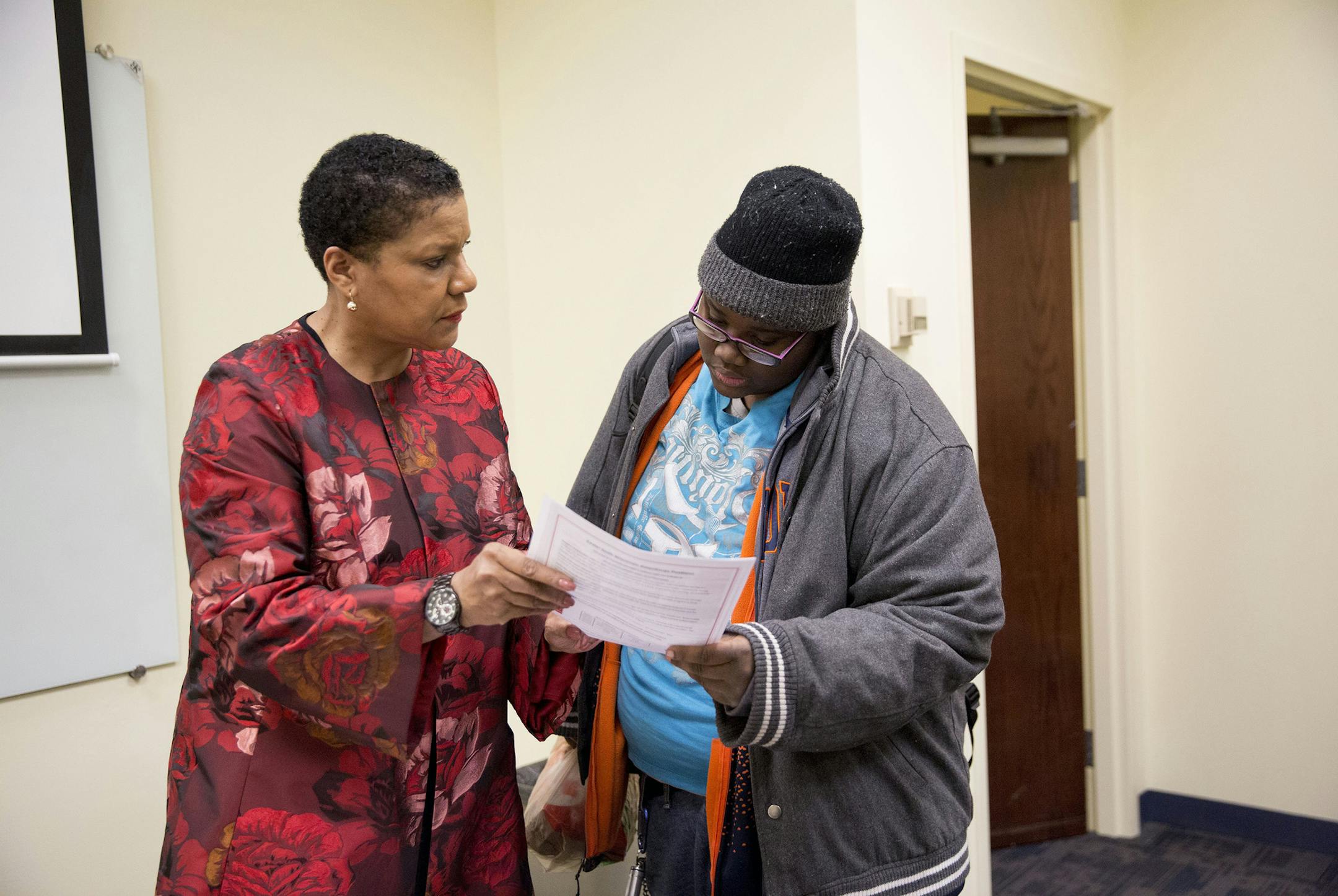
CHICAGO – On a frigid winter morning, Latia Crockett-Holder, 23, emerges from her tent beneath a crumbling overpass in her stocking feet.
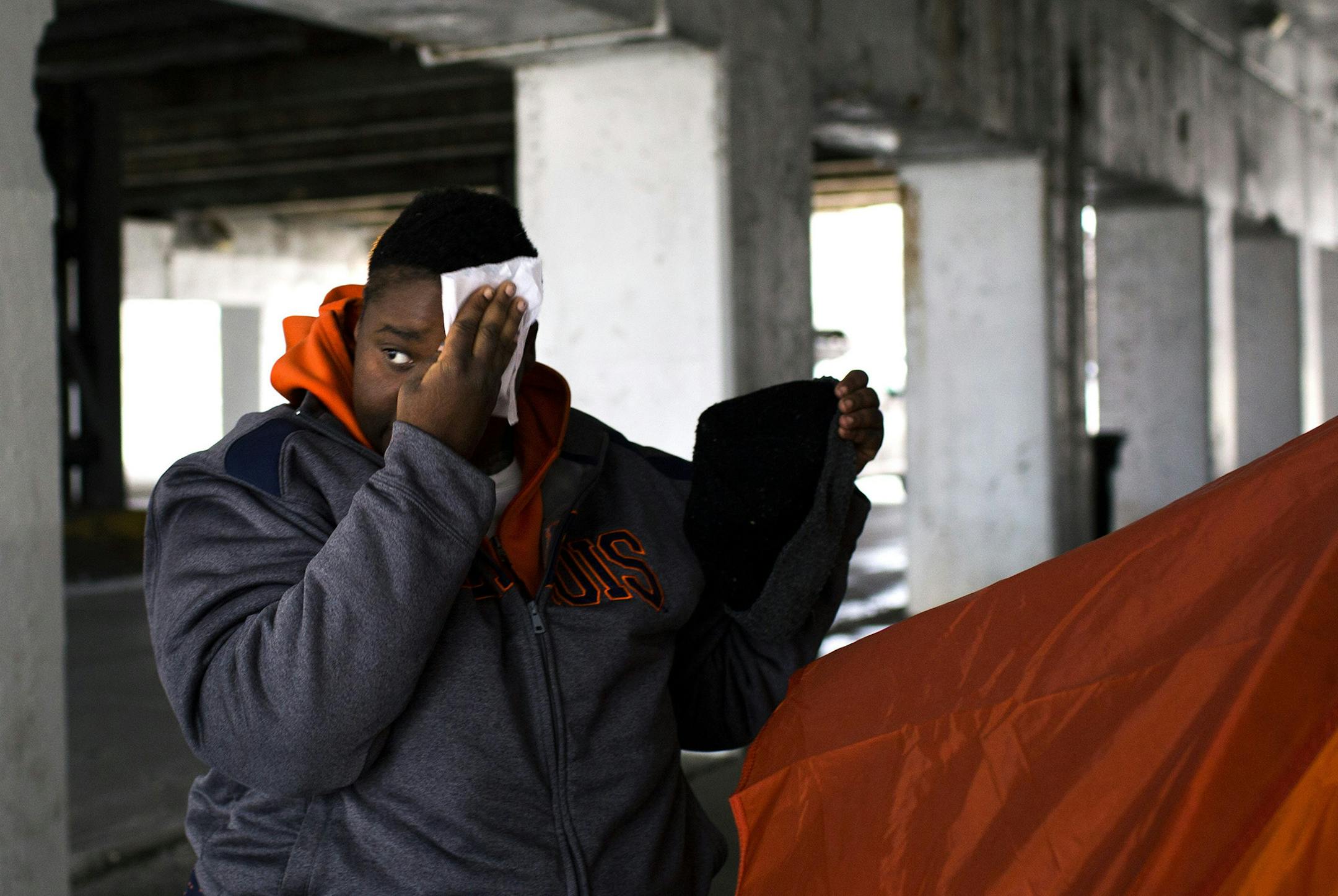
In the dim viaduct, where the streetlights are out and water drips from melting icicles like stalactites in a cavern, Crockett-Holder pulls two sheets of baby wipes from a box to wash her face. She squirts toothpaste from a small tube directly into her mouth, brushes and spits into the street.
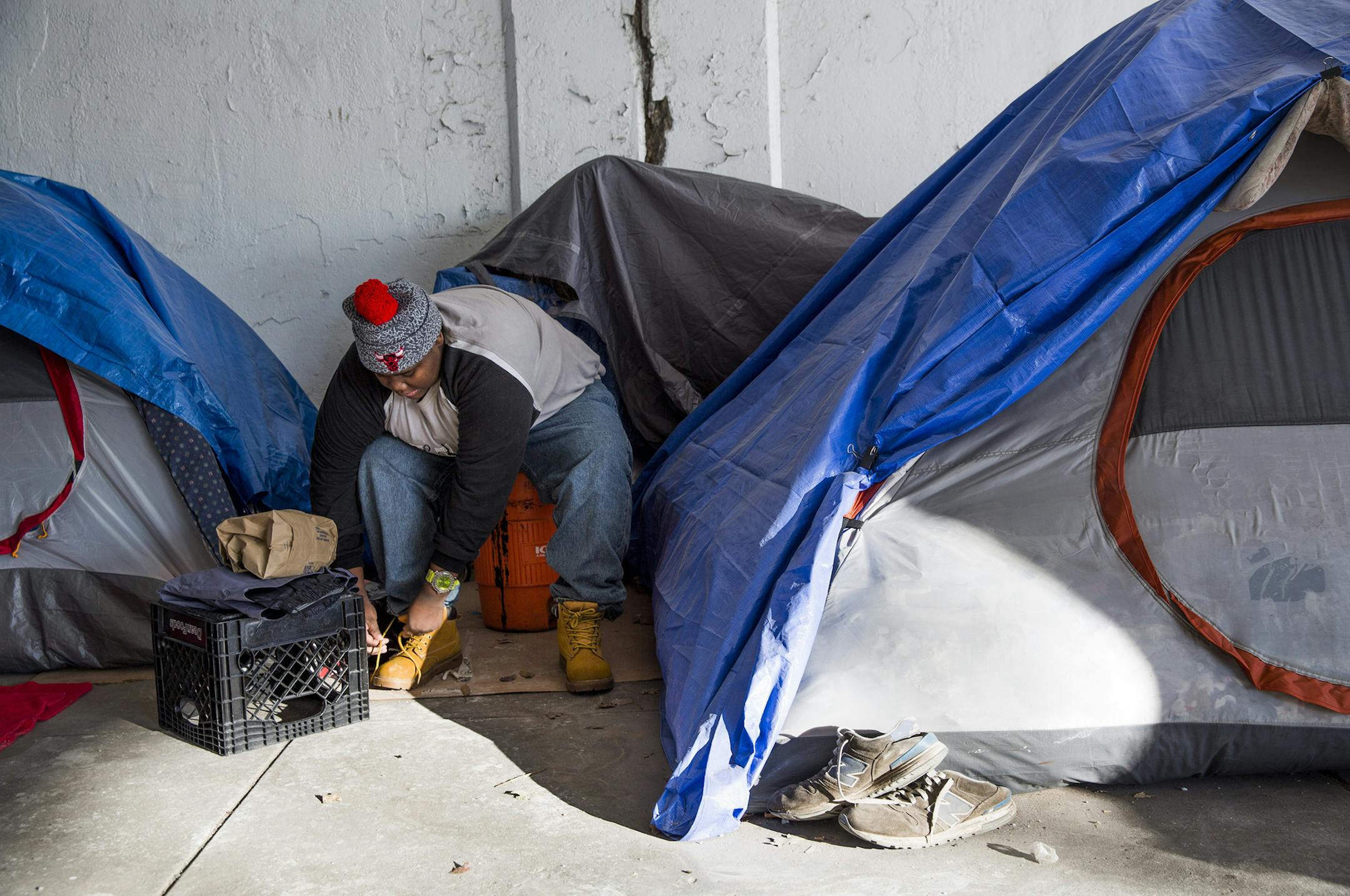
Then Crockett-Holder laces up her boots, slings a book bag over her shoulder and heads off to the bus a block away. She has a 10:45 a.m. economics class at MacCormac College.
Crockett-Holder is studying criminal justice and dreams of a career in law enforcement.
It's an unlikely goal for a woman living in the tent city that has sprouted beneath an overpass in Chicago's Uptown neighborhood. For the last five months, she's lived in an overstuffed tent that she shares with her husband and his stepfather. Inside the tent, she wears a headlamp to study.
She's been saving money from government assistance in an effort to get into an apartment.
"I could get [more] done in the house and not being in the tent doing homework," she said. "That's like the hardest thing ever. You're bunched up in one tent and you can't stay focused. You hear people outside your tent arguing and you can't study."
Young people like Crockett-Holder will be the subject of an upcoming study by the University of Chicago's Chapin Hall research center. Starting in May, the center plans to conduct a first-of-its-kind count of homeless and runaway young people in more than 24 communities across the country.