

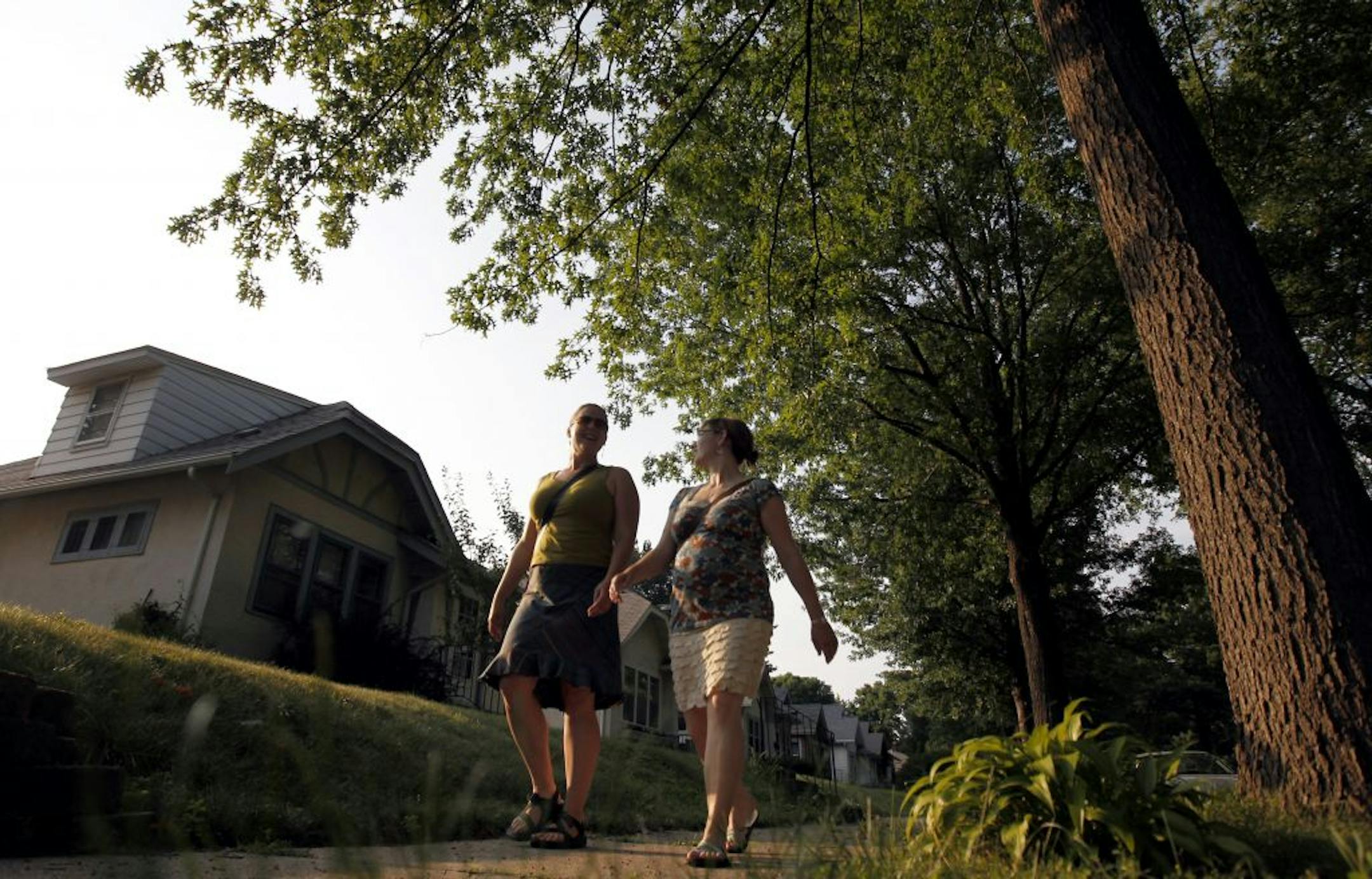
When Scott and Lacey Campbell went searching for their first home, city living was high on their list of must-haves.
"We could have gotten a bigger, newer house in the suburbs for less money, but we didn't want that," said Scott.
Instead, they bought a house in Minneapolis, close to Mississippi River walking trails, restaurants, coffee shops and the Riverview movie theater. Lacey, who is expecting, is pleased that her child will grow up with "access to great things, without being tethered to me or a car," she said.
The Campbells represent a major shift in what home buyers now want and are willing to pay a premium for, according to a recent study by the Brookings Institution. They want "walkability": high-density neighborhoods with nearby destinations, said Brookings senior fellow Christopher Leinberger, a professor at the George Washington University School of Business. "That was not the case 20 years ago."
The Millennials, those born between the late 1970s and the early 1990s, are driving the shift, said Leinberger. "They don't want to live like 'Leave it to Beaver.' They want to live like 'Seinfeld' and 'Friends.'"
Until the 1990s, suburban homes that were accessible only by car cost more per square foot than other kinds of American housing, according to Leinberger. But that equation has flipped, he said. Today, the most valuable real estate is located in walkable locations.
To quantify the value that walkability adds, the Brookings study analyzed housing data from Zillow.com, focusing on the Washington, D.C., area.
The study did not include the Twin Cities, but after analyzing local data at the request of the Star Tribune, Leinberger said that "Minneapolis fits the pattern."


