

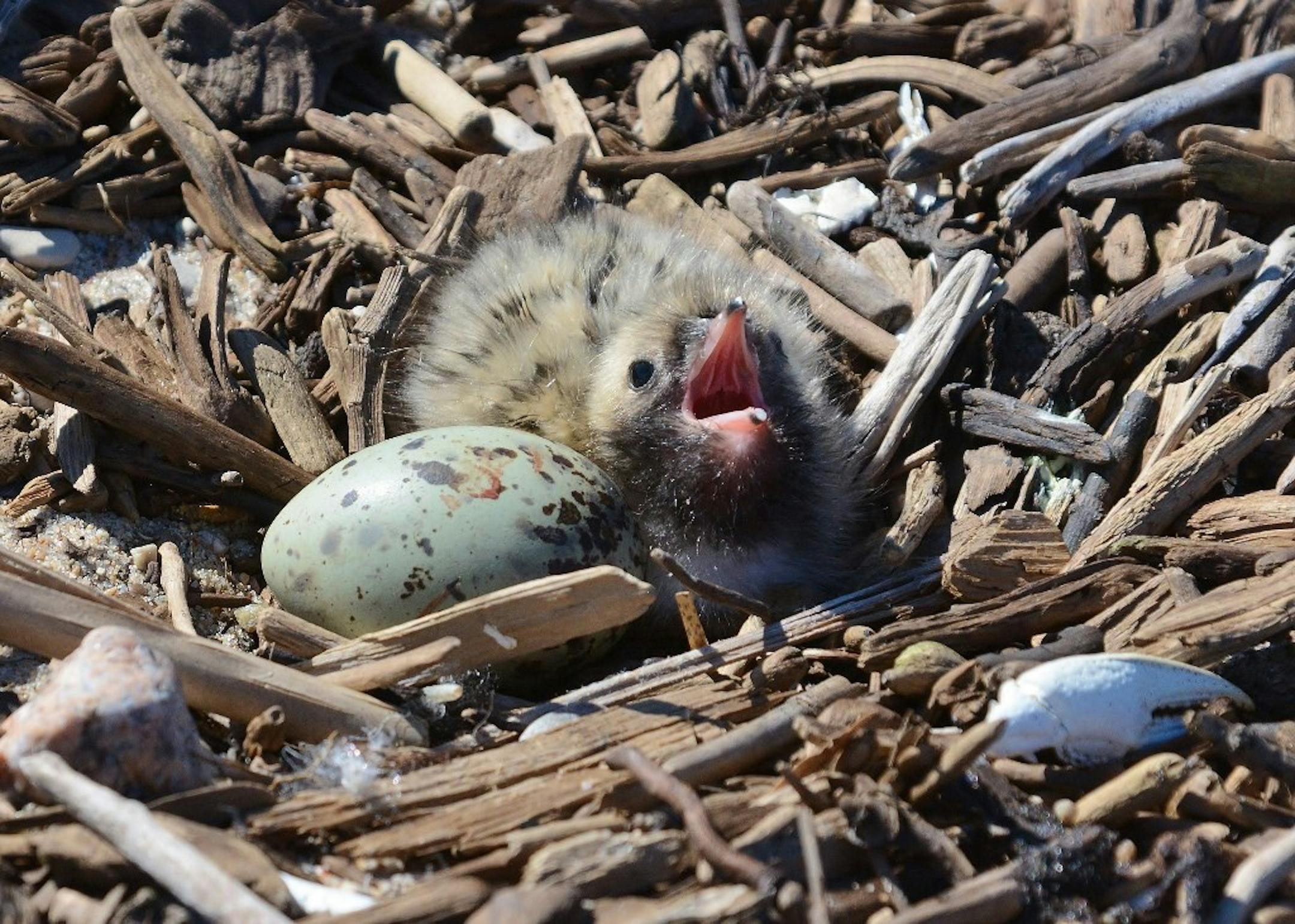
Q: How long does it take to produce a viable bird, from the time an egg is laid until a young bird leaves its nest?
A: The short answer is that it takes about 3½ to 4 weeks for a young bird to develop from life inside an eggshell to becoming mature enough to survive outside the nest. Robins sit on their eggs for about two weeks, then parents feed nestlings for the next 12 to 14 days, before spotty young robins clamber out of the nest. Red-winged blackbirds follow a slightly more compressed schedule, with females sitting on eggs for about 12 days, then nestlings taking 10 to 11 days to develop body and flight feathers. Parental duties aren't over with, however, with robins and blackbirds feeding their young outside the nest for a few more weeks, while they continue to develop life skills.
Bi-parental care is common in the bird world, with both male and female birds contributing to feeding and guarding their young, but is rare among mammals. About 85% of birds benefit from having two parents involved in chick-rearing duties.
Digestive aids
Q: Why are birds pecking at the mortar on my house?
A: Birds need small pieces of stone or sand to help them digest the seeds they eat. Since birds lack teeth, they need grit to perform the job of breaking up hard food into digestible pieces. This action happens in their gizzards, and while all birds have gizzards, not all birds swallow grit. The birds that are pecking at your mortar are probably finches or sparrows looking for an easy source of grit. You might deter them by setting out some coarse sand on the ground near the problem area.
Calcium supply
Q: I'm interested in how birds produce calcium for their eggshells, where the calcium comes from and how long it takes a female to lay her eggs.
A: Most songbirds, woodpeckers and ducks lay an egg a day, while swans, herons and cranes produce larger eggs and these require a two-day interval. Bald eagles need three to five days between laying their large eggs. The calcium is deposited as an egg travels through the female's uterus. Her body normally doesn't have enough calcium to form four eggs, in the case of robins, and up to 12 for a mallard. Recent research shows that female birds' hollow long bones fill up with a special form of bone during nesting season, and they draw on this source to form eggshells. The youngster inside absorbs calcium from its shell to form its skeleton.
We can help calcium-hungry female songbirds by setting out crushed eggshells during nesting season: Collect chicken eggshells, wash them well, then sanitize in a 250-degree oven for 20 minutes. Break into very small pieces and add a teaspoon of this to seeds in a platform feeder or offer shell bits in a pie plate nearby.


