Let’s be clear: canned beans are simply not as tasty as the dried beans you cook yourself.
Yes, canned beans are convenient, speedy and nutritious. But cooking dried beans is much easier than you think. First of all, you do not need to soak dried beans overnight. Second, beans cooked from scratch create their own broth to use in soups, stews and sauces.
The book “Cool Beans: The Ultimate Guide to Cooking with the World’s Most Versatile Plant-Based Protein” from food writer Joe Yonan smashes a lot of bean myths. Don’t soak! Do salt! Yes, most beans take three or more hours of simmering, but it’s all unattended. (Pressure cookers like Instant Pots can speed up the process.) The end result will be firm-textured, silky beans deliciously enhanced with the herbs and aromatics that have shared the pot.
Beans are among the oldest and most universal source of protein. They are a staple pantry item in the homes of cooks across the globe — Mexico, India, Nigeria, Israel, China, Italy, Japan, Spain, Morocco, Peru. Finally, thanks to the growing interest in plant-based proteins, they’re catching on here.
The Midwest Heartland region — Minnesota, North Dakota and Michigan — is the nation’s largest producer of dried beans. The farmland’s rich soils and long, cool growing season are especially well-suited to pinto, kidney and black beans. Plus, these crops are also good for the land. Beans are “nitrogen fixers” that improve the soil’s fertility, prevent runoff into our waters, capture carbon and shelter pollinators.
Beans are immensely affordable, uniquely adaptable and flexible. Categorized as both a protein and a vegetable, they’re extremely nutritious, packed with antioxidants and heart-healthy fibers, are far lower in calories than animal proteins, and contain no fat. Their benefits also may be a dietary key to a long and healthy life, according to Blue Zone founder Dan Buettner.
How to cook beans
When cooking beans, there are a few simple basics to remember:
- Put the beans into the pot and add enough water to cover them by about 3 inches.
- Add about 1 tablespoon of salt to 1 pound of beans.
- Add aromatics to the pot: a few cloves of garlic, a small onion, bay leaf, herbs, a few peppercorns.
- Do not add tomatoes or acids until the very end; they tend to harden the beans and slow the cooking.
- Set the pot over high heat, bring to a boil, reduce the heat, cover, and simmer until done. Start checking the beans after about 2 hours, although they may take longer. When they are tender and creamy, remove from heat.
- Store cooked beans in their broth in the refrigerator for up to a week or freeze.
- 1 pound of dried beans will yield 5 to 6 cups of cooked beans, plus 2 to 3 cups stock.
- 1 can of beans is equal to 1 to 2 cups cooked beans, depending on the size of the beans and the size of the can.
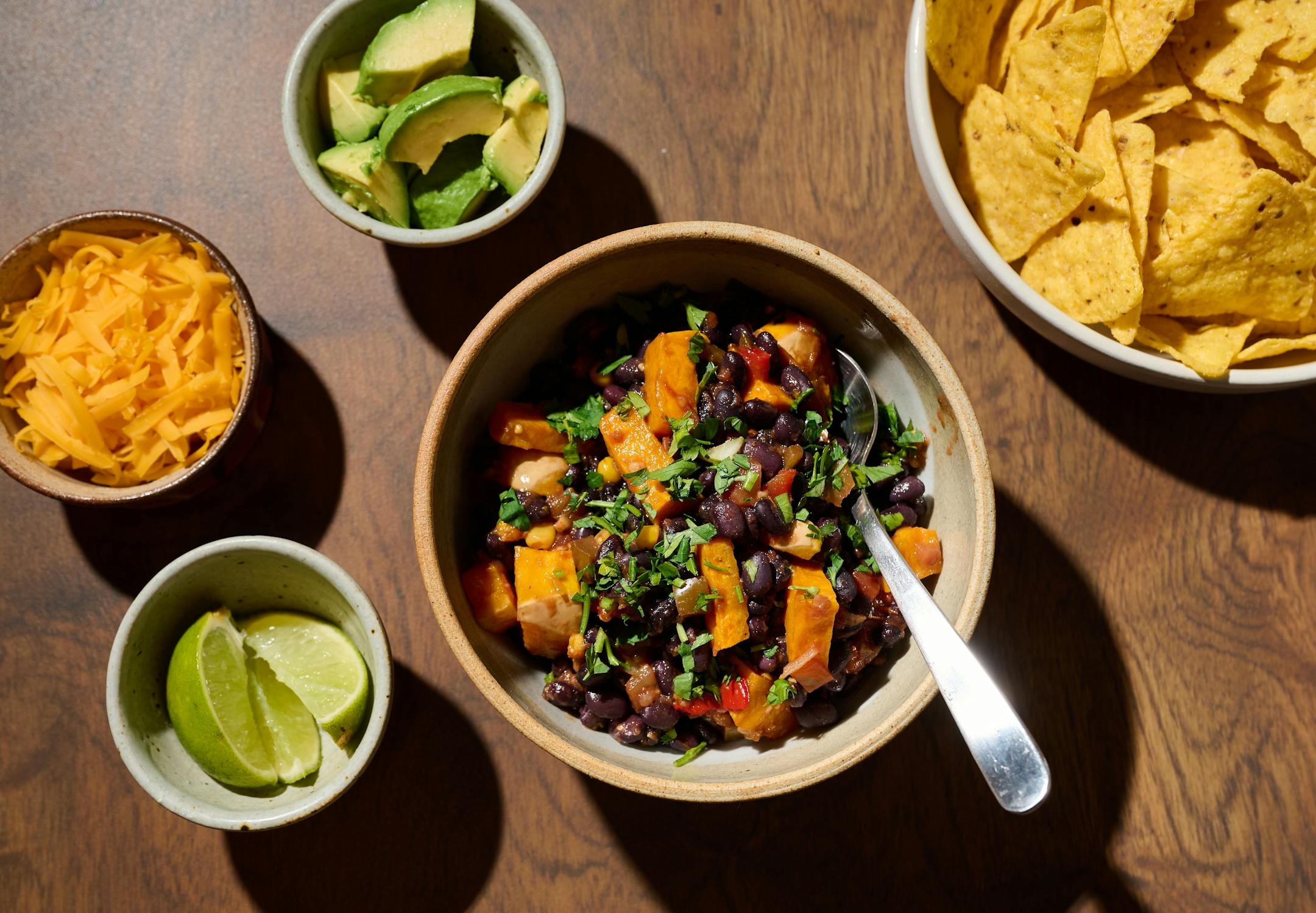
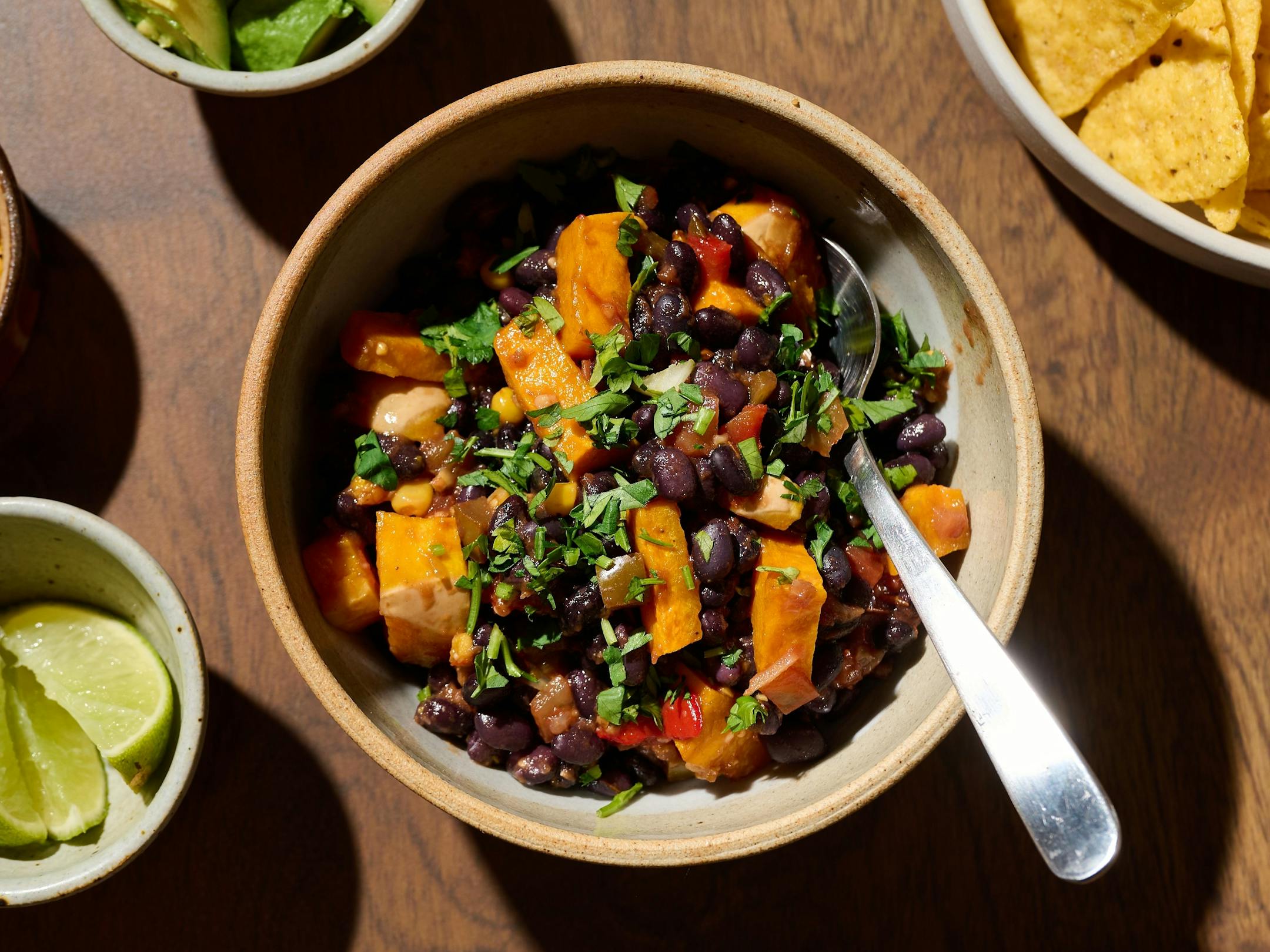
Black Bean Sweet Potato Chili
Serves 4 to 6.