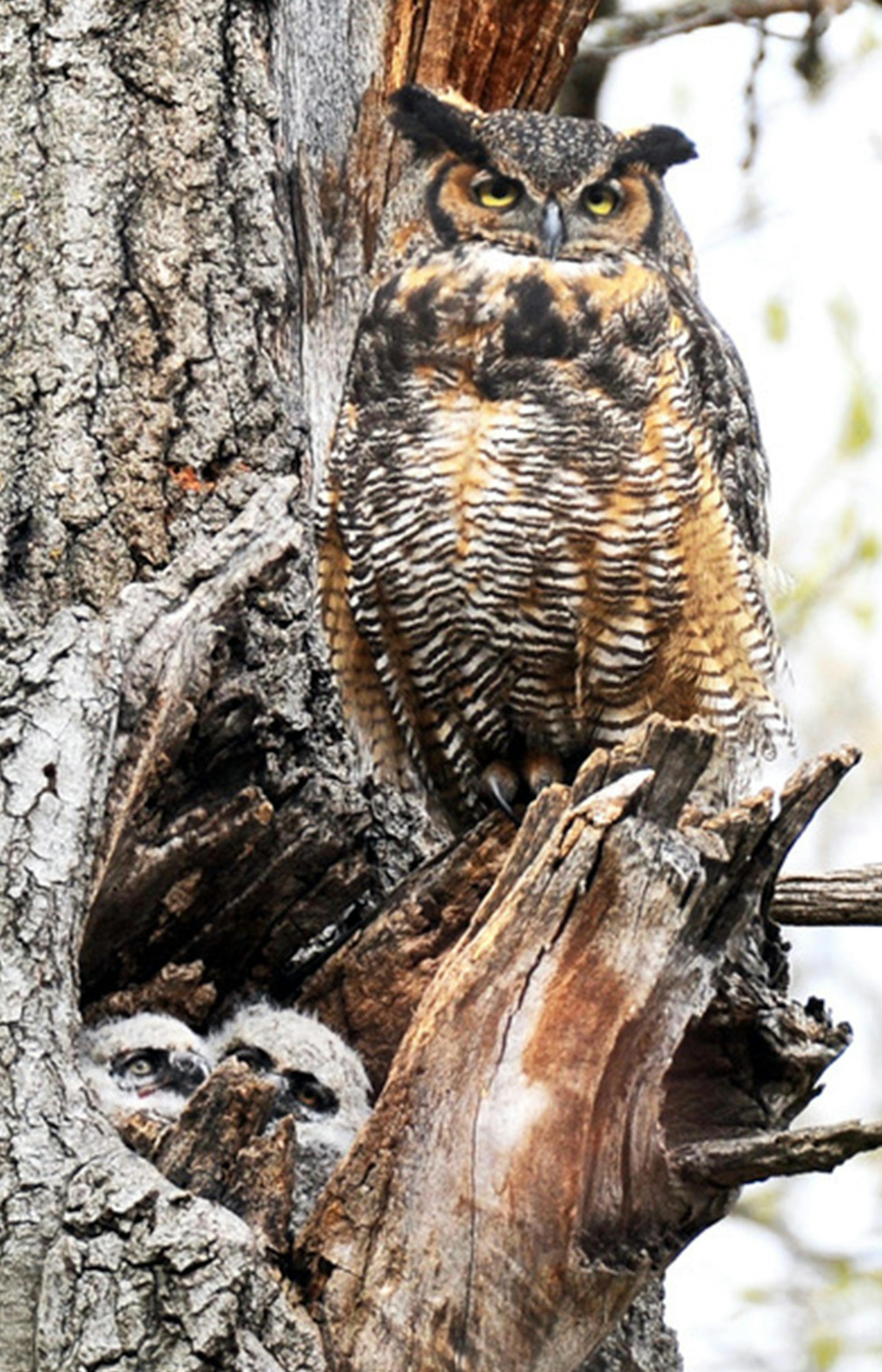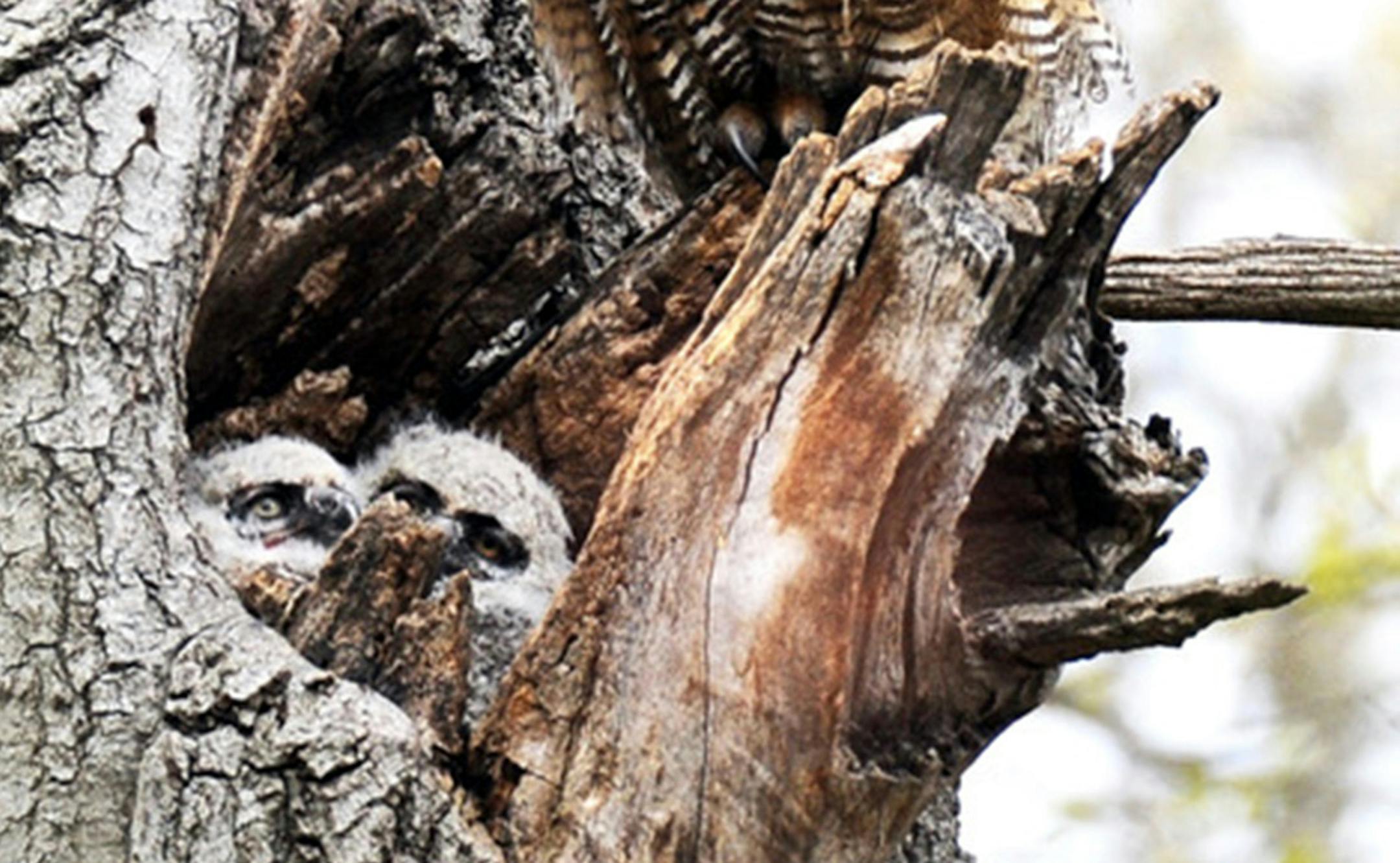
High in a tree sat a great horned owl, atop its nest cavity. Two young birds occasionally struggled into sight, but all I could see were their scraggly heads, eyes and bills.
Their eyes were yellowish-hazel, deep in black sockets. Researchers say this color indicates the birds were 2 to 3 weeks old. Those eyes would soon turn gray, then brilliant owl-yellow when the owlets were 30 days old.
I assumed the great horned owl was female. They tend babies. Males, the hunters, are on the night shift, supporting the family, so to speak.
A birding friend told me he'd seen the owls in a Twin Cities park in early May, which would be late for great horned owls to hatch. My friend thought this may have been a second nest. Great horned owls usually start nesting in January or February. Perhaps the first clutch of eggs was lost to our rough winter weather.
I went to check it out. The owlets did seem small for this time of year.
The mother owl was standing guard. Basically, what she does is keep watch, along with the occasional grooming, stretching and even sleeping a bit. While her owlets are young, she won't leave them alone. They're vulnerable to predation. In fact, crows eat baby owls.
Of course, great horned owls eat many things, including other great horned owls. They are opportunistic hunters, varying their menu with the geography.
Mammals comprise about 90% of their diet, with rabbits and hares topping the list. House cats are up there, too. Birds, sometimes as large as herons, make up the remaining 10%.