

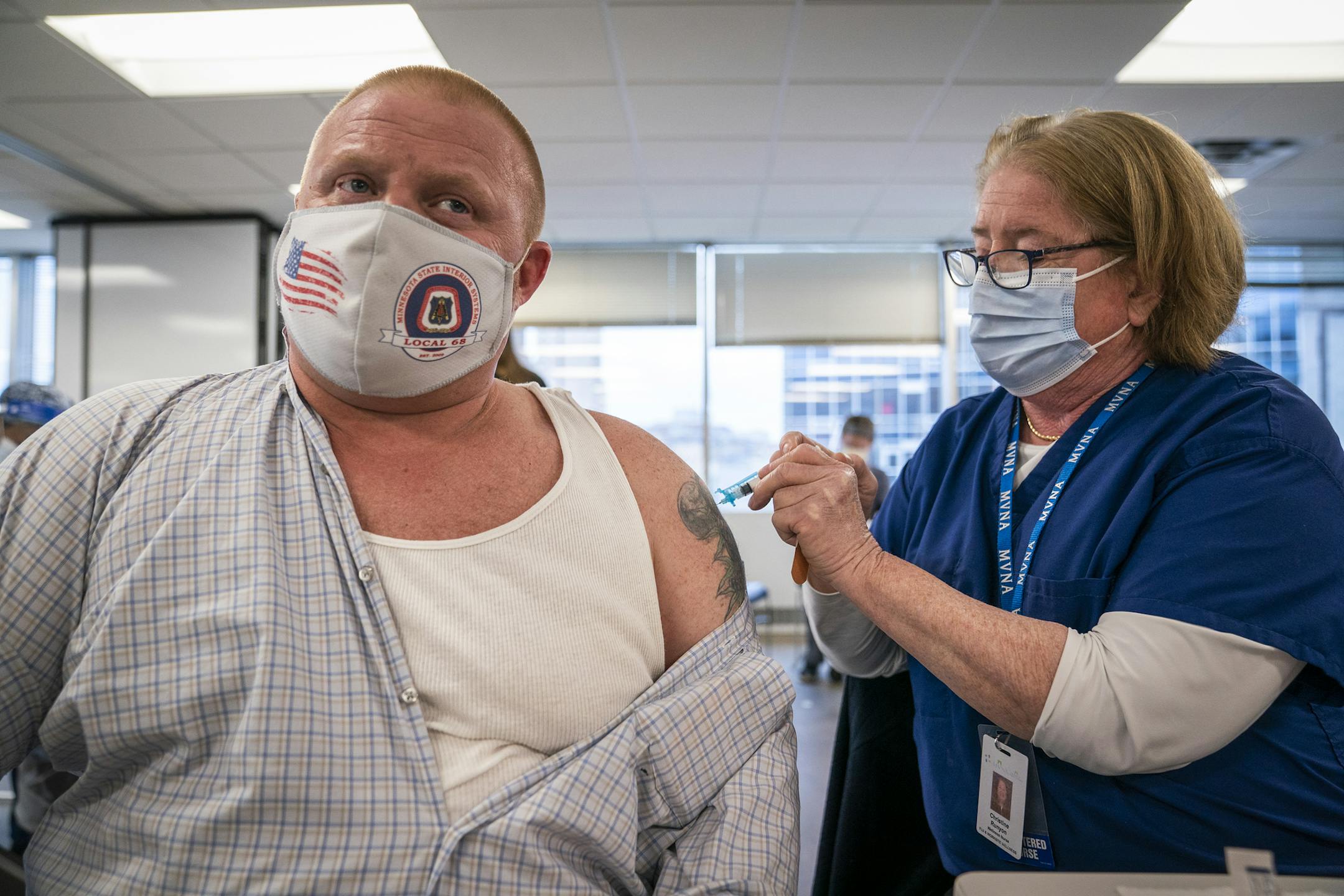
Chris Runyon paused for a moment to catch her breath as she lugged a high-tech cooler and 20 pounds of medical supplies through an empty gymnasium.
It was late on a Friday afternoon and Runyon, a 71-year-old public health nurse, had just finished a community vaccination clinic in south Minneapolis and was racing against the clock. Minutes earlier, she had punctured the seal on a vial of the Pfizer coronavirus vaccine and now had just six hours to inject the vaccine into arms before the doses expired and had to be thrown out.
Frantic, Runyon made a flurry of calls to relatives and acquaintances, directing them to the home in St. Paul where she was babysitting her infant granddaughter that evening. By 6 p.m., people began arriving at her doorstep ready for the shots. With only a couple of hours to spare, Runyon gave the last dose to a middle-aged stranger in the middle of a kitchen with medical supplies spread over a counter.
"It's like we're all on the Titanic and trying to get everyone we can on the lifeboats as fast as we possibly can," said Runyon, who works for Hennepin Healthcare.
Runyon is among hundreds of Minnesotans with medical backgrounds who have stepped forward to administer vaccines as the state ramps up efforts to get as many people as possible inoculated against the coronavirus. As the vaccine supply has increased, so has the demand for people to deliver the shots. Since January, nearly 850 Minnesota health care professionals — from pharmacists and paramedics to optometrists and veterinarians — have volunteered to become COVID-19 vaccinators through a program with the state Department of Health, officials said.
For many, administering the vaccine has become a once-in-a-lifetime opportunity to save lives and spread hope after a year of despair. Nurses who months ago were traumatized by watching people die from COVID-19 are now experiencing relief and joy. For their efforts, they are rewarded with tears of gratitude, celebratory fist bumps and the flashing of smartphone cameras as people seek to capture the moment for their families and social media.
"You can feel the joy," Runyon said after a long day of giving shots to restaurant and hotel workers at a union hall in Minneapolis. "People truly feel like their lives have opened up after the shots."
Yet plunging needles into strangers' bare arms, day after day, is a daunting task.
![Christine Runyon, a nurse with Hennepin Healthcare, left with her supplies and the extra vials of Moderna COVID-19 vaccine at the end of the clinic at United Labor Center. ] LEILA NAVIDI • leila.navidi@startribune.com](https://arc.stimg.co/startribunemedia/F2VPVQJLFSX3VPYD6HQZAJIMA4.jpg?&w=1080)


