

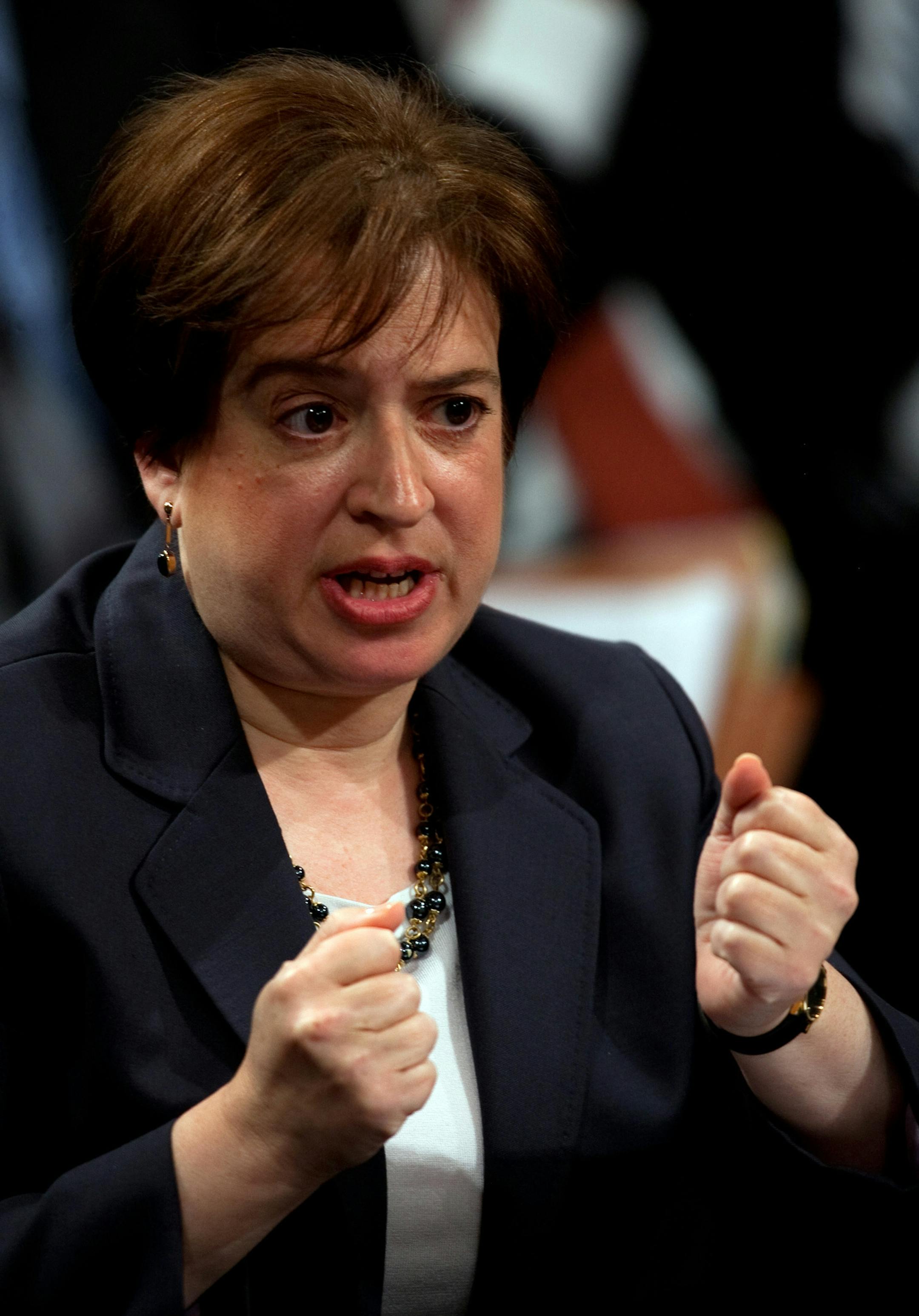
"So one religious group could opt out of this, and another religious group could opt out of that, and everything would be piecemeal, and nothing would be uniform."
— Supreme Court Justice Elena Kagan
Freedom is a powerful nuisance when one's goal is uniformity. The incompatibility of these two conditions is at the core of the latest Supreme Court test of Obamacare.
During last week's oral argument in a much-discussed case that challenges the federal health care law's "contraceptive mandate" — which requires employers providing health insurance to cover a full array of birth-control methods — Justice Kagan took the prize for pithily framing the underlying issue. Her nightmare scenario, should employers win the right to "opt out" of paying for medical procedures their faiths abhor, is a society where "piecemeal" religious beliefs would undermine the government's preference for a "uniform" health care system for all.
But isn't that what it means to have religious freedom, freedom of conscience — that people's right to be true to their own beliefs is more important than many things the community as a whole might prefer?
As it happens, social conservatives might, if they tried, be able to understand how progressives longing for health care uniformity feel. Conservatives have seen the shattering of various forms of uniformity they cherish. One of their nightmares, quickly becoming reality, is a society where "some people could define marriage one way, and some could define it another way, and nothing would be uniform."
In another conservative nightmare, long since come true, "some people could believe life begins at conception, and others could believe that it doesn't, and the very right to life would be a piecemeal affair …"
No doubt people on all sides would insist that these issues are different from one another. But what mainly makes the difference is how much one values each type of uniformity — and how much one respects the right to dissent from it.


