

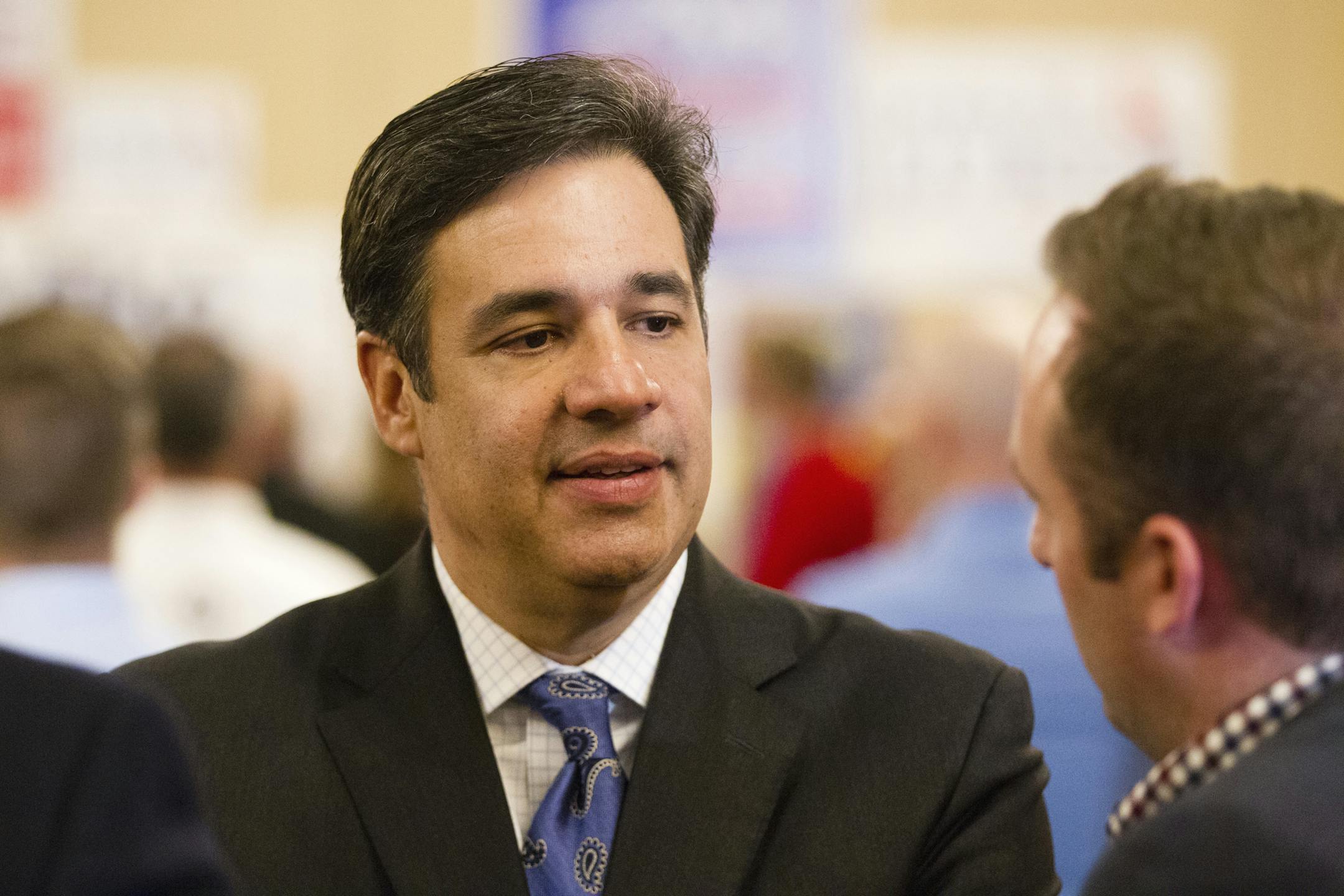
WASHINGTON – Do people die because they lack health insurance?
Rep. Raul Labrador, R-Idaho, found himself in a pickle — and in monologue by late night talk-show host Jimmy Kimmel — when he suggested they don't. He later elaborated that he was making the point that no one would "die in the streets" under the Republican health care plan, because hospitals are required by law to treat any patient in need of emergency care.
But health care advocates say his explanation falls short of reality, pointing to a host of studies that show access to health care does prevent premature death, in the case of Americans with conditions such as cancer, diabetes, coronary heart disease, respiratory failure and asthma.
While researchers may quibble over the exact figures, they say the evidence is plain: Americans do die earlier because they don't have access to health insurance. Those studies include a 2012 survey that found lower mortality rates among states that expanded their Medicaid programs compared with states that did not.
"No one says the number is zero," said Rachel Garfield, a senior researcher for the Kaiser Family Foundation. "There may be some disagreement on the scale, but there is a lot of agreement that there are health effects."
U.S. law does require that hospitals treat emergency room patients until they are stable, "but they don't have to provide ongoing treatment for a chronic condition," Garfield said. That means the emergency room may stop the bleeding, but that people without health insurance may have challenges controlling diabetes or high blood pressure.
The Institute of Medicine — now part of the National Academies of Sciences, Engineering, and Medicine — was among the first to put a number find a link with a 2002 report, "Care Without Coverage: Too Little, Too Late," which found a 25 percent higher mortality risk for the uninsured based on an analysis of scientific studies. The researchers estimated 18,000 people between ages 25 and 64 died in 2000 because they did not have health insurance.
A 2009 follow-up survey found that men and women without insurance "are much less likely to receive clinical preventive services that have the potential to reduce unnecessary morbidity and premature death."


