

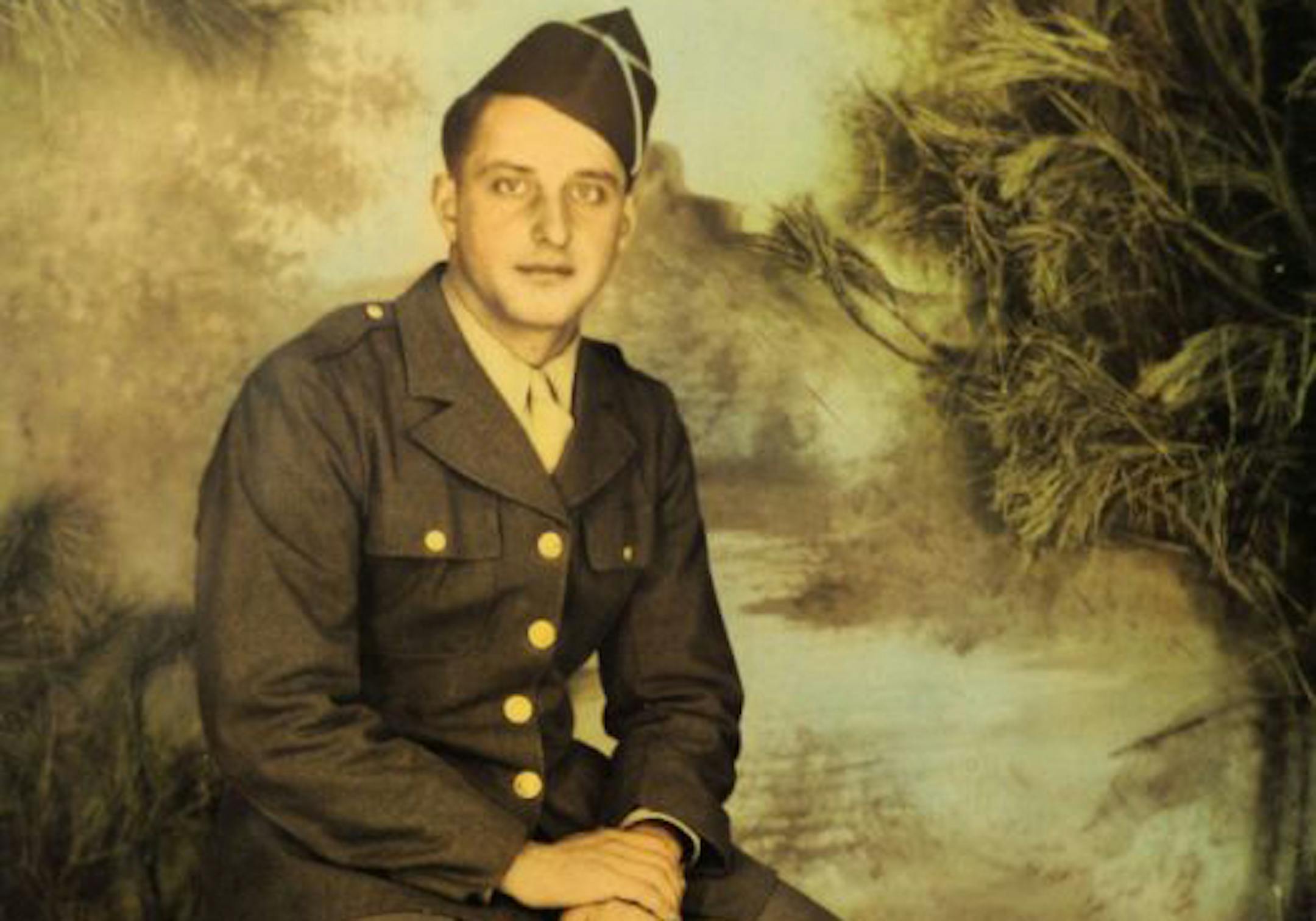
More than 70 years after he went missing in action, Army Pvt. John P. Sersha is finally coming home. And, fittingly, the World War II veteran will be buried Memorial Day weekend on the Iron Range where he was raised.
"That was my plan," said his nephew, Richard Lohry, whose DNA helped identify Sersha more than 71 years after his death. "That was my prayer."
Sersha was entrenched with his company on a hill overlooking German-controlled woods near Groesbeek, Netherlands, when he and two other "bazooka men" were sent on an assault mission on Sept. 27, 1944, and never returned, according to Pentagon records.
In April 1948, three years after the war's end, two sets of remains were located in those woods; one was identified as one of Sersha's fellow soldiers and the other possibly being Sersha but ultimately ruled unknown.
Those mystery remains were buried at a U.S. military cemetery in Belgium — identified as Unknown X-7429 — and have rested there until Sersha's family asked for their removal, based on dental comparisons of family and military records.
The disinterment occurred this past December, and DNA tests by the Defense Department at the Offutt Air Force Base in Nebraska found a match with Lohry and a brother of Sersha's, the Defense Department's POW/MIA Accounting Agency announced Friday.
Lohry said that when the phone call came on March 28 — the day after Easter — from a military staffer in mortuary affairs, a woman on the other end said, " 'Are you sitting down?' I told her, 'I don't need to sit down. I know.' "
Lohry, who lives in the Iron Range town of Angora, said, "It was really the DNA, ultimately [that sealed confirmation], although there also was other evidence that was forensic and circumstantial."


